Ratchet Tie-Down Straps
Filters
1-48 of 65 Products

Item # 5702554
Order today to get this price.
Item # 332781
Item # 152006
Item # 332780
Item # 45113
Item # 45231
Item # 45120
Item # 322835
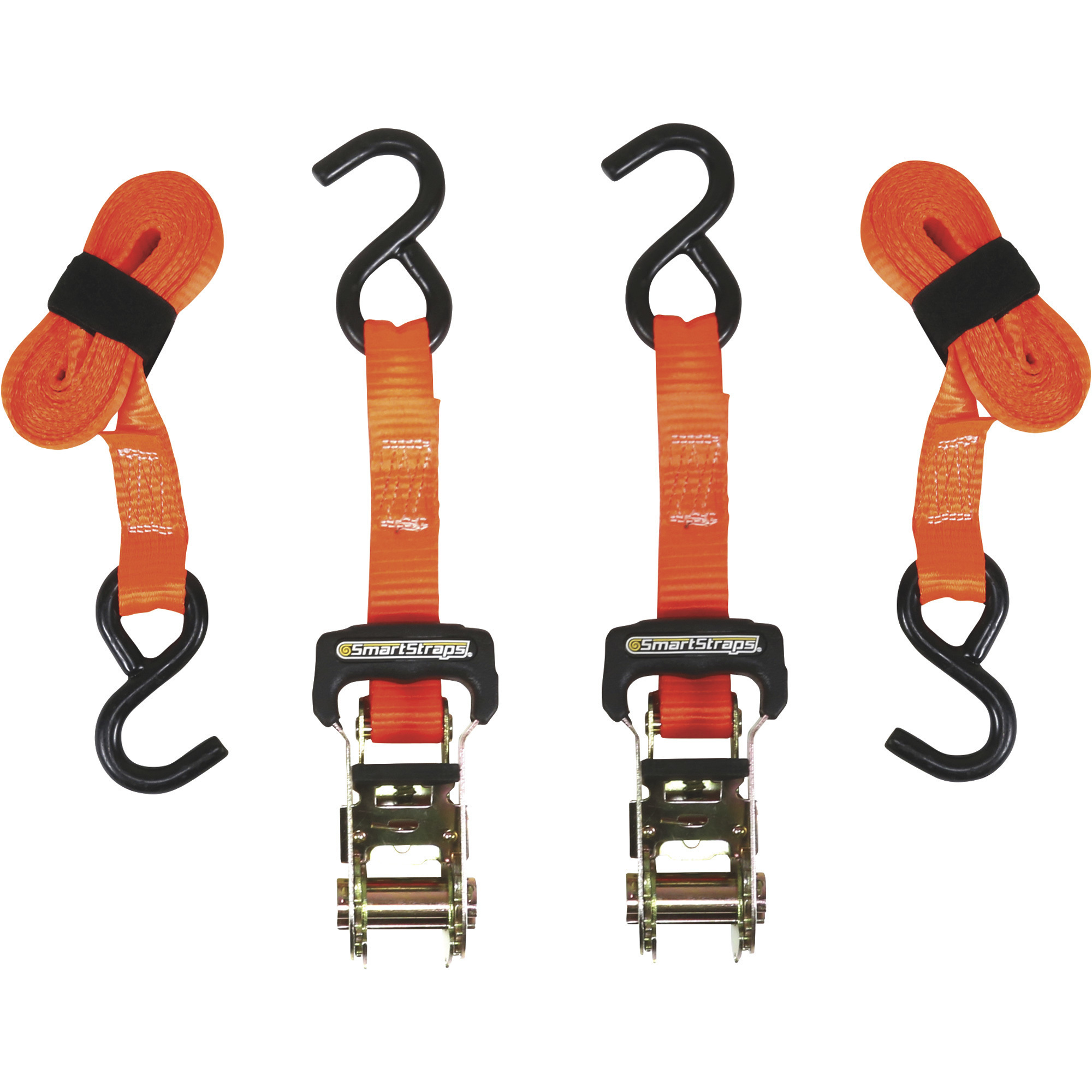
Item # 332773
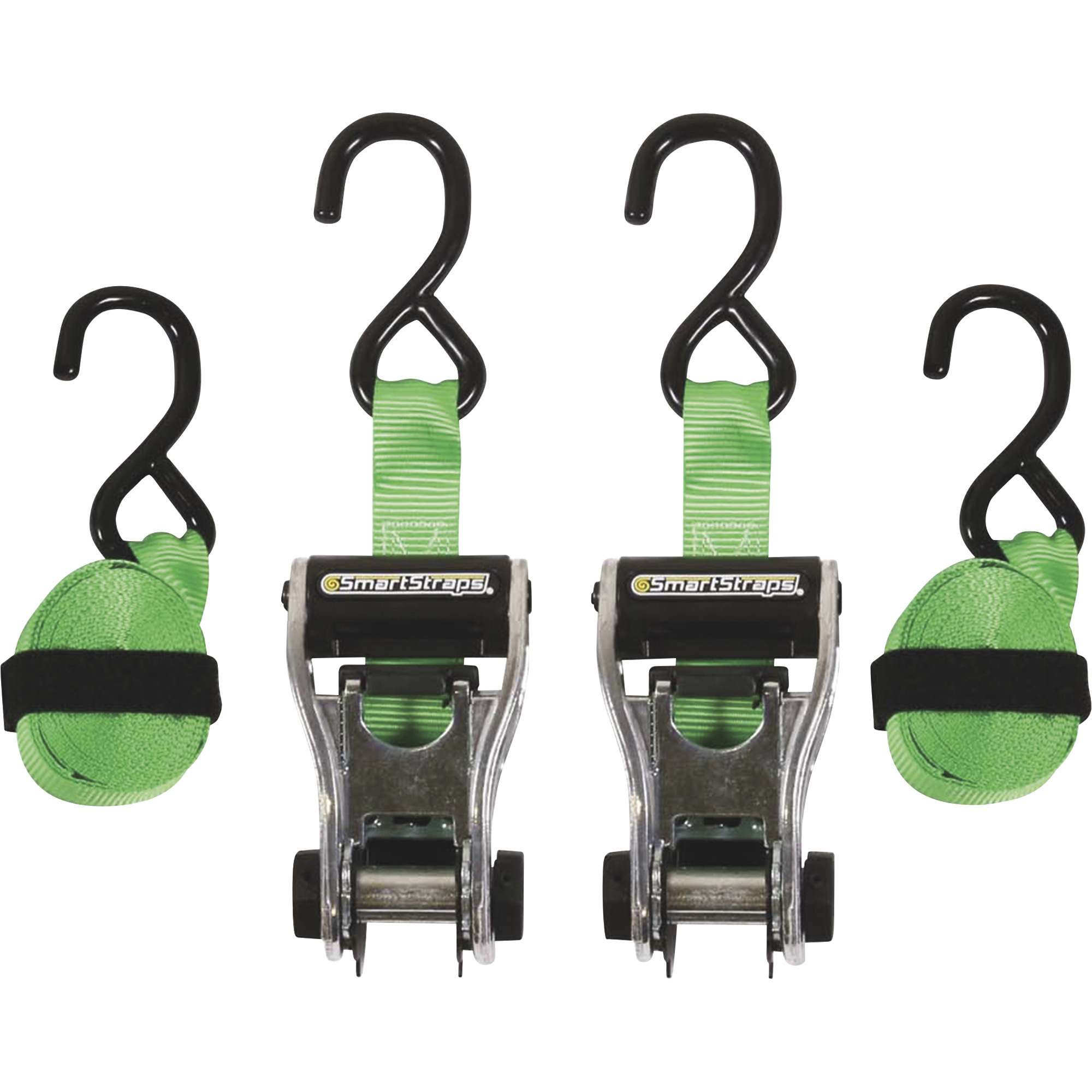
Item # 152004
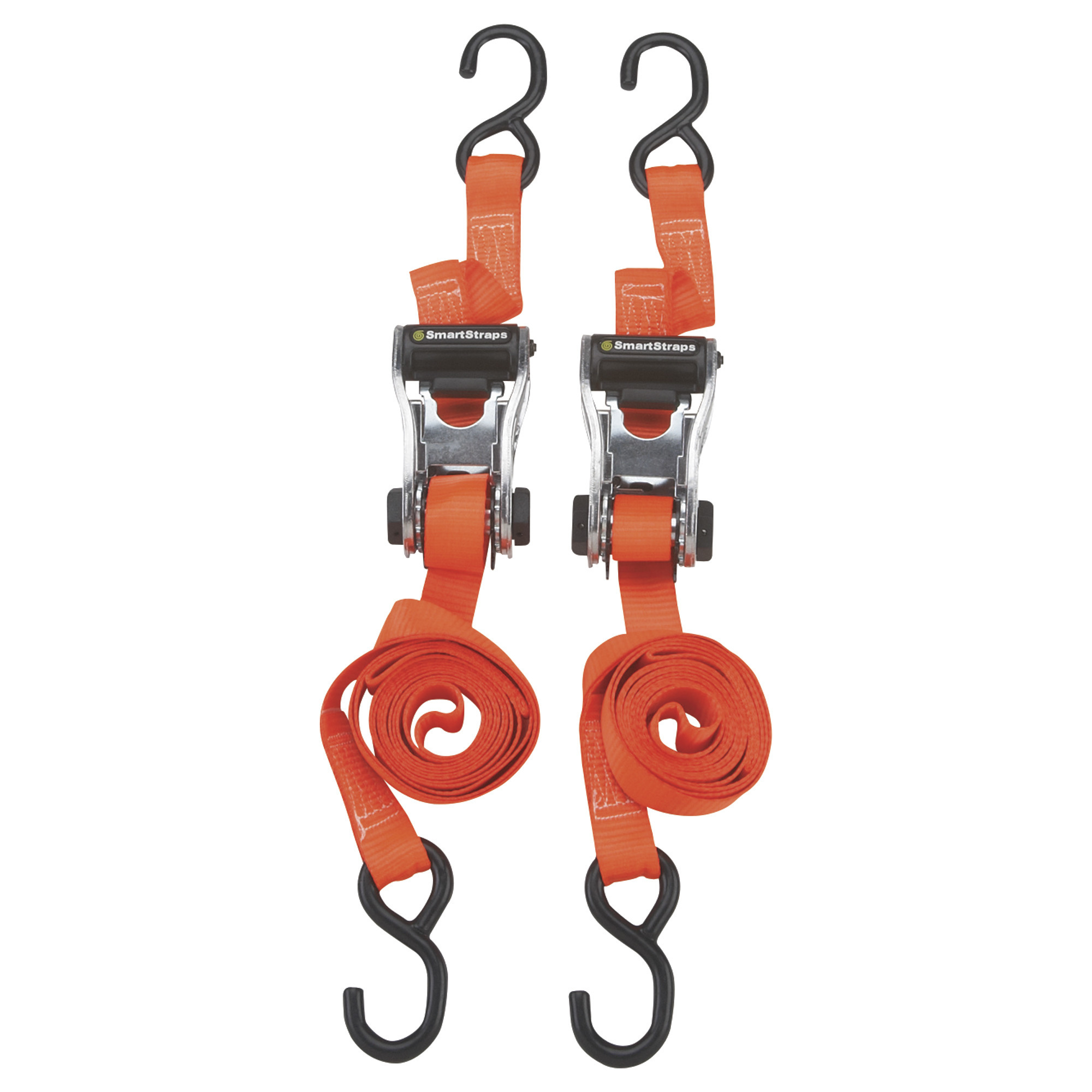
Item # 3327882
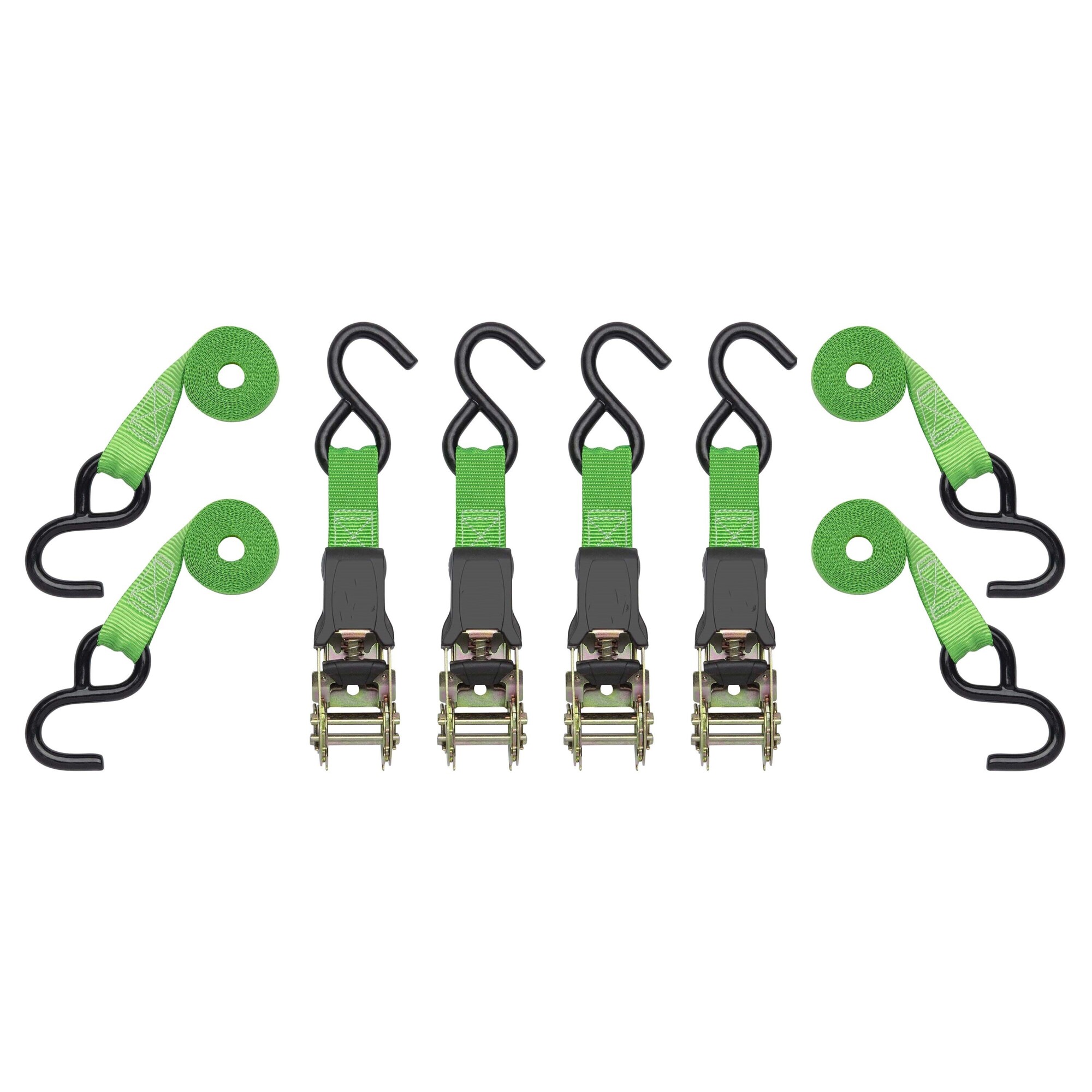
Item # 5686144
Item # 45116
Item # 322830
Item # 54395
Item # 54397
Item # 330998
Item # 54398
Item # 322831
Item # 54402
Item # 54399
Item # 5721325
Item # 54394
Item # 24245
Item # 332786
Item # 5702642
Order today to get this price.
Item # 5702600
Order today to get this price.
Item # 54404
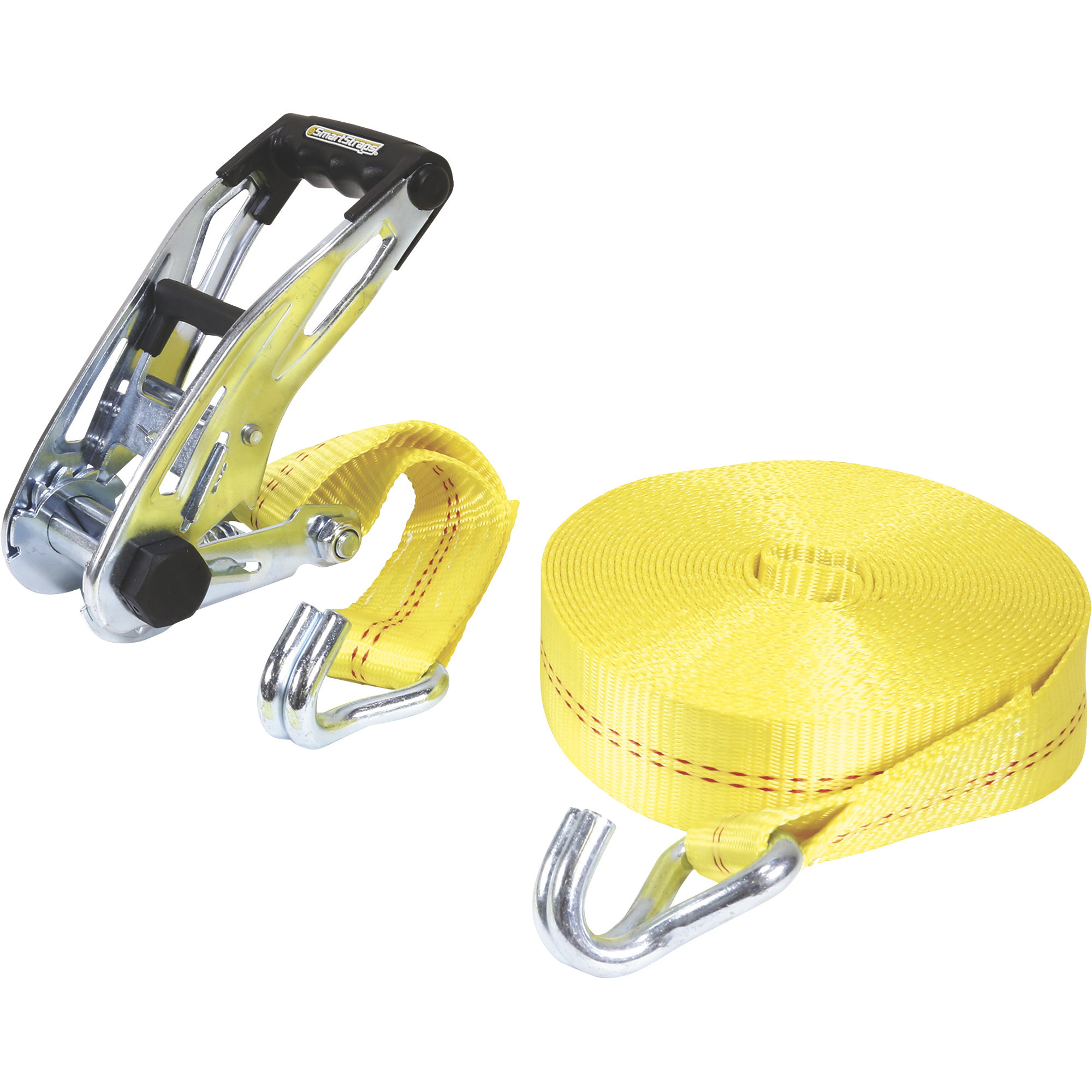
Item # 45112
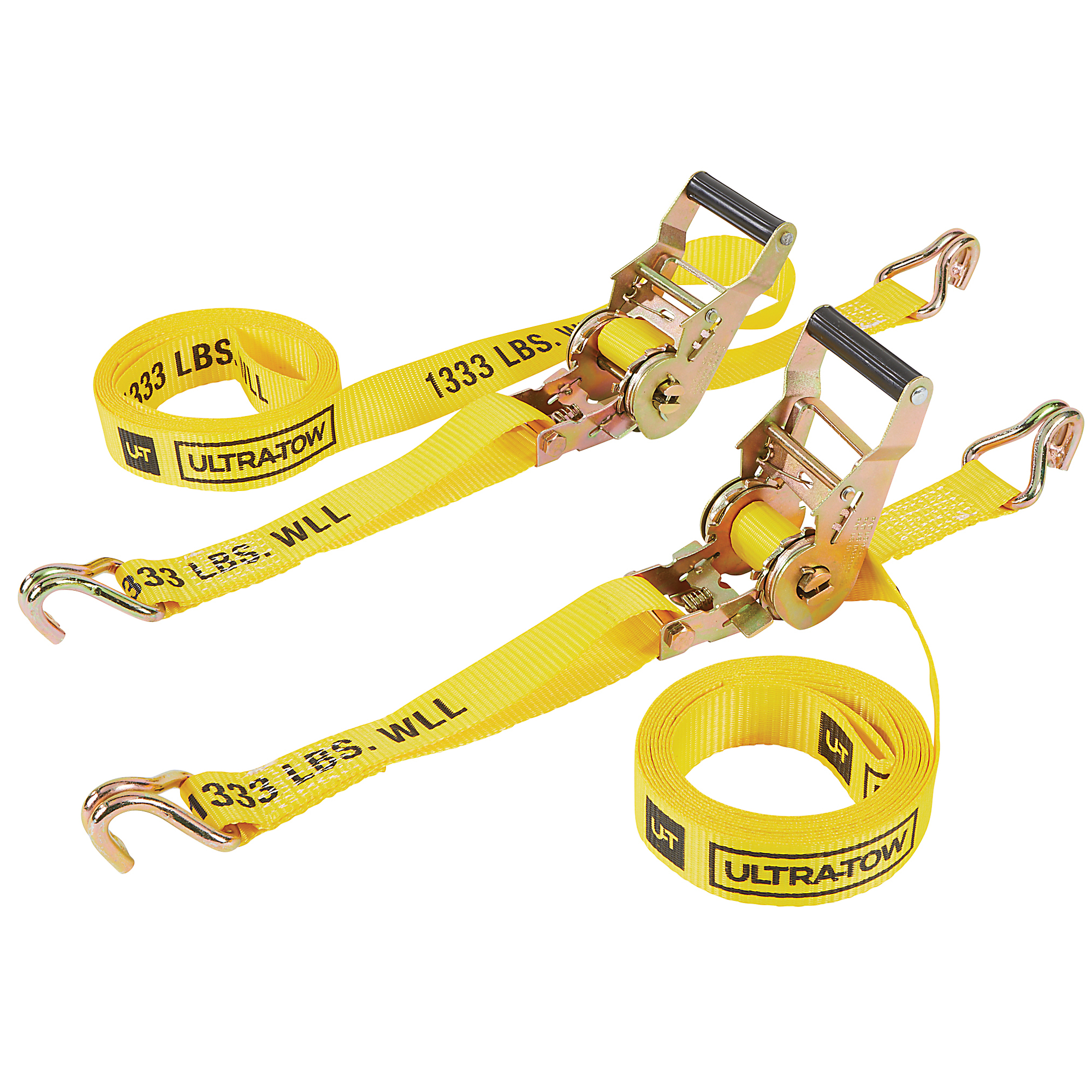
Item # 5702562
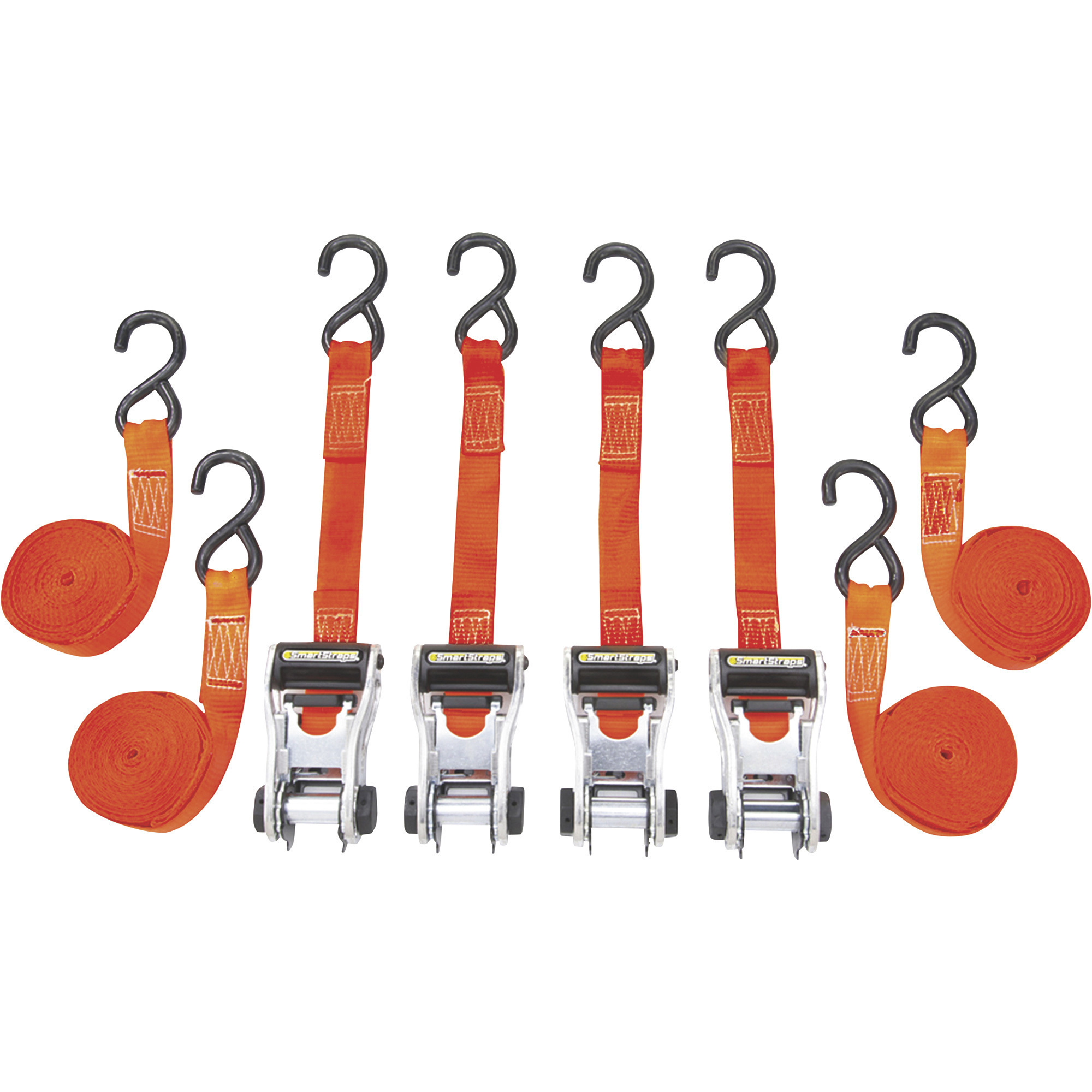
Item # 54403
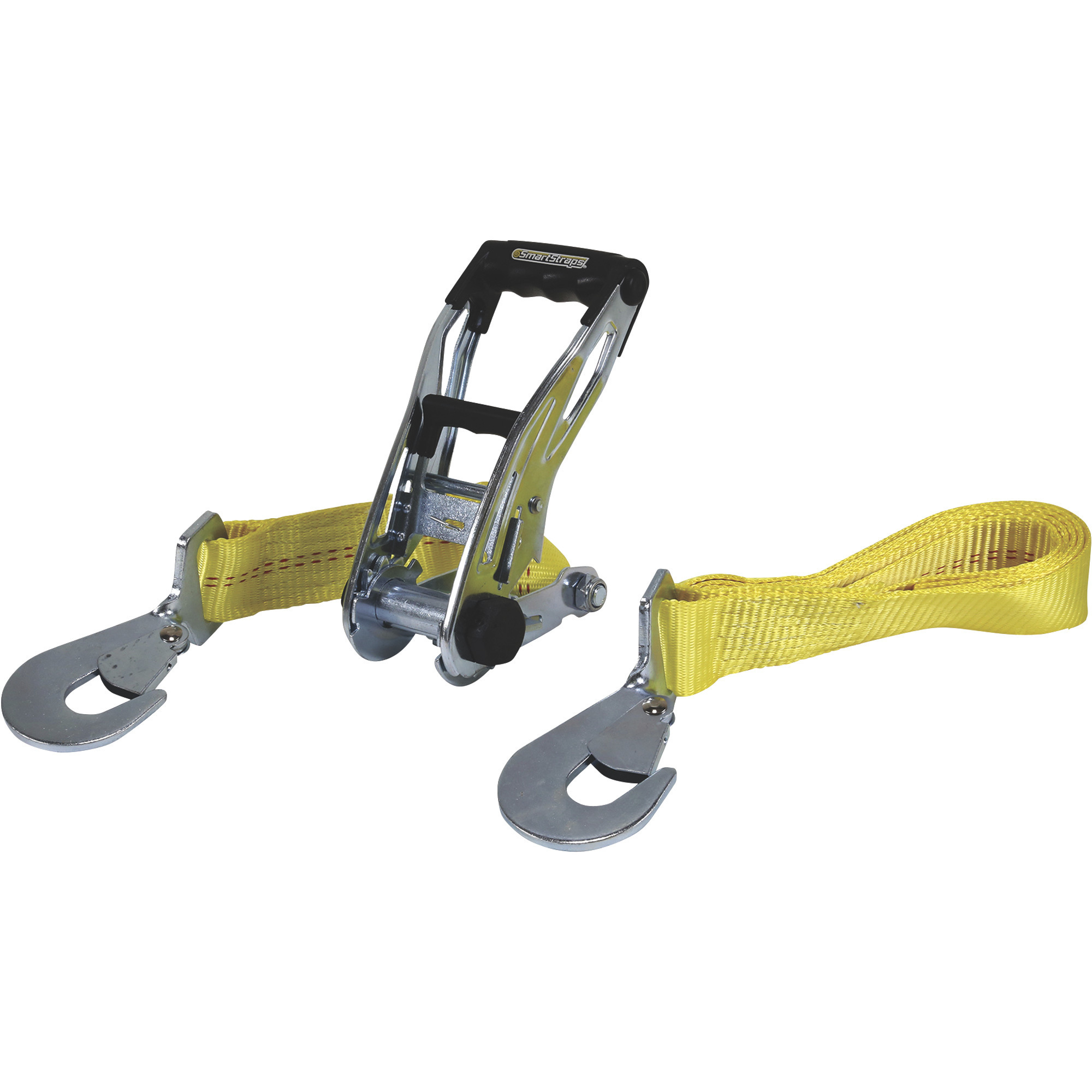
Item # 45194
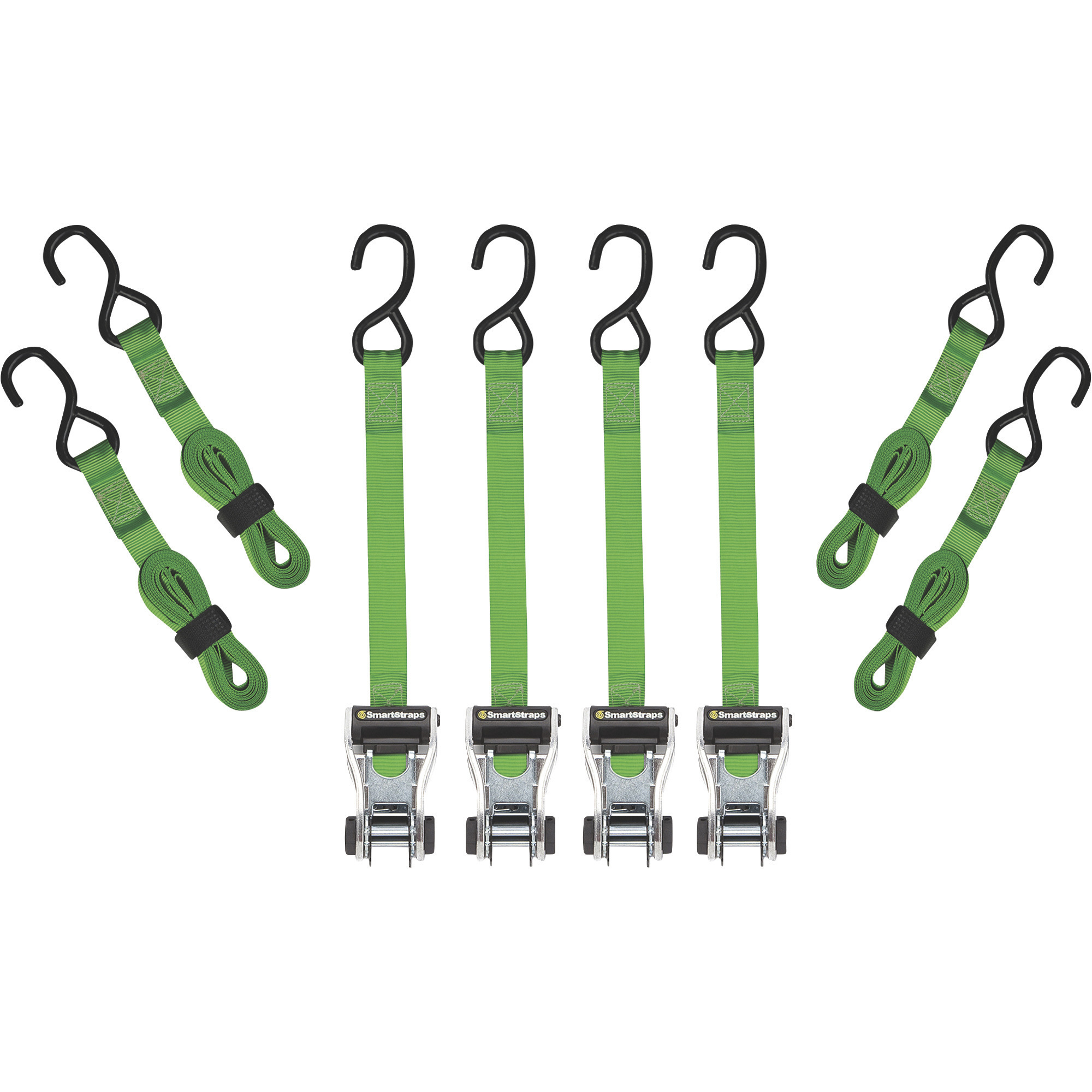
Item # 54401
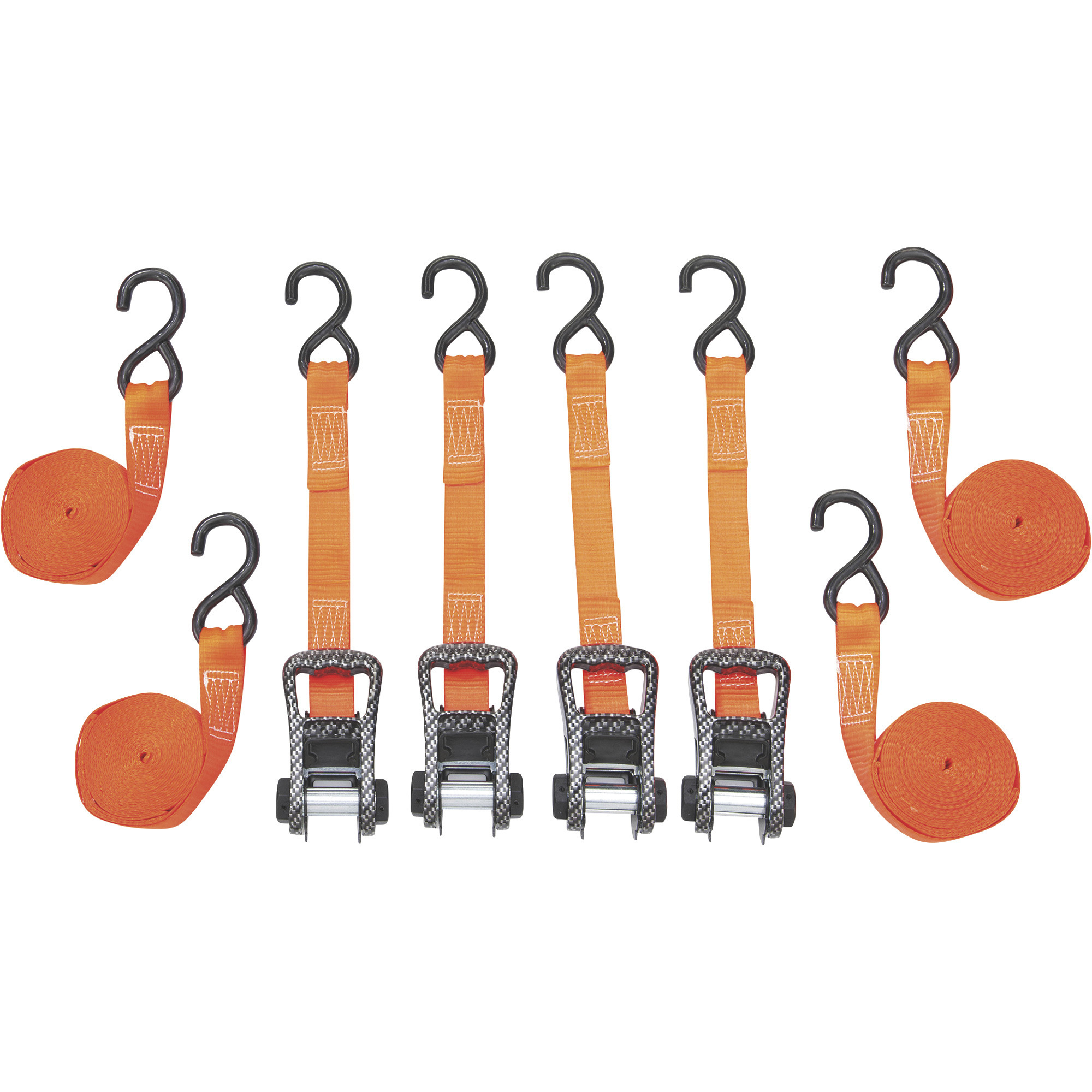
Item # 322814
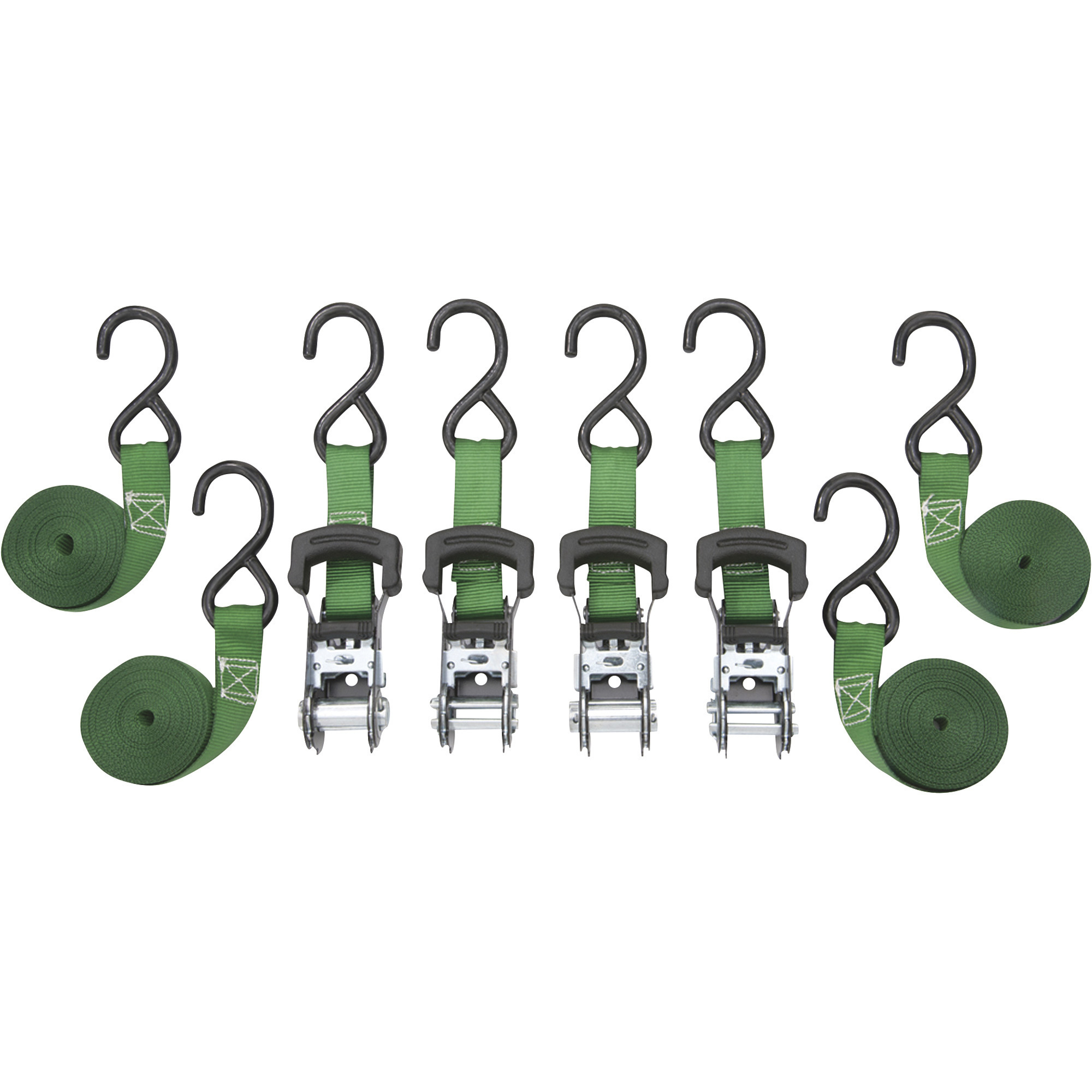
Item # 45101
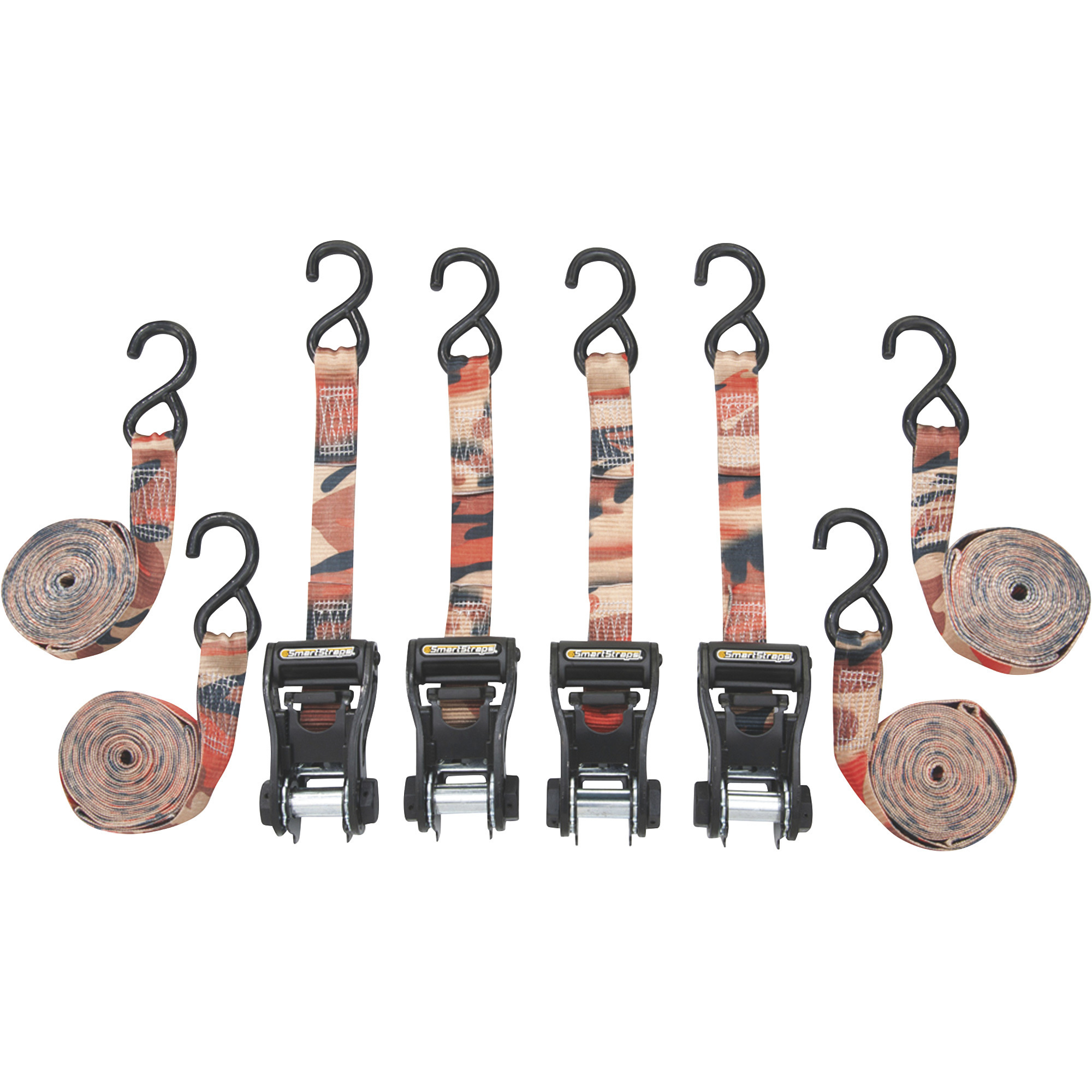
Item # 45109
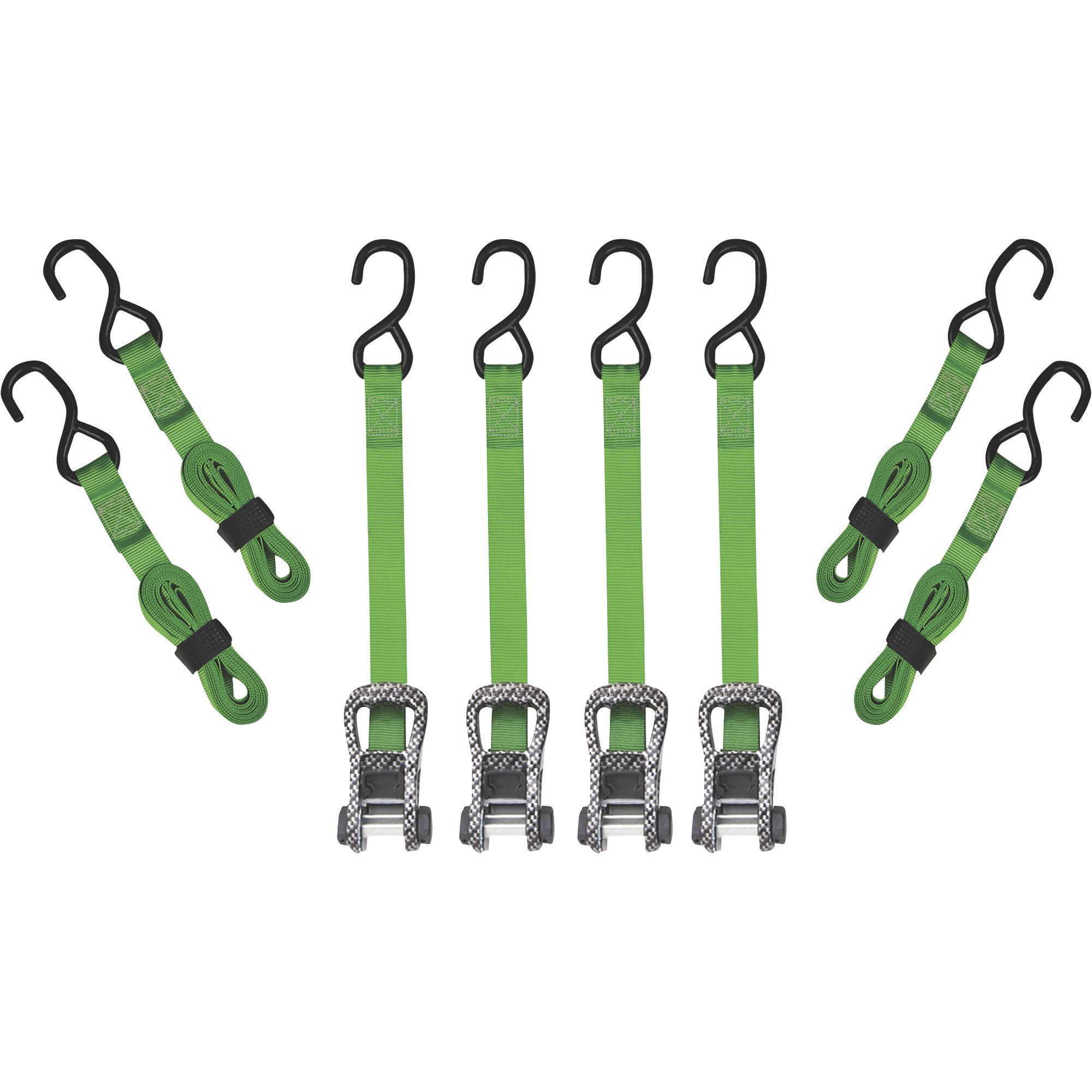
Item # 54400
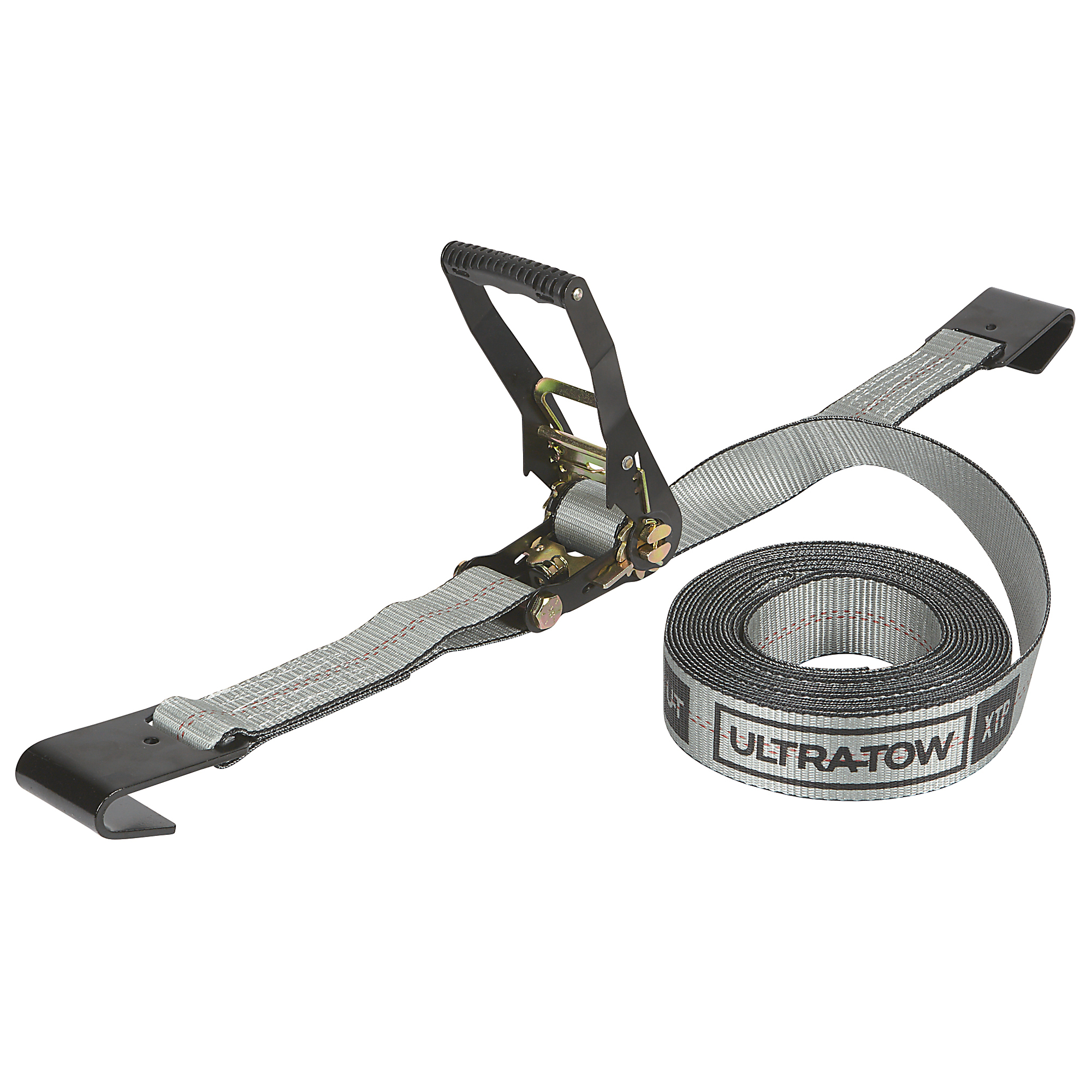
Item # 5702626
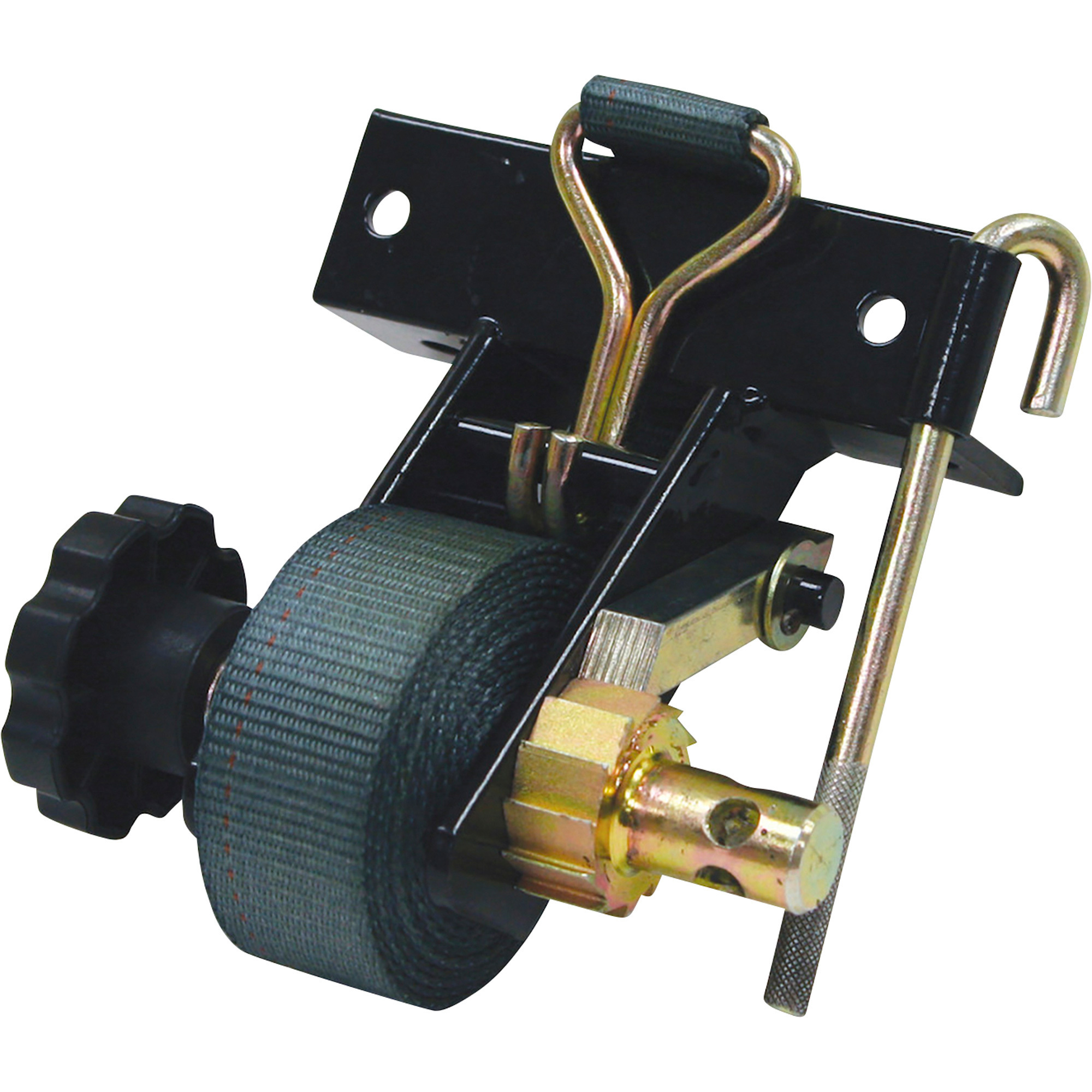
Item # 24246
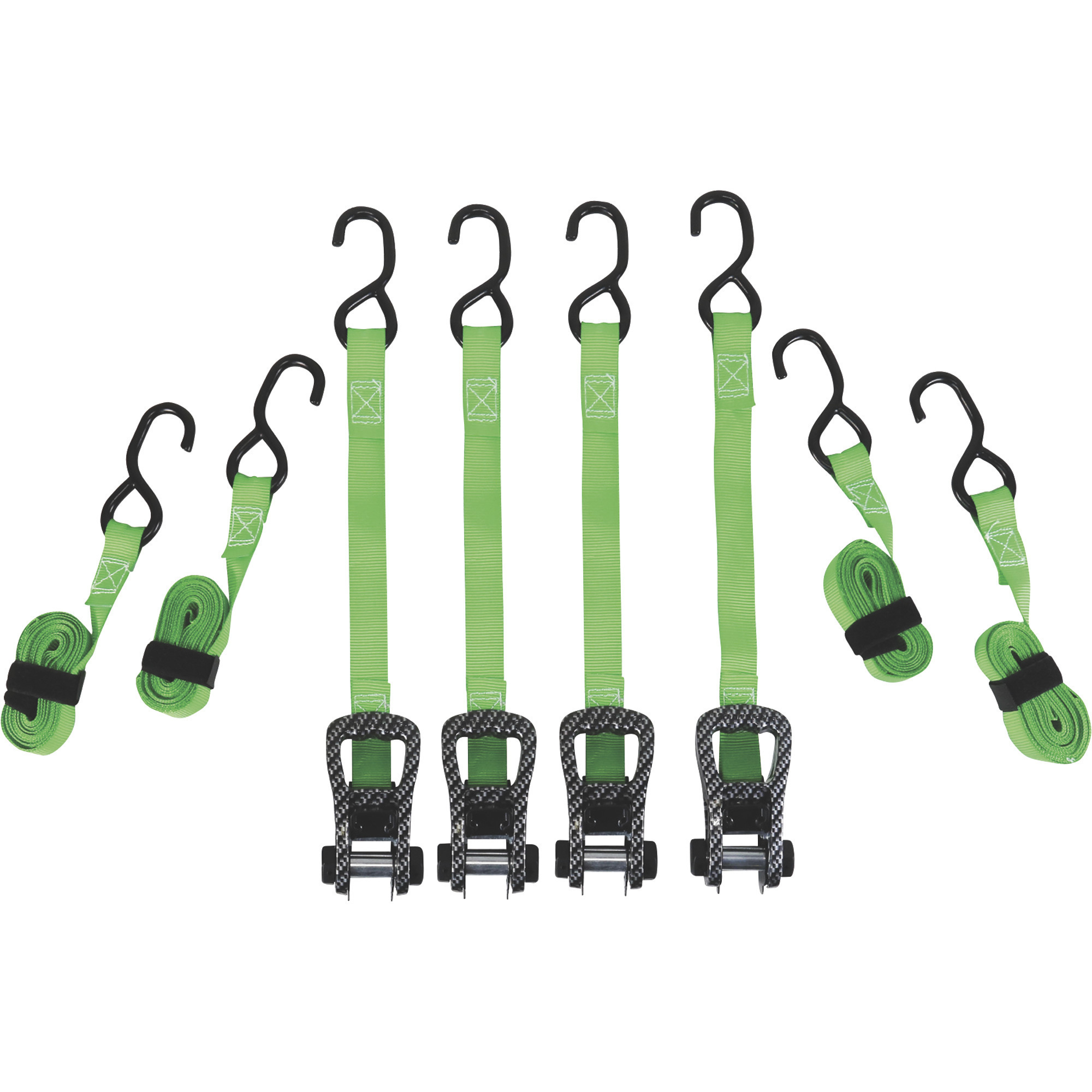
Item # 322813
Item # 5702634
Item # 5721341
Item # 5702597
Item # 152005
Item # 45119
Item # 856677
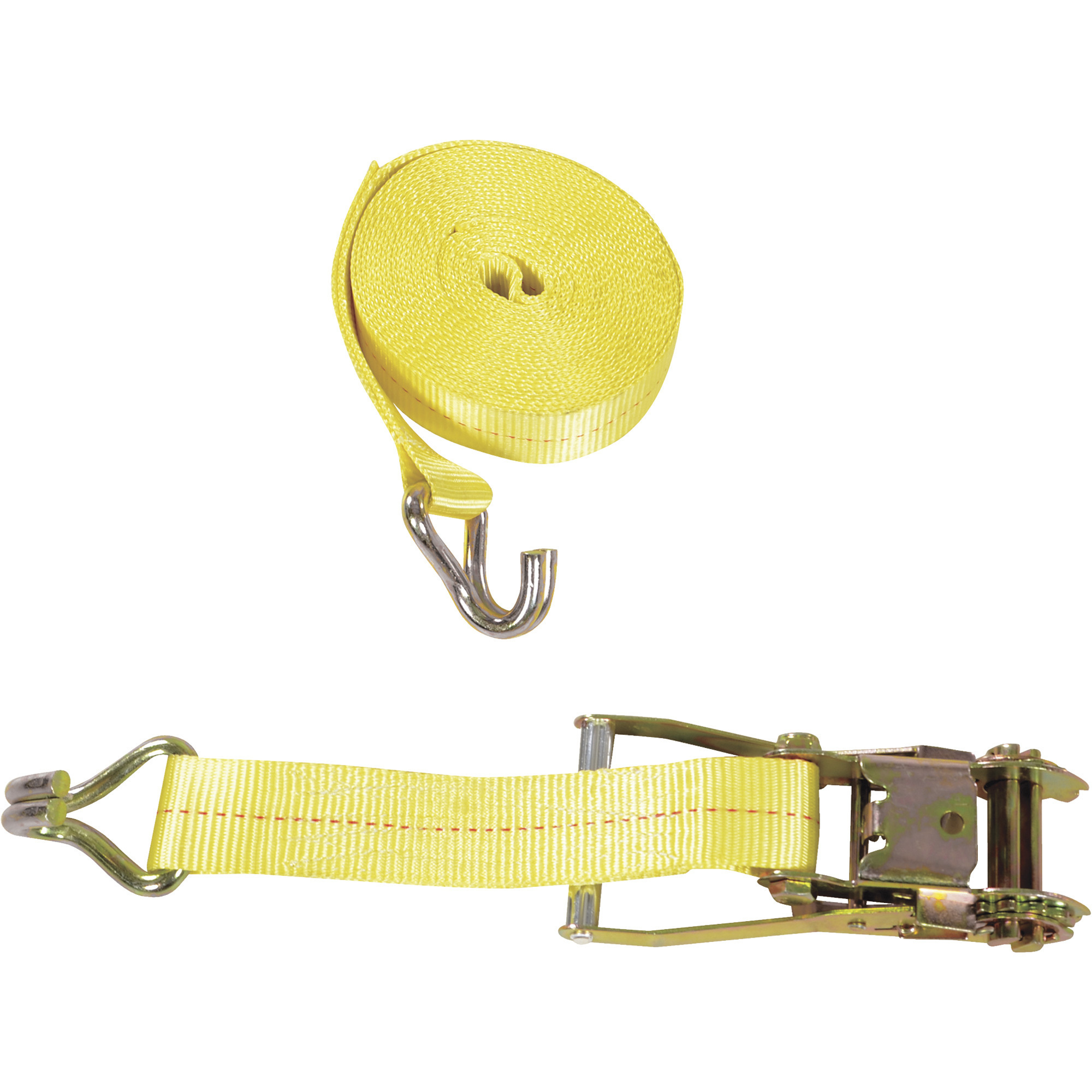
Vestil Cargo Strapping - 27ft. Length, 3325-Lb. Working Load, Ratchet Tightening, Model# STRAP-27-RH
Item # 856678
Item # 8566741
From
Save up to $2.10
Ratchet Tie-Down Straps
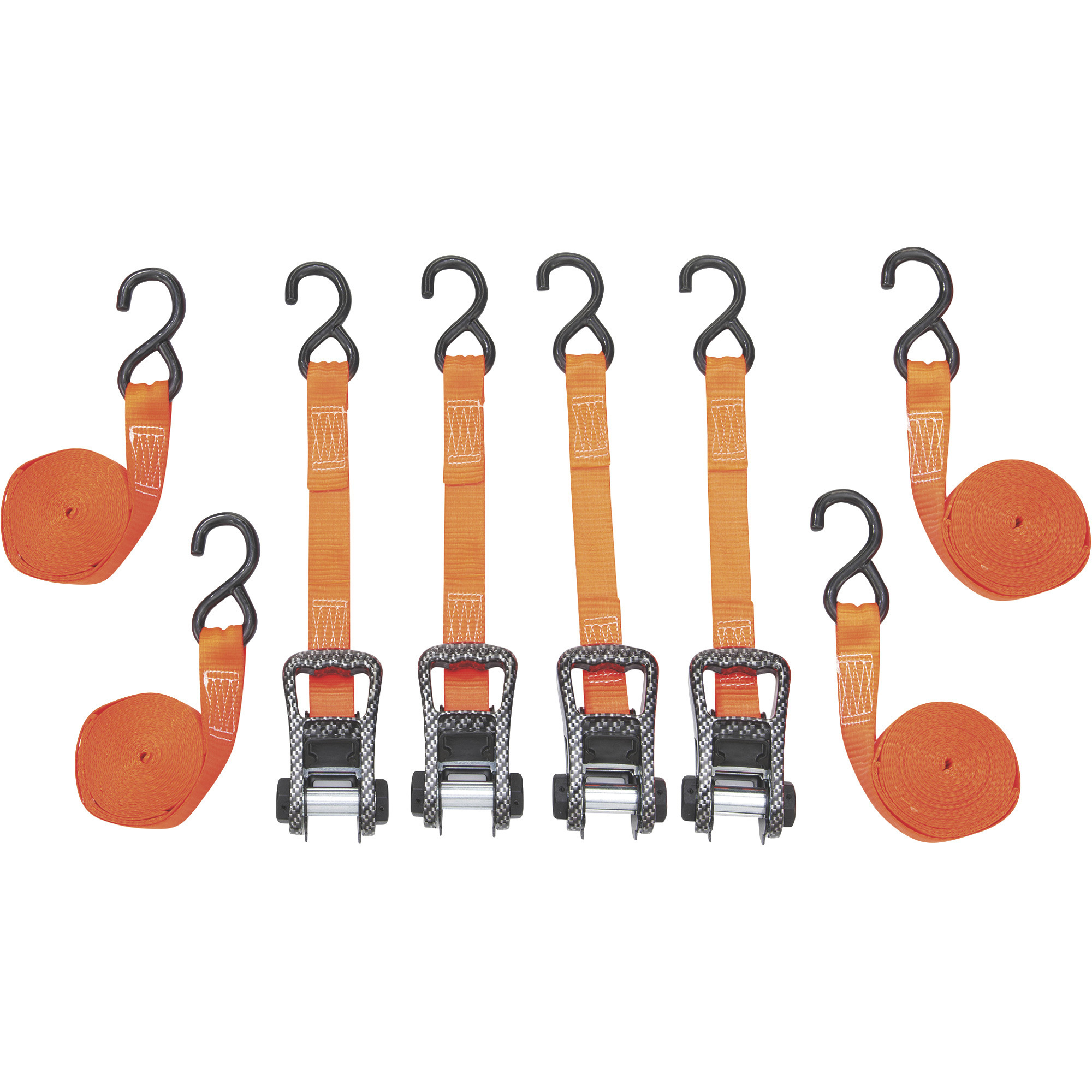
Ratchet straps and winch-style tie-downs secure loads during transport on a truck bed, trailer, equipment hauler or roof rack. The straps consist of sturdy webbing material and a ratcheting mechanism. The ratchet makes for easy tightening around all sizes and shapes of cargo.
The wide straps prevent the shifting of load items. Bungee straps secure loads with flexibility. Versatile straps are designed to stretch and adapt to hold bundled items. As with any load-securing equipment, tap the taut strap while confidently proclaiming, “That’s not going anywhere.”
Ratchet Strap + Tie-Down Frequently Asked Questions:
How do I find the right length and capacity for tie-down straps?
The length of your tie-down straps should be at least 1-1/2 times as long as your cargo to ensure enough strap to secure the load.
For load capacity, your tie-down strap should be rated for a breaking strength that’s three times the working strength. For example, if you have a 5,000-lb. load, your straps should be rated for a breaking strength of 15,000 lbs. How can you tell the working load limit of a tie-down strap? Look on a tie-down strap for the WLL tag typically sewn in. It will read WLL and state both lbs. and kgs. and include a statement that reads, “In compliance with Guidelines by the (CVSA) Commercial Vehicle Safety Alliance.”
How do different tie-down strap mechanisms work?
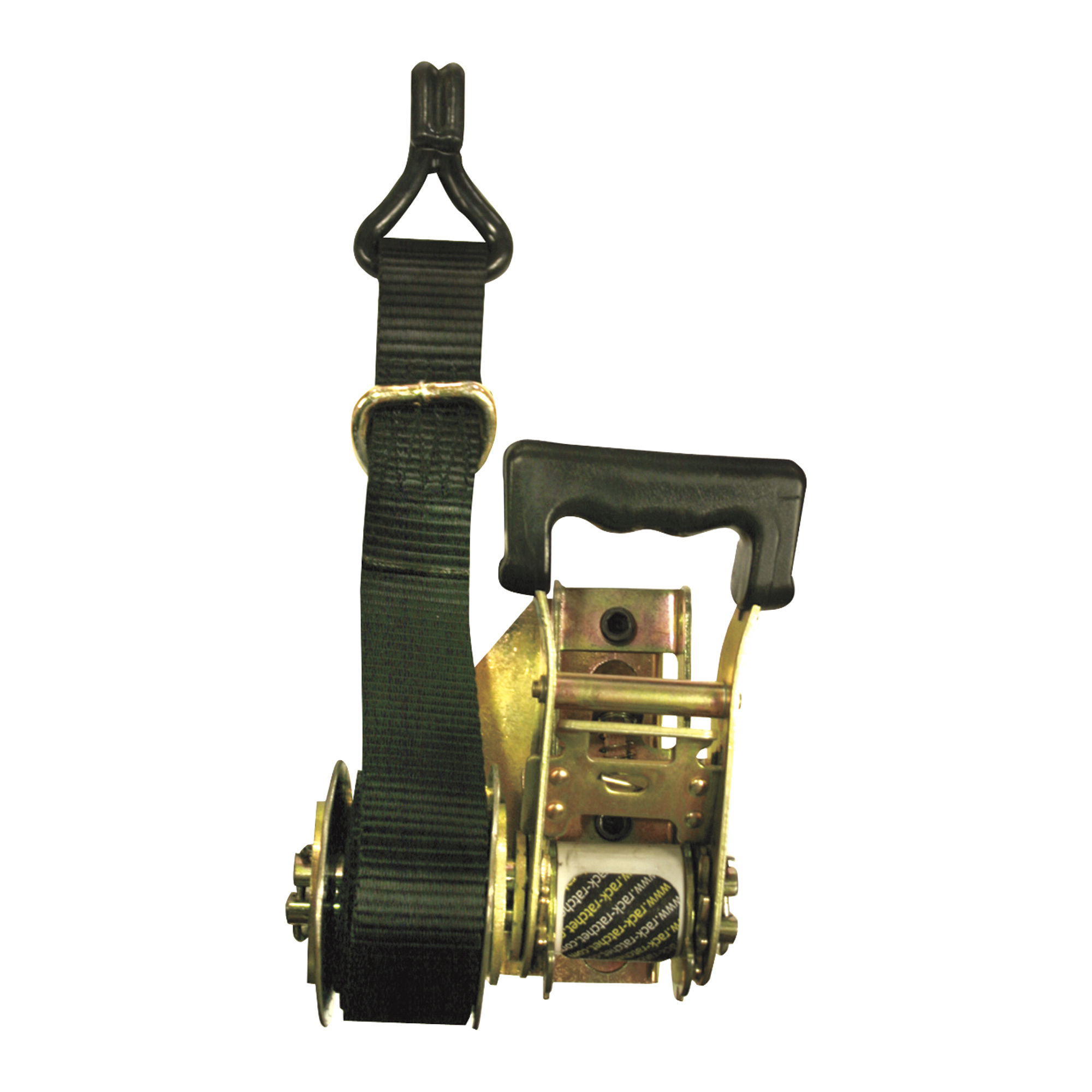
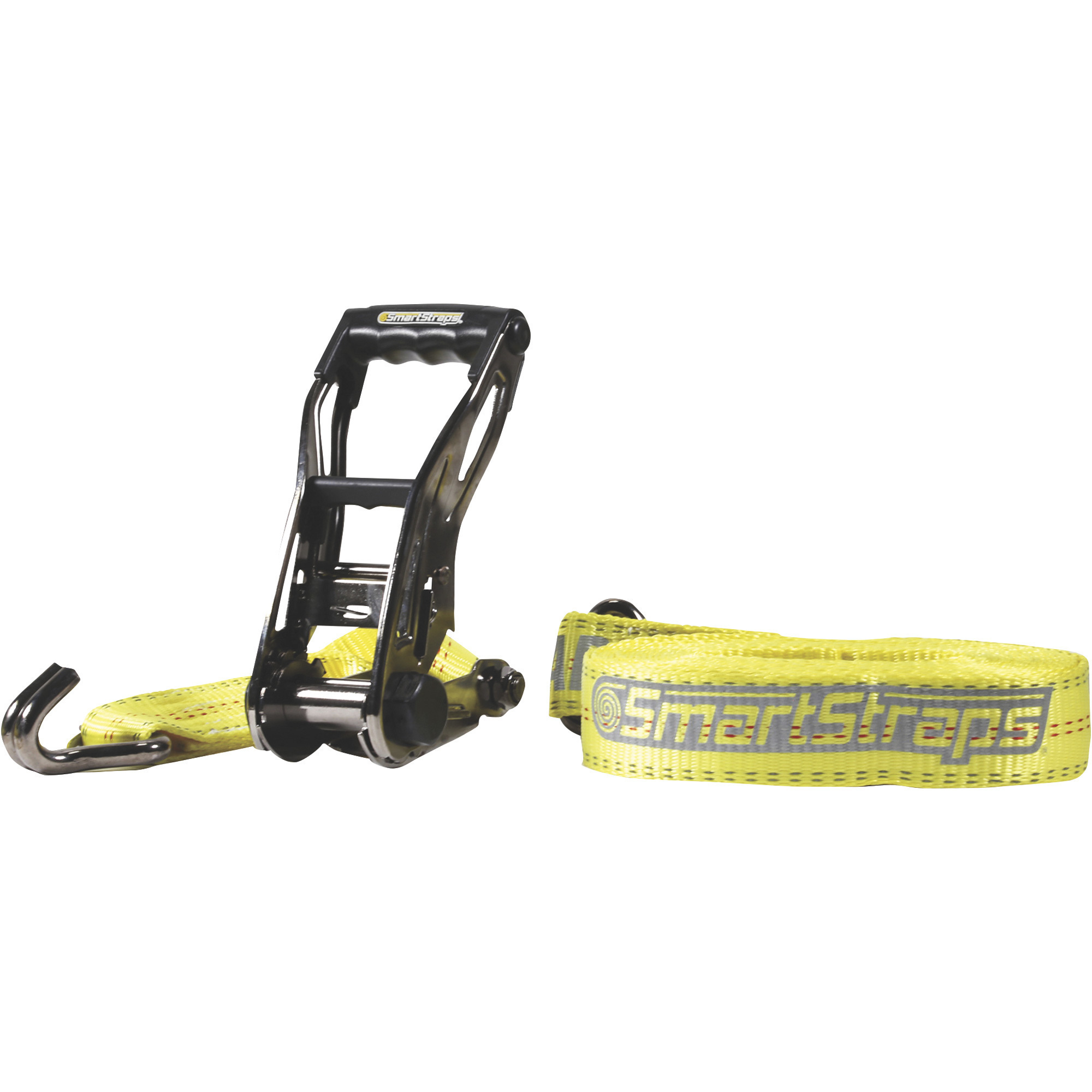
Ratchets are opened via the release catch, and the strap is then threaded through the open slot. The ratchet is then tightened, and the ratchet handle is closed and locked.
Cam buckles function the same as ratchets, except that instead of a ratchet to help tighten the strap, the tightening is done manually by the operator.
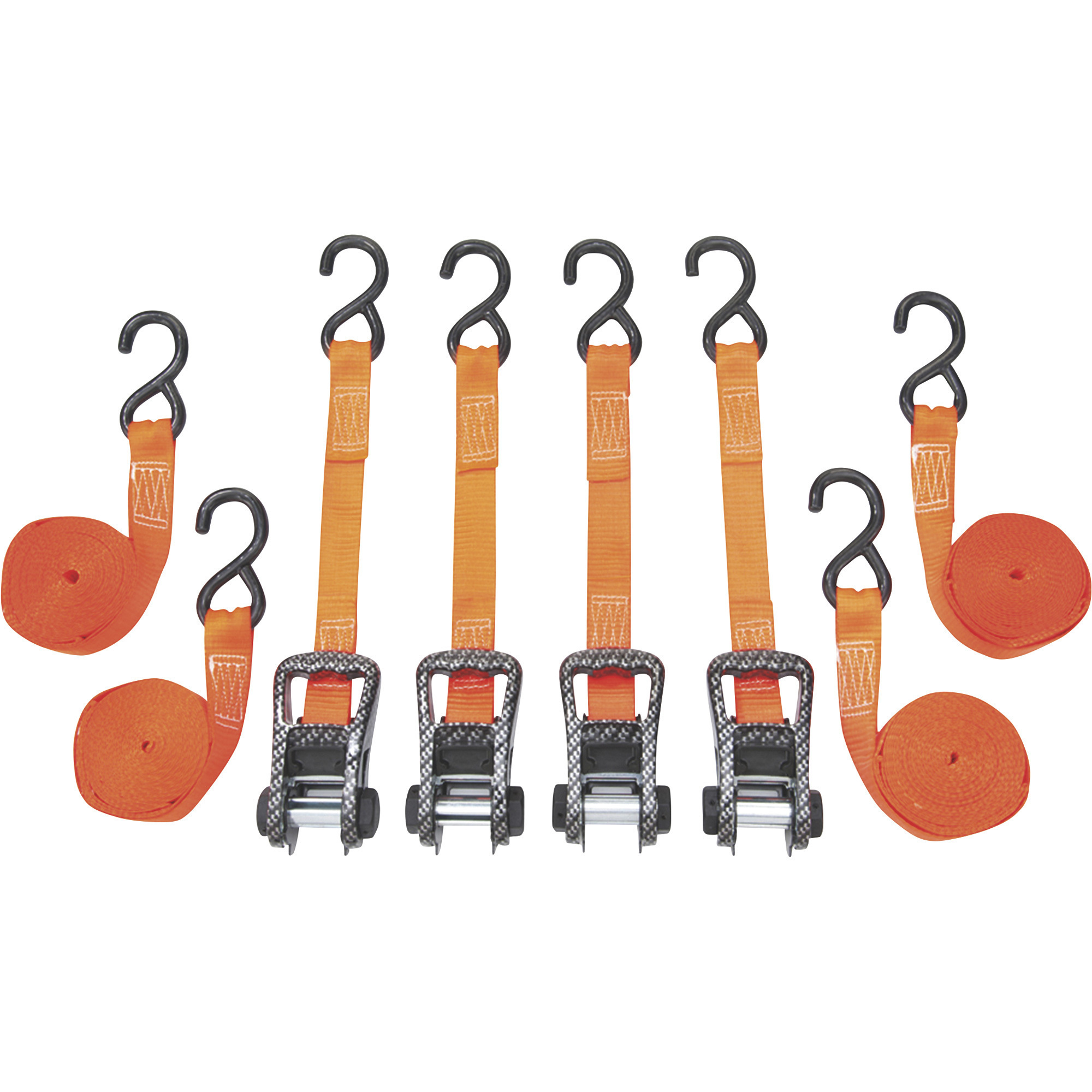
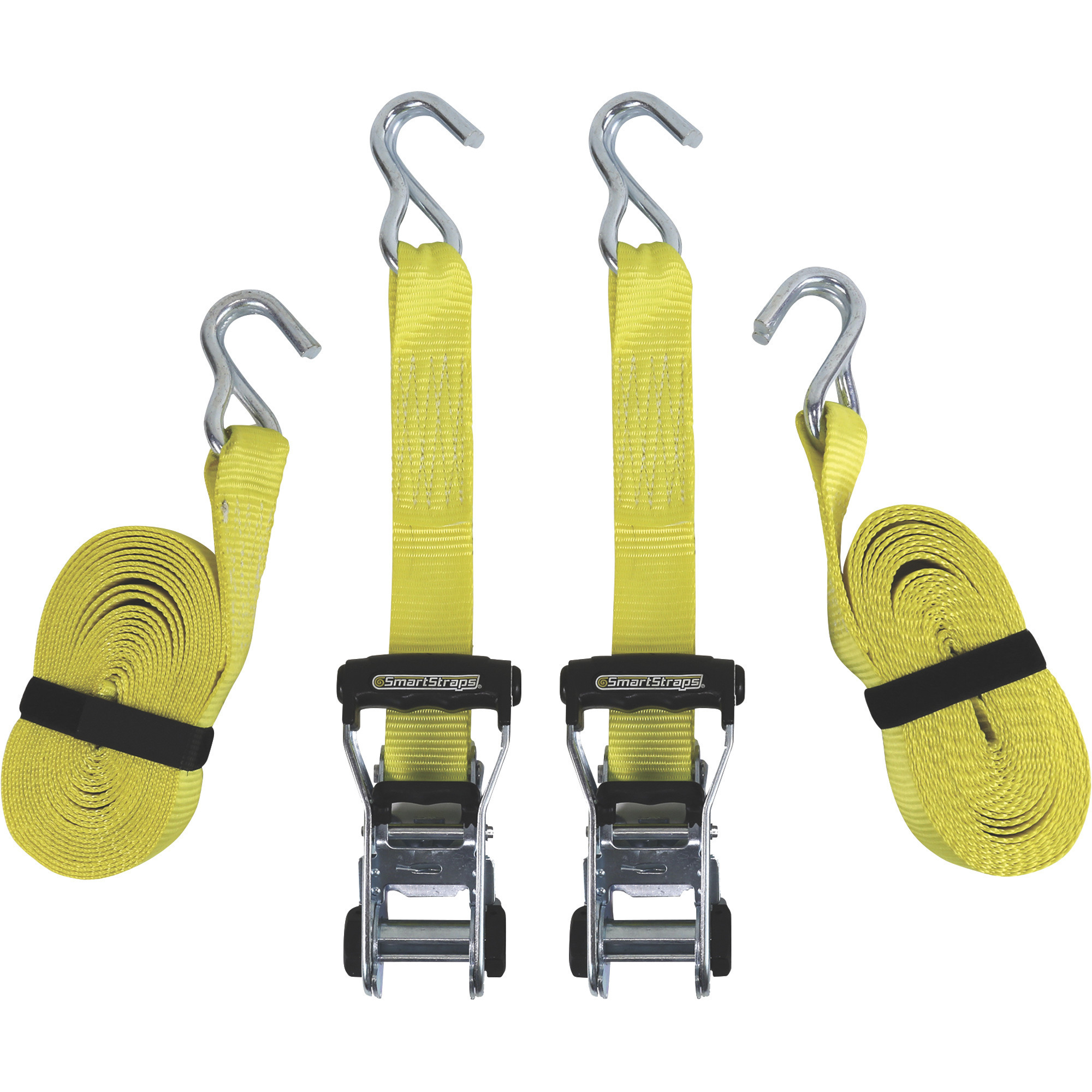
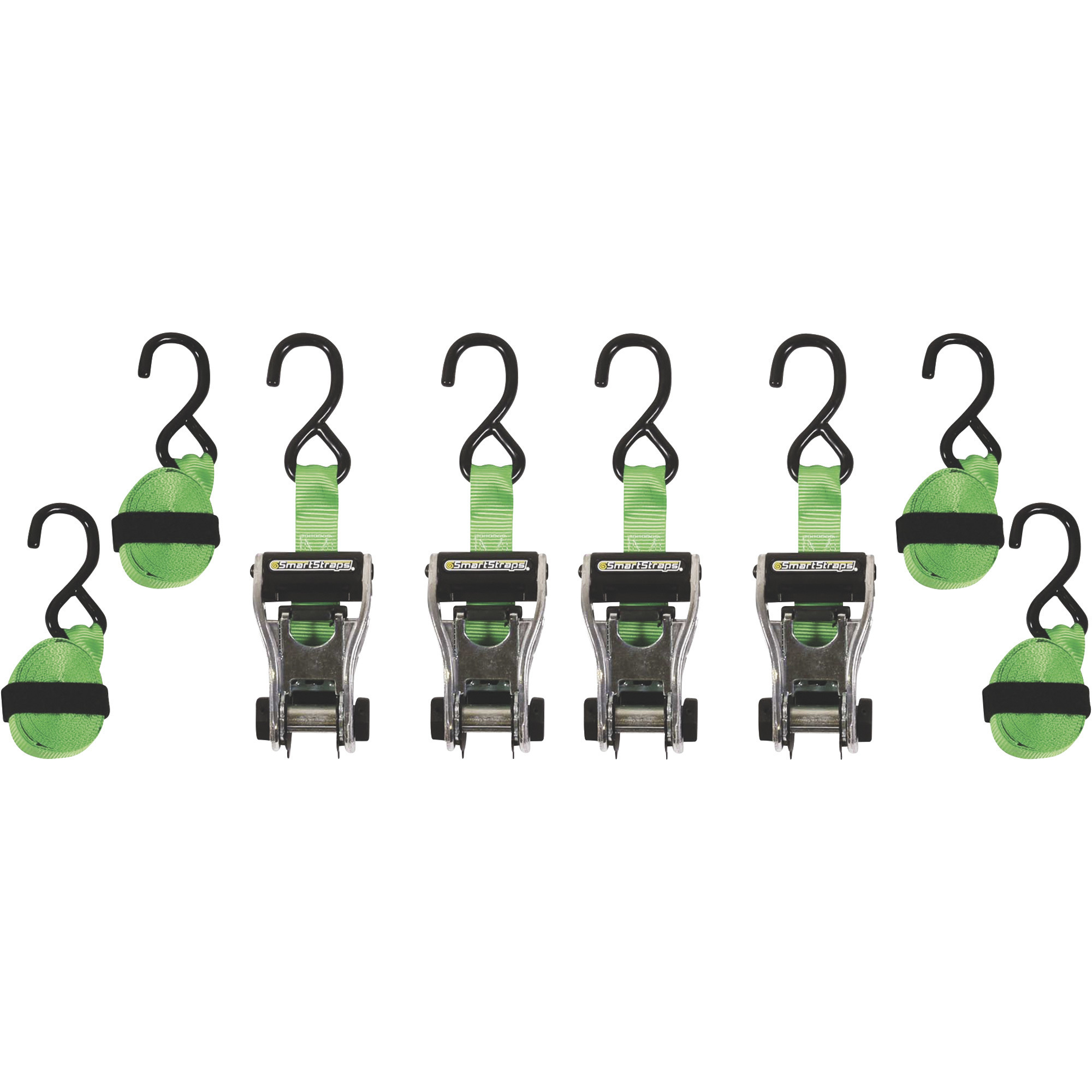
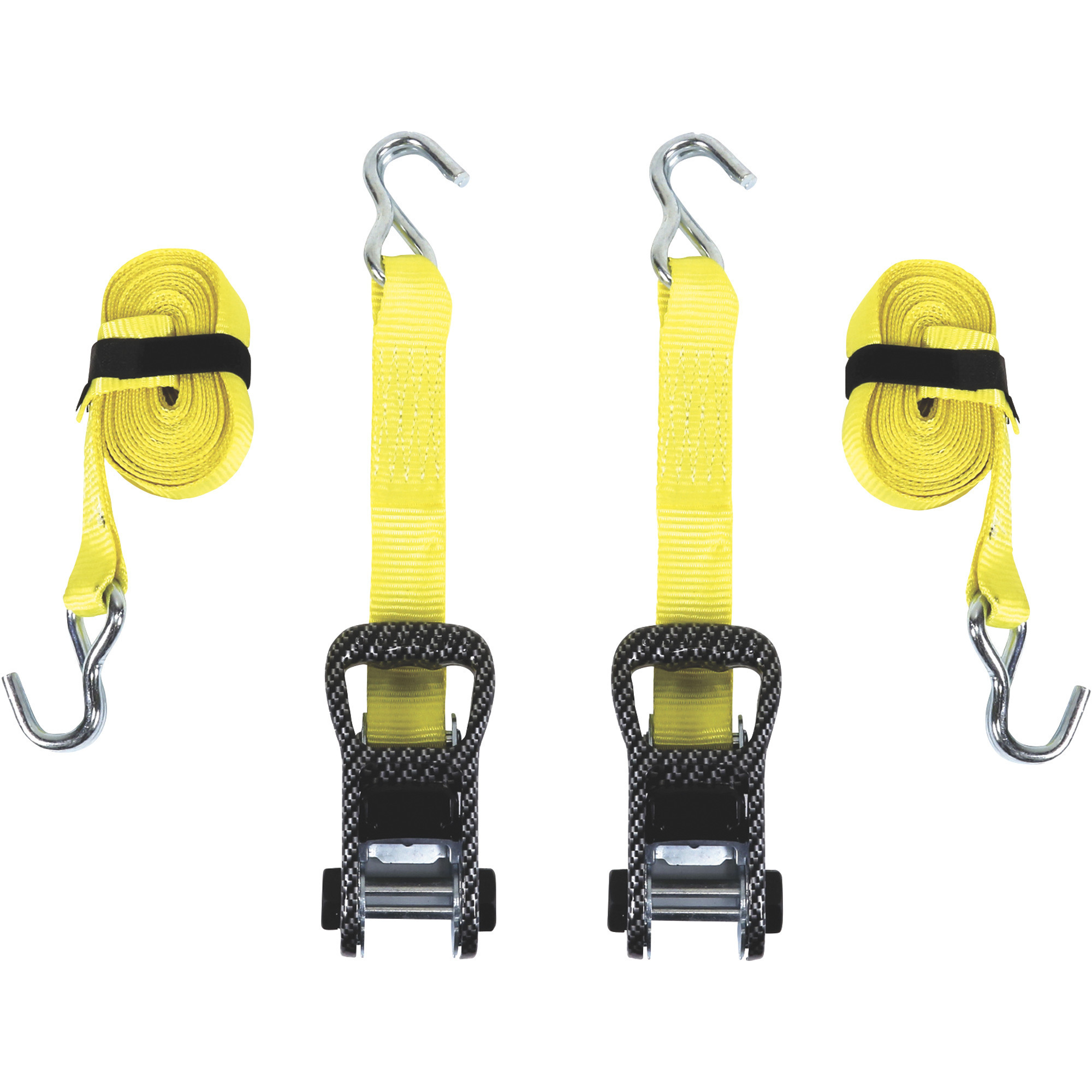
S-hooks are the most standard type of hook end and fit just about any hole to remain secure when a simple strap would not.
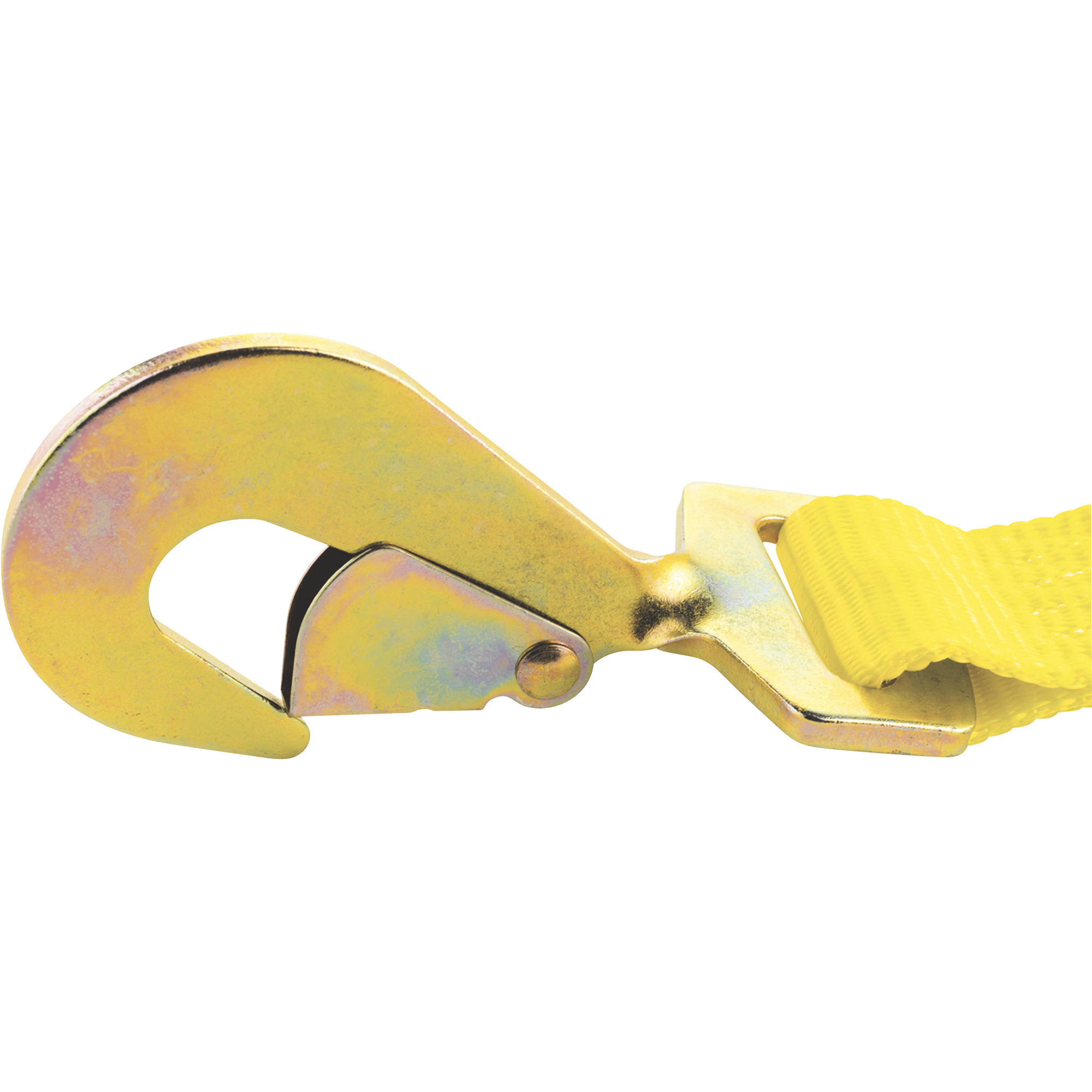
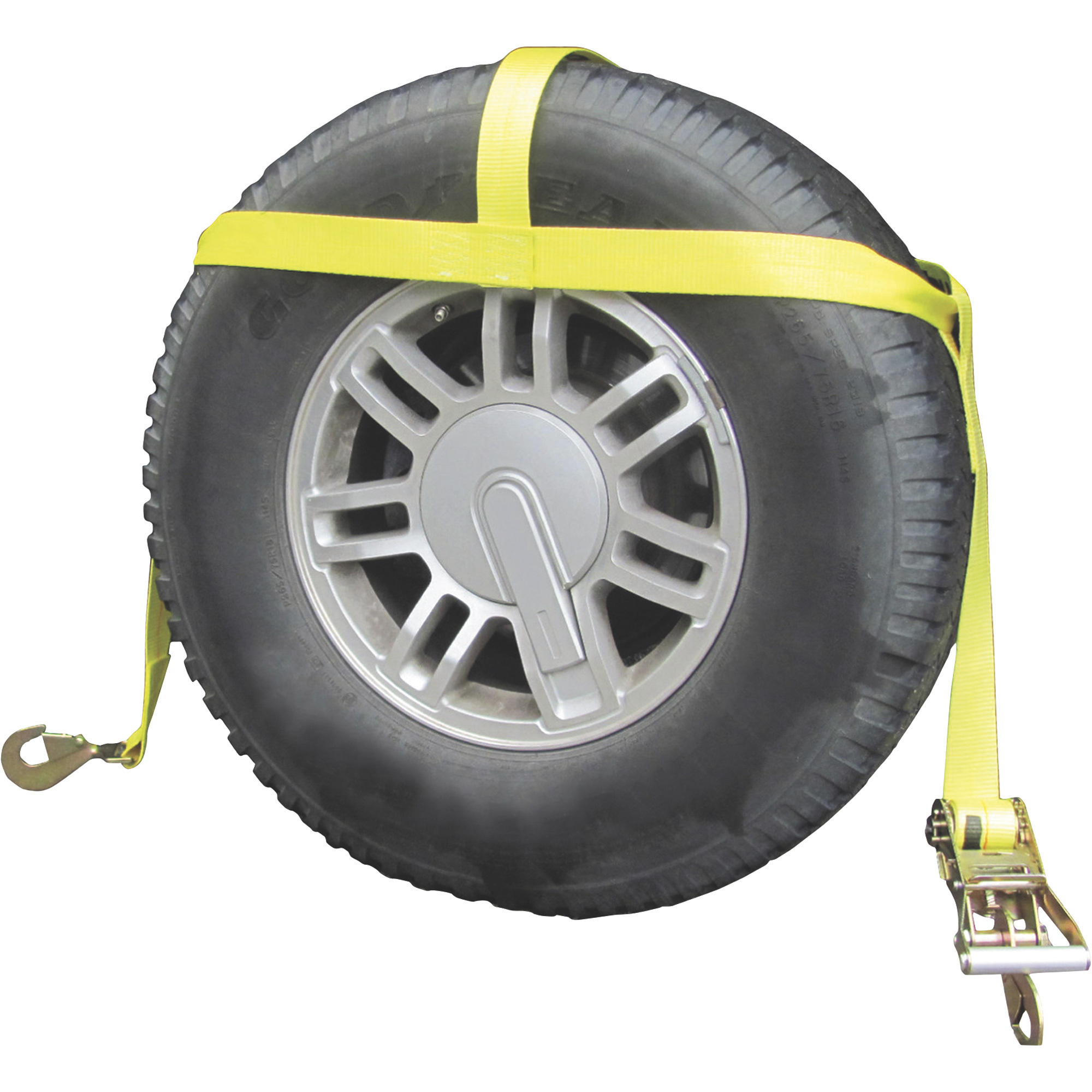
Snap hooks are similar to S-hooks, except that they feature a latch that snaps closed around the tie-down point for a more secure grip than an S-hook.
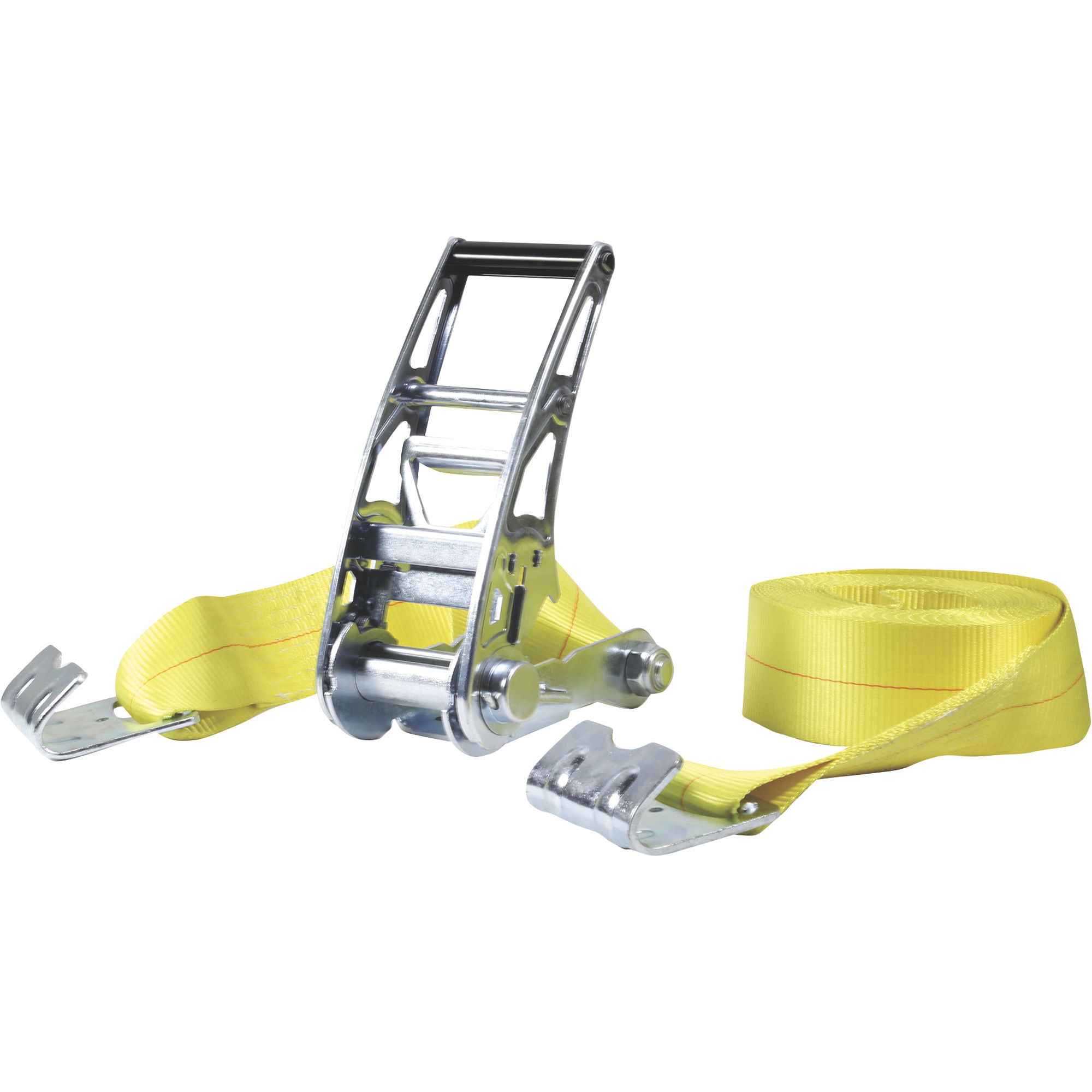
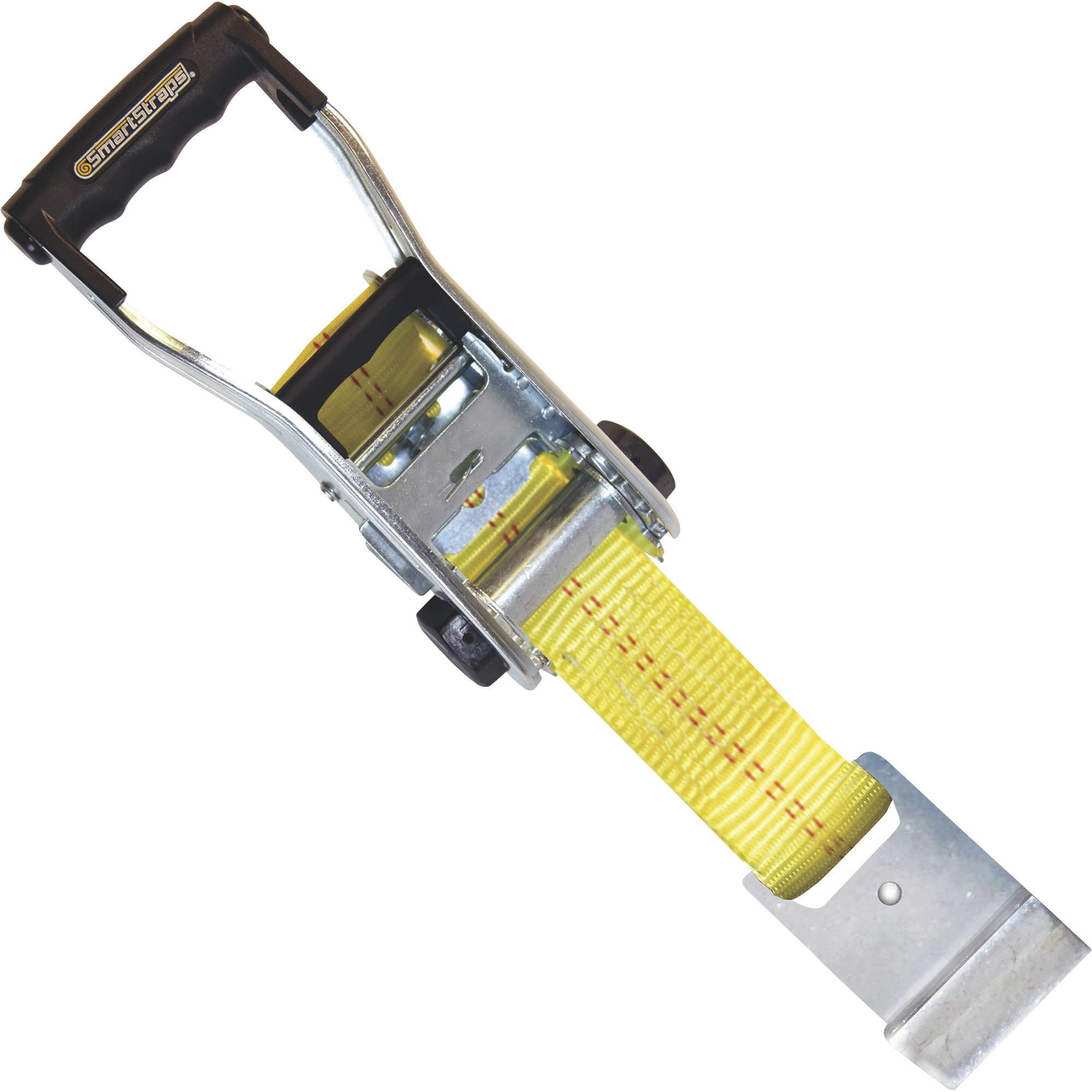
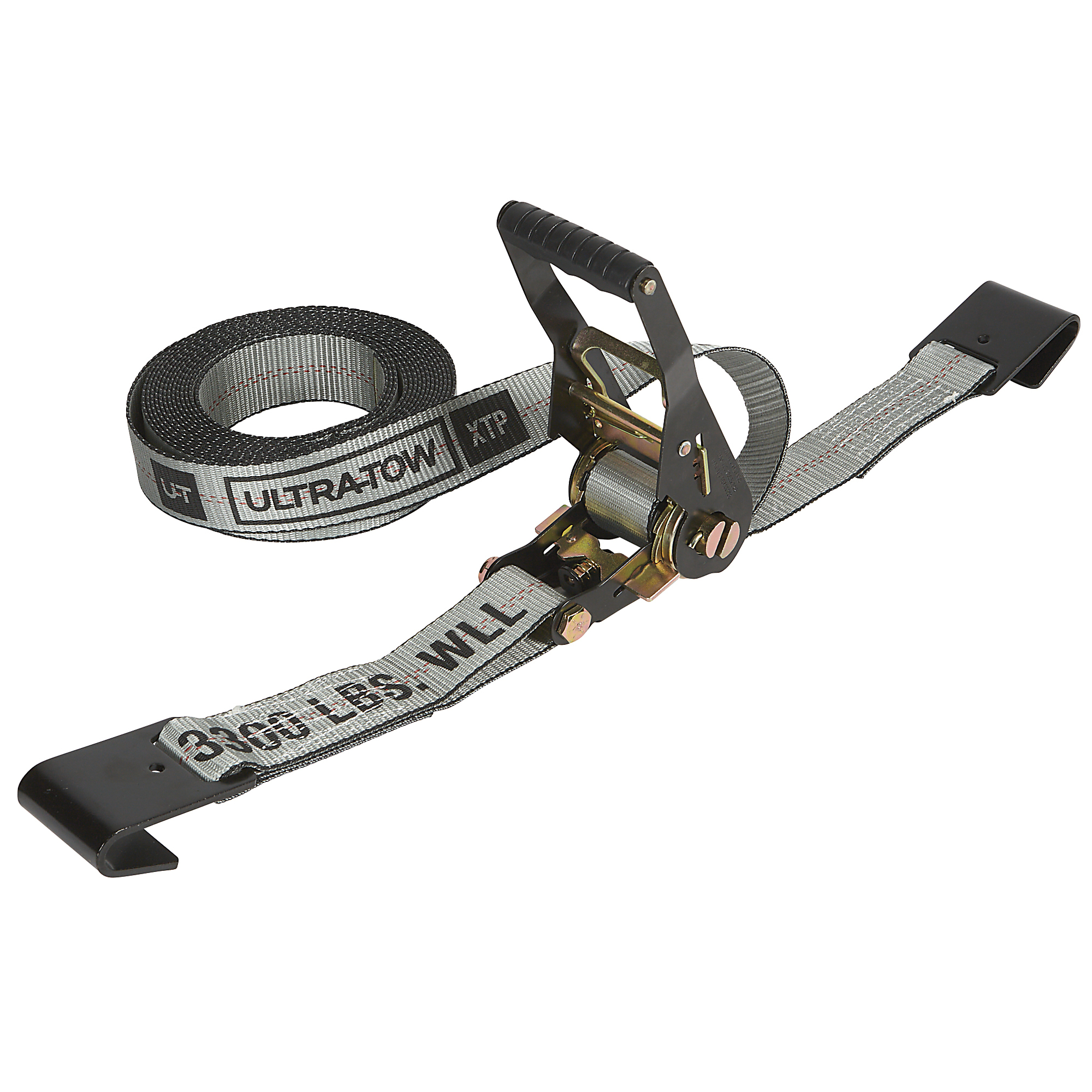
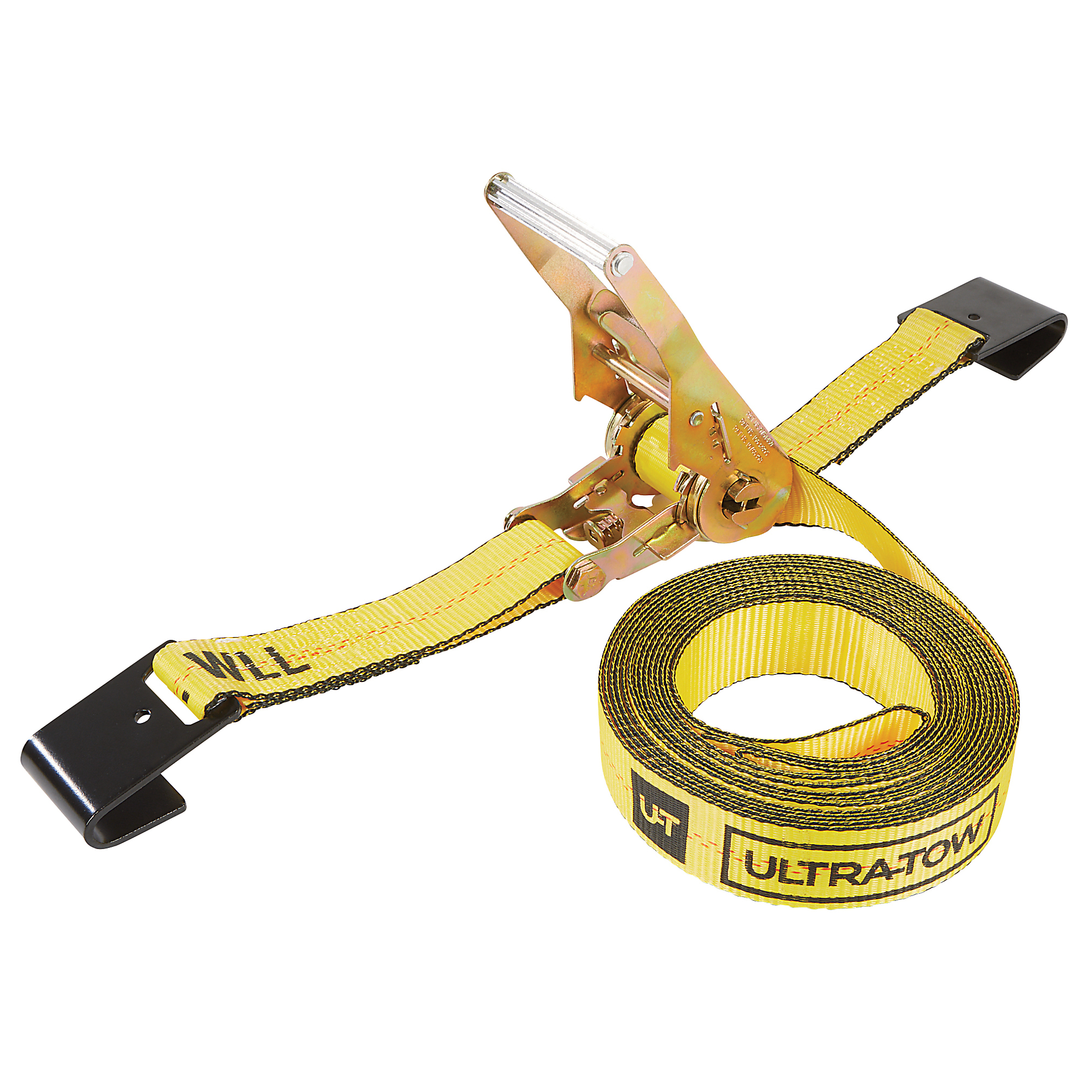
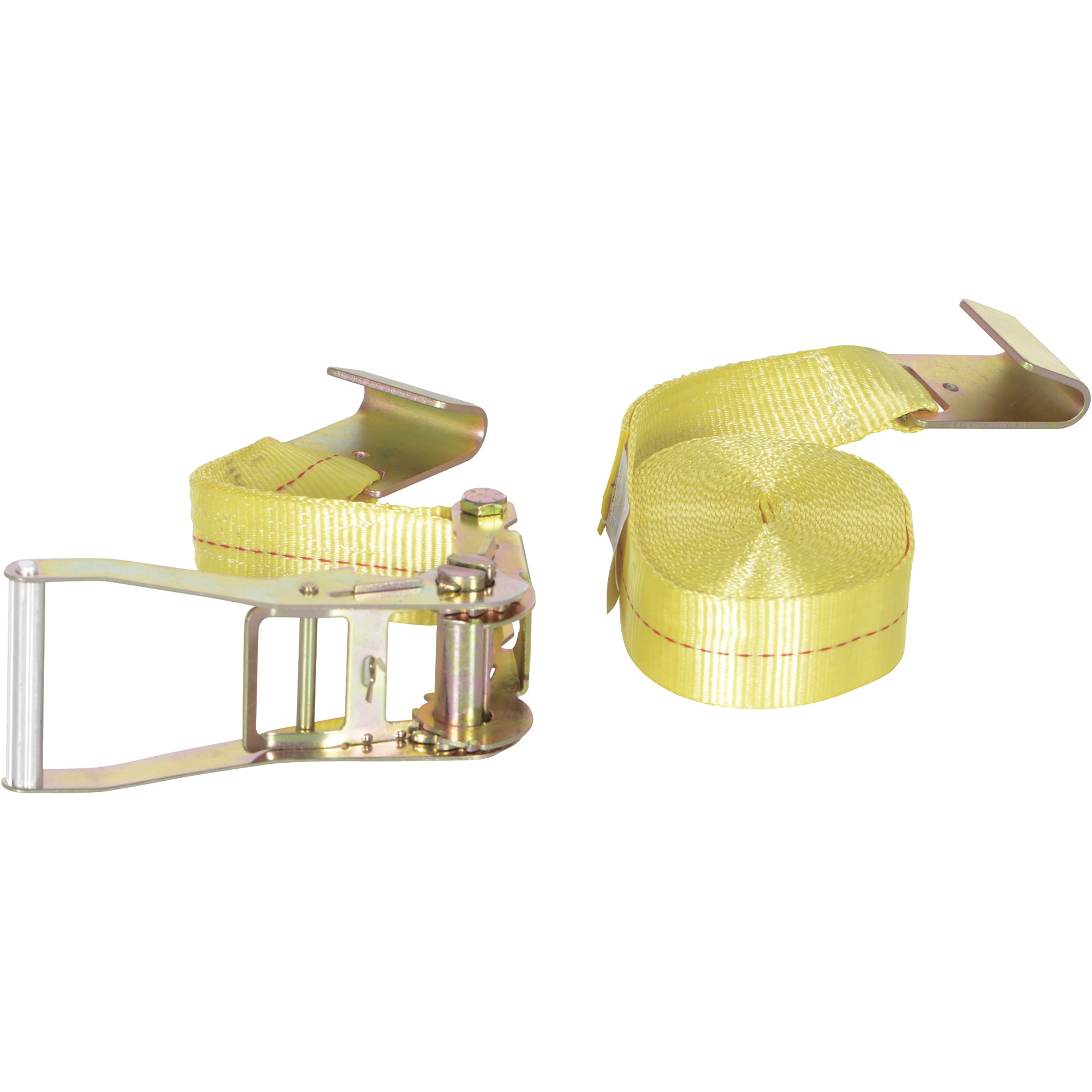
Flat hooks are low-profile units that can go over the rub rail of a trailer and use other tie-down straps as anchors.
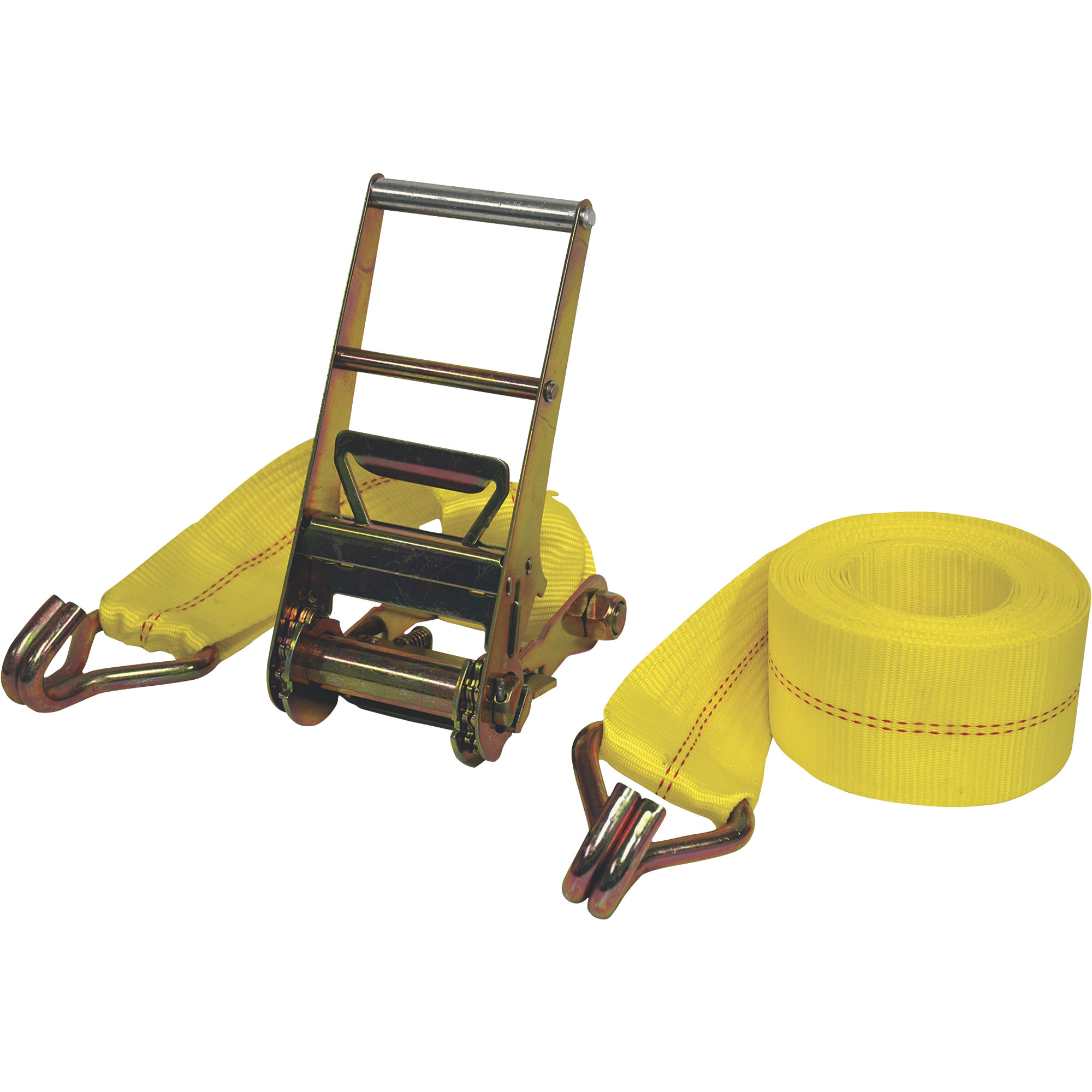
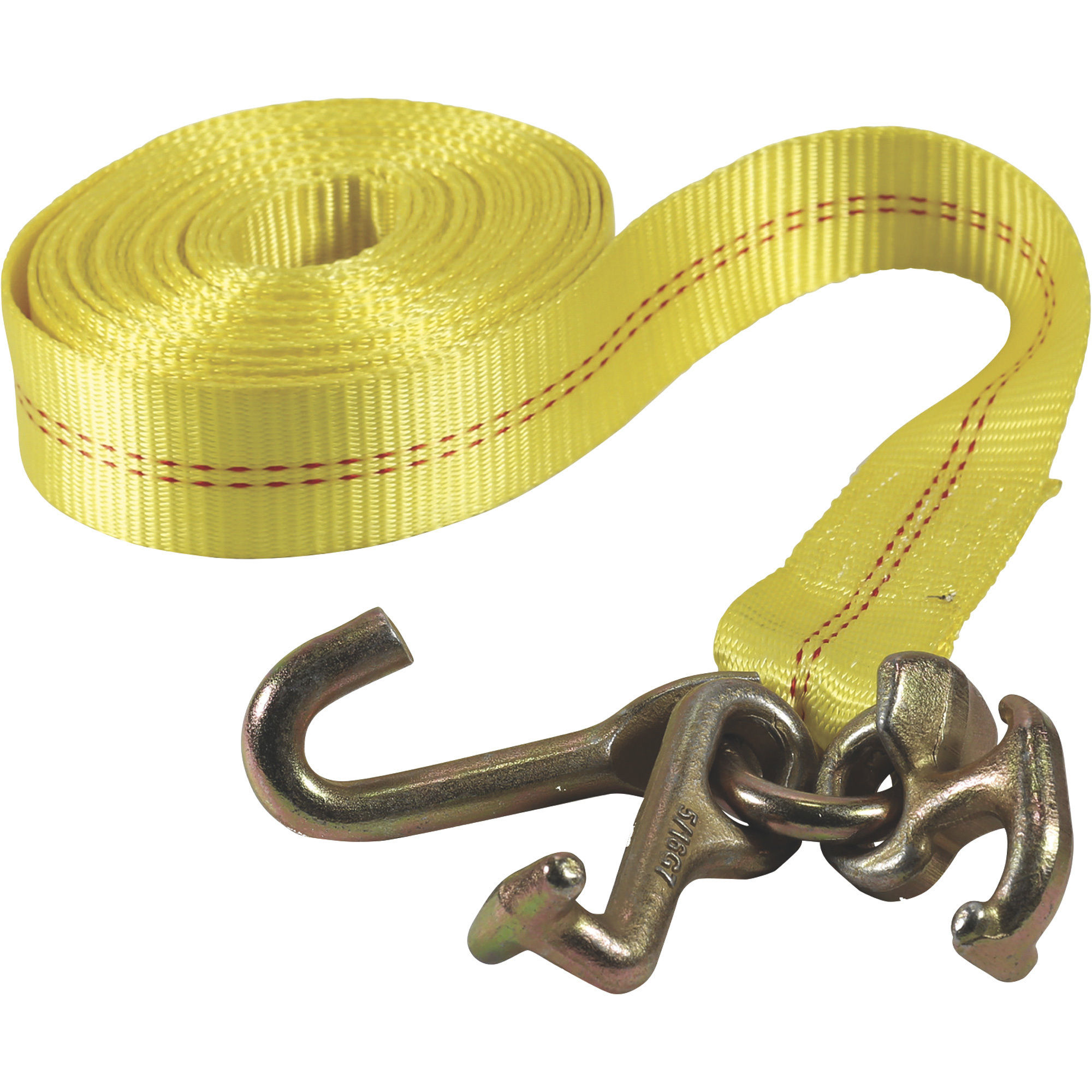
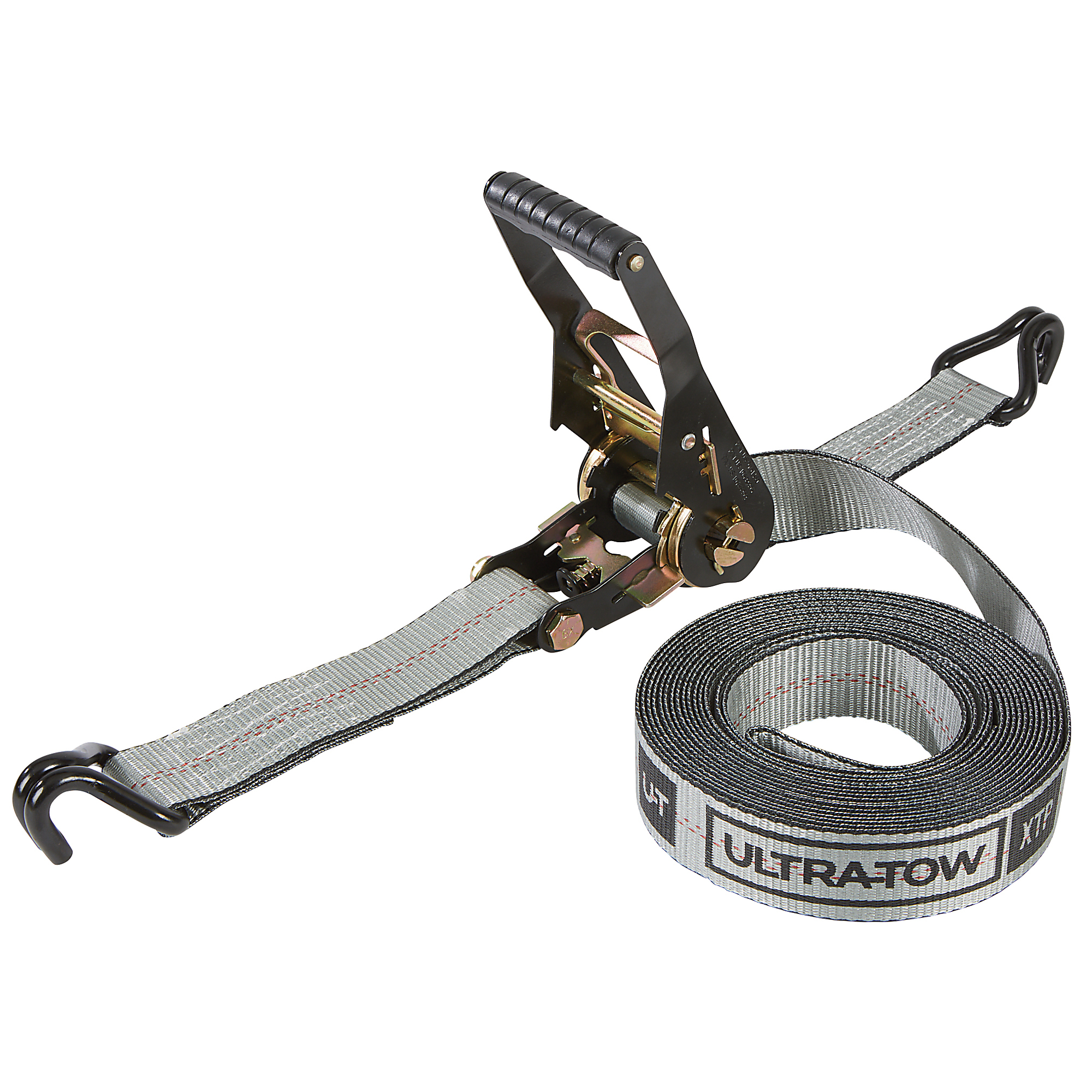
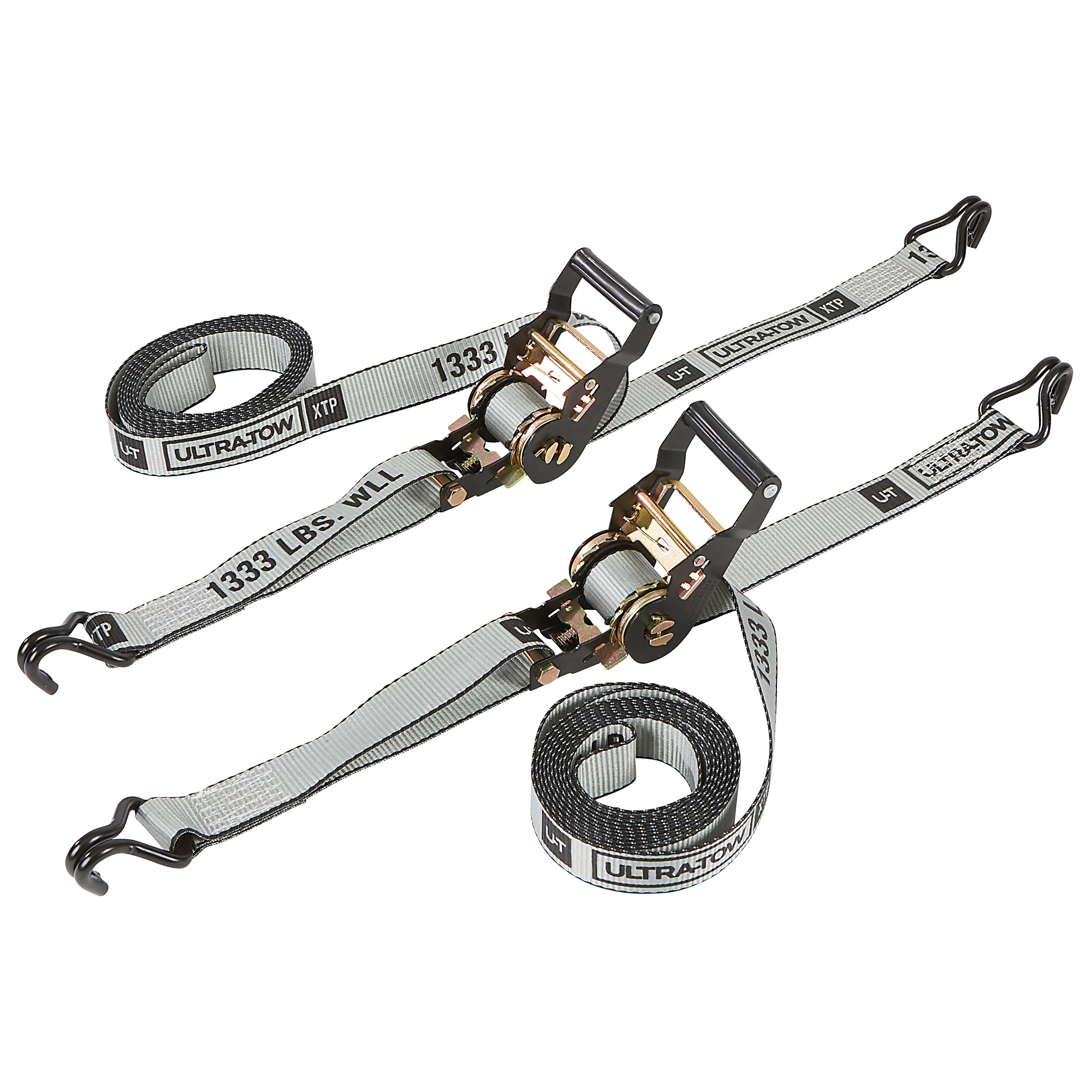
J-hooks also called wire hooks, are usually attached to one end of a ratchet strap to grip an anchor point tightly.
Clevis grab hooks are u-shaped fasteners attached to a stud that’s threaded with a tie-down. Once a tie-down is threaded on a stud, the rod is slipped through holes on each side of the fastener and then secured with a cotter pin on the free end of the stud. These heavy-duty versions of these hooks are often used with chains for securing heavy equipment loads.
Can I repair a damaged tie-down strap, or should I replace it?
If the end of an old tie-down strap that’s damaged is the long end without ratcheting hardware, you can replace that end economically. If the ratcheting end of the strap is damaged, the strap will need to be replaced.
Are there tie-down straps for extreme conditions or heavy-duty use?
Heavy-duty ratchet straps are typically used for big hauling jobs such as ATVs, lawn equipment and other heavy equipment loads. According to the Department of Transportation (DOT), heavy equipment weighing more than 10,000 lbs. must be secured by a minimum of four tie-downs on each corner. For vehicles with an appendage, including excavators, an additional tie-down strap is required when the appendage is lowered. In addition, loads must be secured with straps equal to one half their weight. For example, a 30,000-lb. load must be secured with a minimum of four straps in each corner, with a minimum working load of 3,750 lbs. with this working load at four corners, a 30,000 load is secured up to half its weight: 15,000 lbs. (3,750 x 4=15,000).