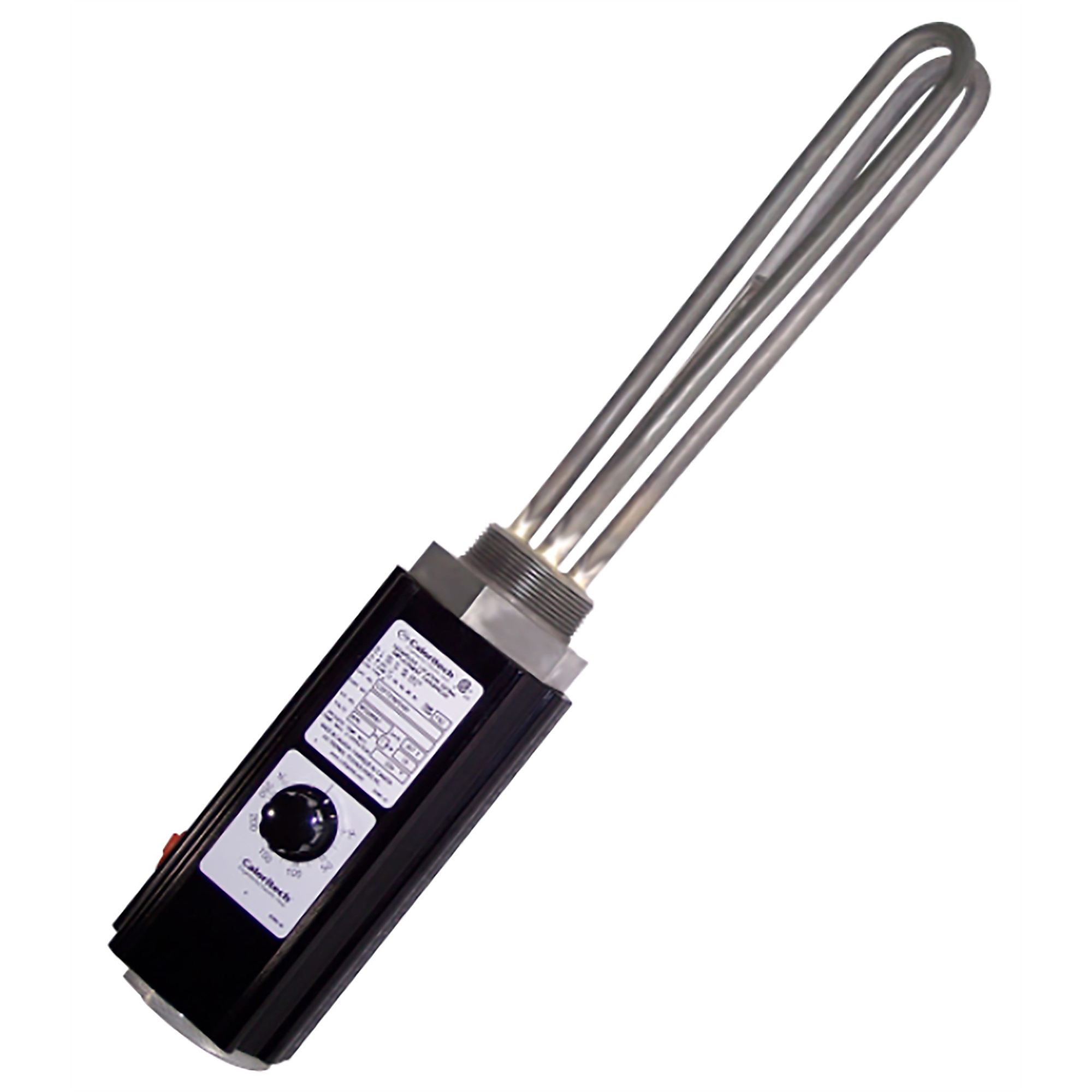
Caloritech, Screwplug Heater, 1in.NPT c/w T'stat, 1000W, 120V, Model# CXCT110P1X11
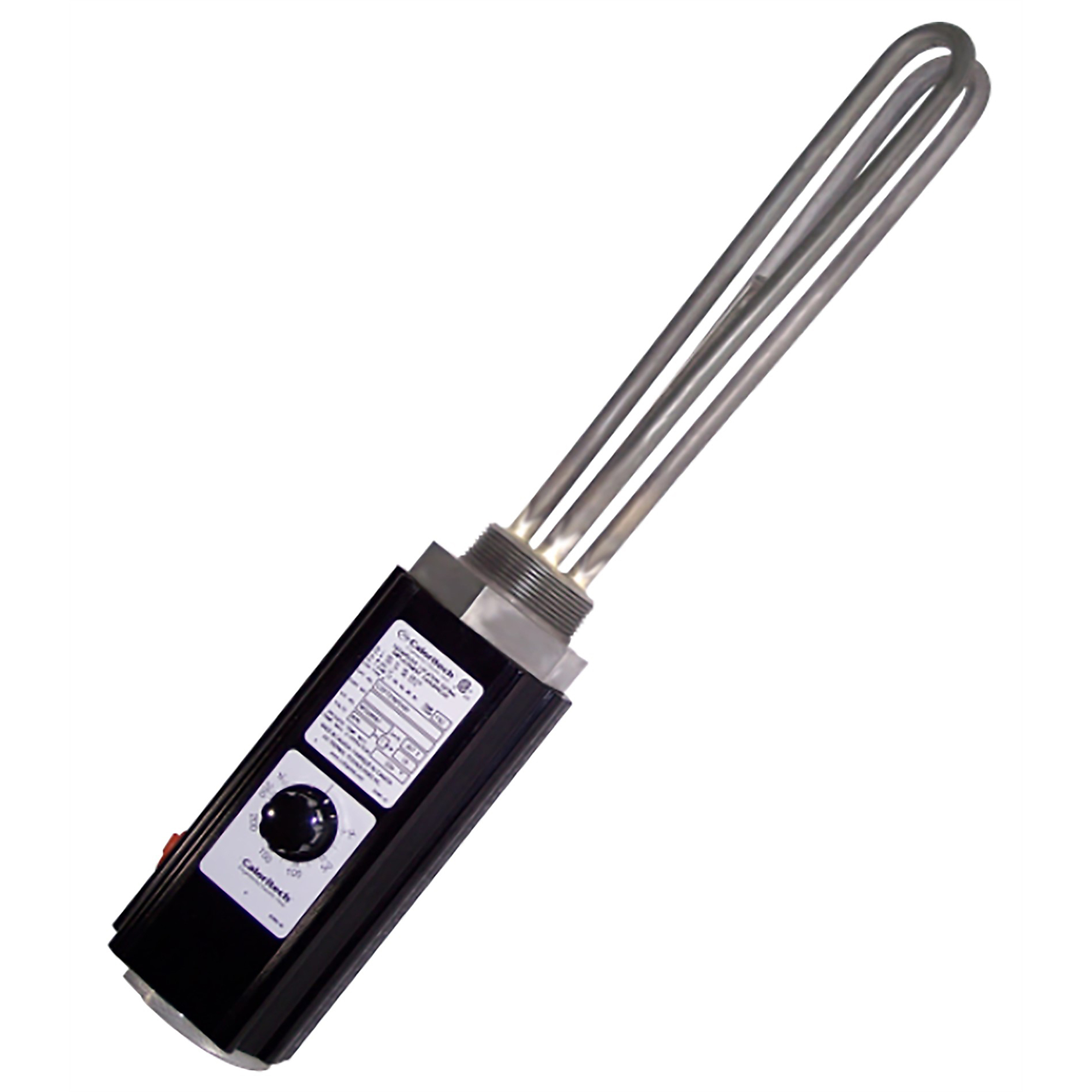
This is a carousel with one large zoomable image and a track of thumbnails on the left. Select any of the thumbnail buttons to change the zoomable image on the right. If a thumbnail is a video or 360 degree image thumbnail, or the last thumbnail in the list, the button will open the product media modal.
Click or Tap image to Zoom
- 1 kW, Immersion Length: (7.1 Inches / 180 mm)
- Application: Screwplug heaters are primarily used to heat liquids in tanks or vessels. To do so safely and reliably requires that the heating elements remain fully immersed in the liquid. Liquids such as water, oils, trichloroethylene, etc. can be heated through natural convection currents created by the immersed elements. Although electricity costs are generally higher than gas or oil, it can be demonstrated that a Caloritech™ immersion heater is often your best choice. The electric heater provides close to 100% efficiency, is safer and easier to control, and is usually cheaper to install.
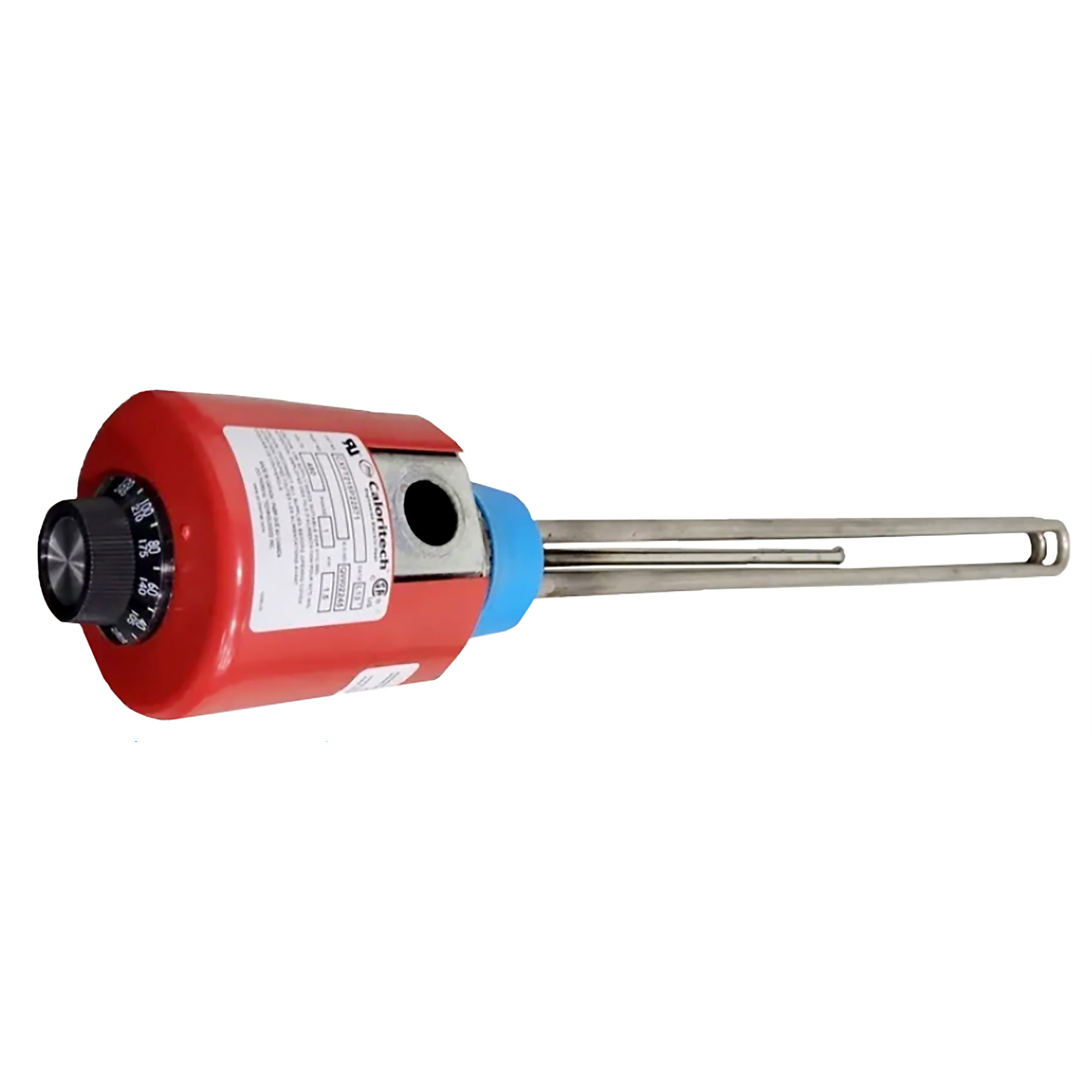
- Terminal Block Simplifies Wiring: All thermostat-equipped screwplug heaters with moisture or explosion-proof housings feature a convenient terminal block mounted to a slide-out trolley. This unique Caloritech™ feature simplifies installation and reduces maintenance.
- Installation: Listed heaters have standard 1" to 2 1/2" NPT tapered plugs. Any other size or type of plug is available on special order. The heater is installed through a threaded half coupling located in the vessel wall well below the minimum liquid level but spaced sufficiently above the bottom to allow for sludge build-up which should never be allowed to cover any part of the elements. Horizontal installation is preferred even though heater replacement will require draining of the tank. Vertical installation is sometimes possible but it is best that you contact the factory for advice prior to purchase.
- Operation: For an immersion heater to transfer heat it must establish a balance between convection currents and the temperature difference between itself and the liquid. Viscous liquids which retard convection currents are the most difficult to heat. Care must be exercised to ensure that the required rate of heat transfer from the heating elements is achieved without overheating the element and the liquid resulting in coking. This is generally achieved through the selection of heater watt density. Heaters immersed in liquids, such as water with high calcium and magnesium content, phosphates or eluate solutions, have a tendency to precipitate their solids over the elements on heating. These heaters require scheduled maintenance to remove scale build-up which may thermally insulate the elements and reduce their service life.
See full description
See All Electric Immersion Heaters
See All Caloritech Electric Immersion Heaters
Currently Viewing This Product
 $708.00
- $704.99
- $314.99
Specifications
Screw Plug
Screw Plug
Screw Plug
16.6 in
13 in
16.1 in
3,412 Btu/hour
6,824 Btu/hour
5,118 Btu/hour
120
120
120
1,000
750
1,500
1 in
1 in
1 in
9.0000 lb
4.0000 lb
3.0000 lb
4.25 x 5.0 x 16.6 in
4.0 x 4.0 x 13.0 in
4.0 x 4.0 x 16.1 in
See All Electric Immersion Heaters
See All Caloritech Electric Immersion Heaters
Recently Viewed Items
This is a carousel with auto-rotating slides. Activate any of the buttons to disable rotation. Use Next and Previous buttons to navigate, or jump to a slide with the slide dots.
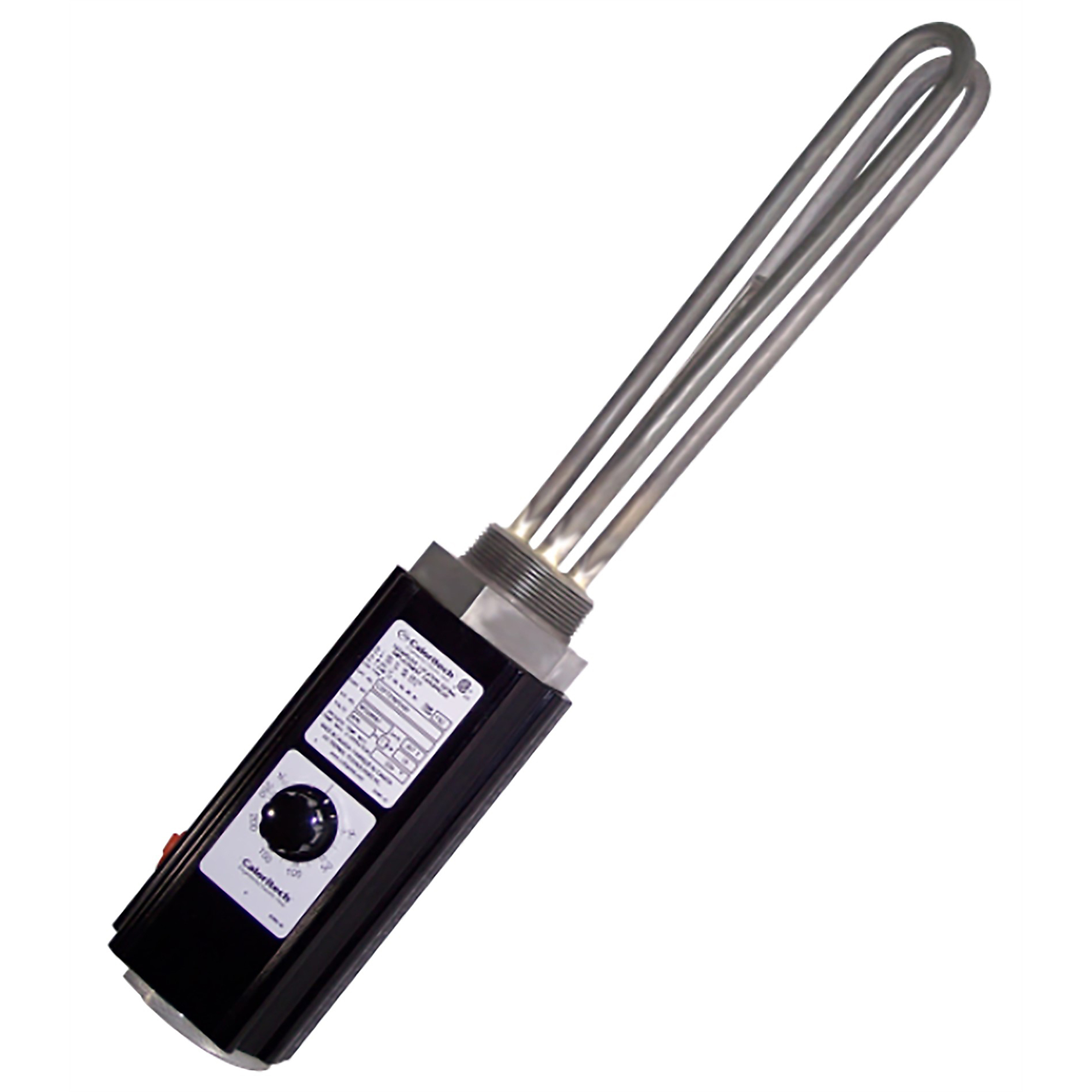
Caloritech, Screwplug Heater, 1in.NPT c/w T'stat, 1000W, 120V, Model# CXCT110P1X11
Item # 5091159