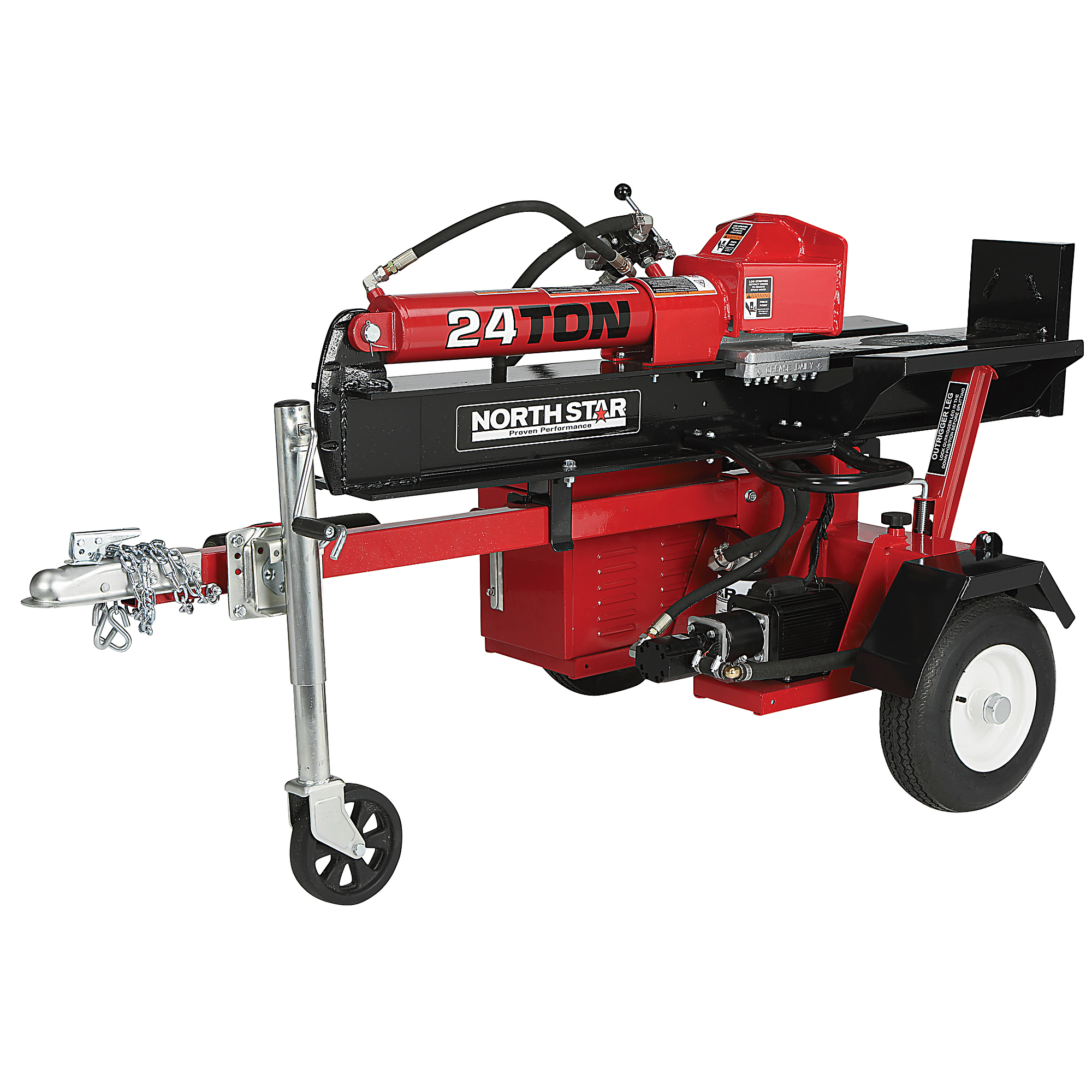
With so many great choices available in today’s marketplace, choosing the perfect log splitter can be a very tall task. But by following some simple guidelines, asking yourself a couple of standard questions and applying a few basic criteria in a step-by-step manner, you can chop that task down to a manageable size.
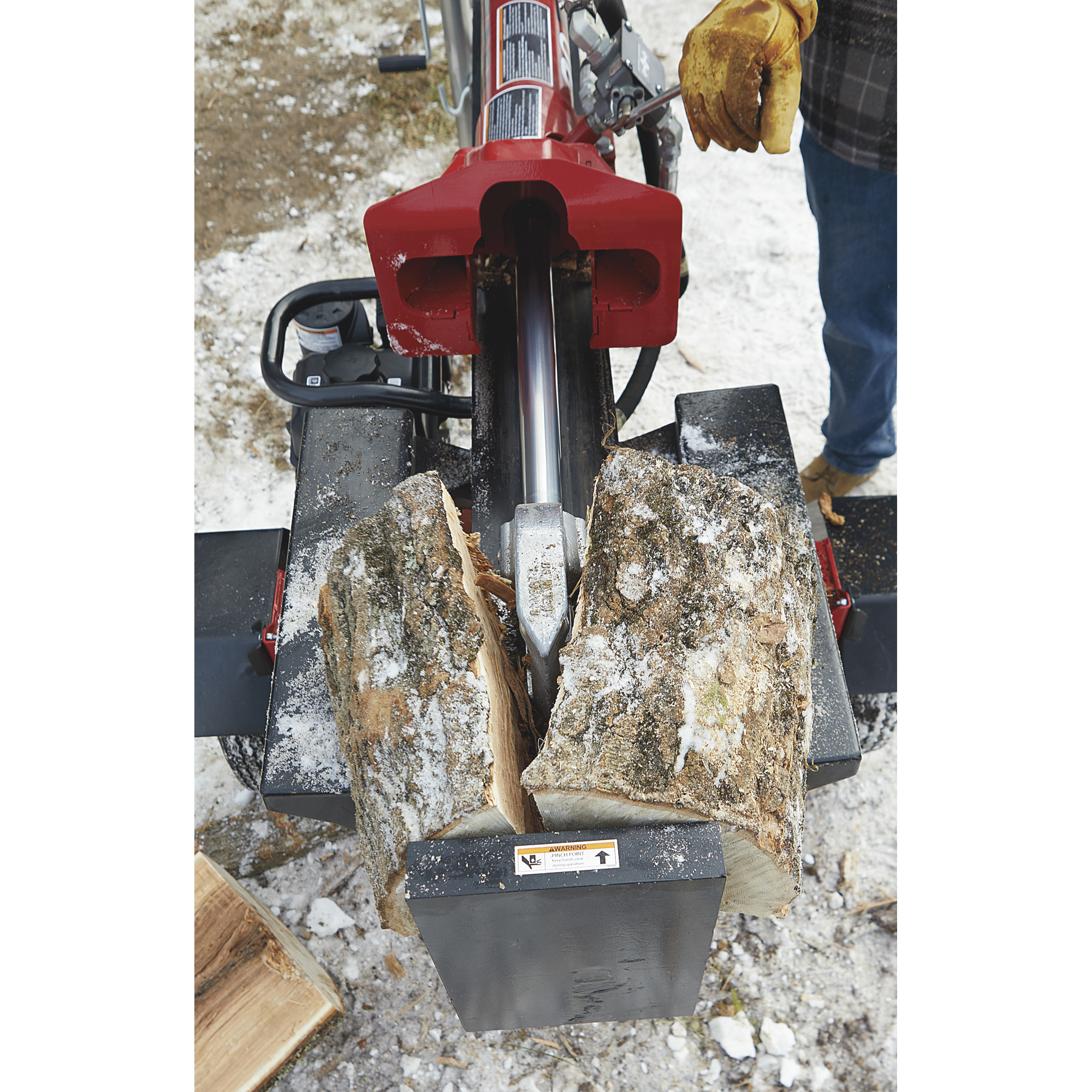
What's Your Splitter Style?
Step one is determining the STYLE of log splitter that’s right for you. The biggest decision you’ll make is the choice between a gas log splitter and an electric log splitter.
Electric Log Splitters
- Ideal for smaller jobs
- Low maintenance and easy to operate
- Perfect for indoor use and some outdoor use
If you’re looking for a safe, efficient, and clean way to split firewood, electric log splitters are an excellent choice. These log splitters offer easy pushbutton starts with no gas, oil, or fumes to worry about. Because of their lower operating noise level, they are great for use in garages, sheds or other enclosures that can shelter you from the cold or wet weather. But because they are powered by electricity, they can’t be used in the woods or other remote areas where no outlets are present to plug in the machine. Electric log splitters generally tend to be lighter in weight than their comparable gas-powered counterparts. Some larger models are towable, but most electric log splitter models are light enough to be moved by hand. Typically, they are designed for lighter duty applications, smaller logs and less daunting woodpiles.
Gas Log Splitters
- Perfect for larger jobs
- Powerful and efficent performance
- Towable outdoor design goes where it's needed
When it comes to power and performance, it’s tough to beat a gas log splitter. These splitters rely on a gas-powered engine to power through wood, so it’s best to use them outdoors. Because they are powered by gasoline, they can be used anywhere and are commonly used right at a worksite or on remote trails deep in the timber. The attached engine does tend to make gas models heavier than electric and a bit more cumbersome to move around. Because of this, most models are towable, and some commercial-grade models are even highway worthy. Overall, gas models are designed for heavy-duty applications, larger logs, and the largest, most intimidating woodpiles.
At-A-Glance Electric/Gas Splitter Comparison
| Splitter Type | Power/ Splitting Force | Log Size/ Quantity | Portability | Starting/ Operational Ease | Operational Cleanliness | Maintenance |
|---|
| ELECTRIC | Less | Smaller | Limited by outlets | Very easy | Very Clean | Low level |
| GAS | More | Larger | Use almost anywhere | More involved | Dirtier (gas/oil) | Higher level |
Handling the Load
No matter what type of log splitter you choose, gas or electric, you need to make sure it will be able to handle the workload you throw at it. The type and size of the wood you are splitting plays a major part in the power you will need from your log splitter.
Log splitting power is affected by a log splitter’s ram and horsepower. These elements combine to deliver a force, measured in tons, that is associated with the splitter (i.e., 35-Ton Log Splitter delivers 35 tons of splitting force.) The higher the tons of force, the more powerful the splitting ability of the unit.
The splitting power necessary for your job will depend on the size (diameter) and the hardness of the wood. The bigger and harder the wood is, the more force needed to split it. A great source for associating the hardness and denseness of the wood by type is called a Janka Rating. The lower the Janka number, the softer and less dense the wood and the lower the force needed to split it. As wood hardness and denseness increases, so does the Janka number and the tons of force required from a splitter.
By combining the Janka rating and the diameter of the log to be split, you can approximate the force in tons that will be needed to split that wood. The table below does a great job in decoding the force (in tons) that your splitter will need to effectively handle different types of wood.
Log Splitter Tonnage Chart
Required Tons of Force Needed to Split a Log
| JANKA RATING | 510 (Spruce) | 870 (Pine) | 950 (Cherry) | 1010 (Walnut) | 1450 (Maple) | 1620 (Oak) | 1820 (Hickory) |
|---|
| 6" Log Dia. | 4 tons | 6 tons | 7 tons | 7 tons | 7 tons | 10 tons | 10 tons |
|---|
| 12" Log Dia. | 12 tons | 15 tons | 20 tons | 20 tons | 20 tons | 22 tons | 22 tons |
|---|
| 18" Log Dia. | 20 tons | 20 tons | 26 tons | 26 tons | 26 tons | 26 tons | 26 tons |
|---|
| 24" Log Dia. | 27 tons | 27 tons | 4 tons | 4 tons | 4 tons | 4 tons | 4 tons |
|---|
*Note: Log diameter capabilities may be limited on some log splitter models
Finalizing Factors
A few other finalizing factors will also play a part in your ultimate log splitter choice. Don’t forget to factor in these important pieces before making a final purchasing decision.
- Horizontal vs. Vertical Operation
Log splitters are typically classified as horizontal, vertical, or dual operation horizontal/vertical log splitters. The style that is right for you will largely depend upon the size of the logs you will be splitting and your physical strength and ability.
Horizontal operation requires the user to lift every log up and onto the log splitter. Those bigger logs can sometimes be a challenge, especially if you have back or shoulder issues or struggle to lift heavily weighted items. But for smaller, manageable log sizes, a vertical splitter allows you to work at a natural height without bending over during the splitting process. And many of these horizontal splitters feature log catchers which prevent the split wood from falling all the way back to the ground, minimizing the bending the user will need to do during the splitting task.
Vertical operation units allow the user to roll larger logs into the work area and stand them on end in the splitter without lifting. For massive logs this can be a true blessing. But once split, the kindling will fall to the ground so there will be some bending required for cleanup.
The best of both worlds just may be a Horizontal/Vertical log splitter. These models feature the ability to operate in a horizontal position when desired, then utilizes a beam locking system that can be released, allowing the splitter to swing up and convert to vertical operation when needed.
- Splitting Speed Desired
Faster Cycle Times = Faster Splitting
Speed is one final piece you might want to consider when choosing a log splitter. When doing your research, “speed” will be classified as “Cycle Time.” The faster the cycle time rating, the quicker the ram will return to a ready position after making a split. Increasing that ram return speed will ultimately reduce the wait between log splits and speed up the time it takes you to power through that entire wood pile.
Tying It All Together
In the end, any log splitter you choose will ultimately lessen the exertion and work load you will encounter if you try to split the wood pile by hand with an axe. By following a few of the guidelines outlined above, you are sure to find a log splitter that is perfect for your needs.
Visit Northern Tool to easily compare and contrast our complete selection of available log splitter models. Be sure to check out the best log splitters list highlighting our customer's favorites.