Ground + Floor Protection Mats
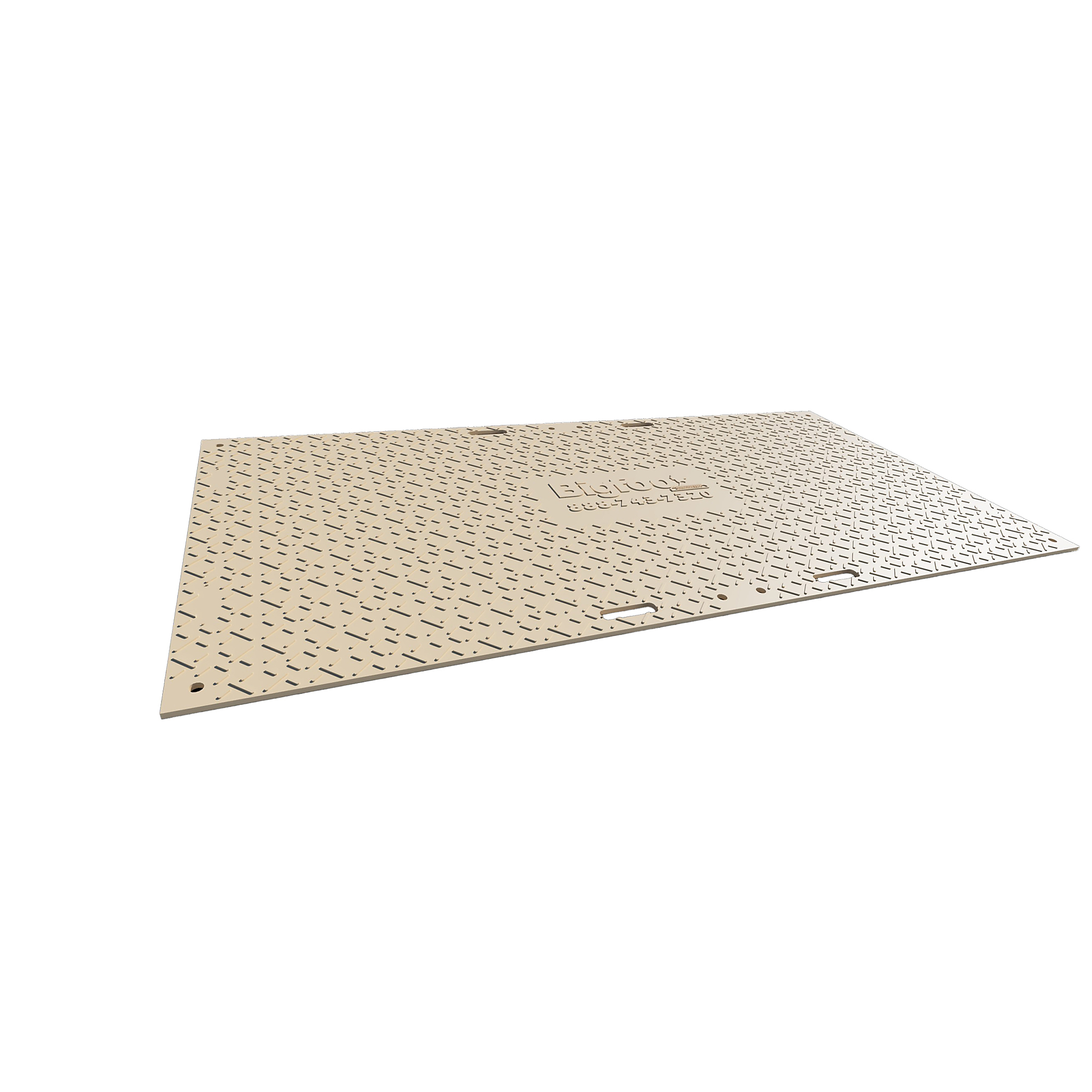
Ground protection mats, also called track or construction mats, are used in several industries to protect ground surfaces during heavy equipment operations. These mats are made from durable materials like high-density polyethylene or composite materials, designed to distribute the weight of heavy machinery and prevent soil compaction, rutting, or damage to grass, pavement, or underground utilities. Ground protection mats are used in construction and landscaping to minimize environmental impact and ensure the safety of both workers and the ground beneath. Learn more about common uses for ground protection mats across industries.
Ground Protection Mats Frequently Asked Questions:
What are ground protection mats made of?
Plastic, polyethylene (especially high-density polyethylene [HDPE]), polypropylene and fiberglass are all materials commonly used to make ground protection mats. Plywood may be tempting to use, but it is not flexible, and it offers little to no traction for vehicles that need to be driven over it. In wet weather, plywood becomes slippery.
How long do ground protection mats last?
High-quality, heavy-duty ground protection mats can last up to 10 years or more. Check with the manufacturer of a specific mat you’re interested in to see if it offers the service life you need.
Can ground protection mats be used on a hill?
Yes, many ground protection mats are designed specifically to work on all kinds of terrain, including uneven ground. These mats are typically made of flexible material such as polyethylene, HDPE or polypropylene.
Are there weight limits for ground protection mats?
There are ground protection mats on the market that can withstand anywhere from hundreds of pounds all the way up to 120 tons. The highest capacity mats are designed for use on sites with daily large-vehicle traffic, such as commercial construction sites.
How do you clean ground protection mats?
These mats can be easily cleaned with a shop vac, hose or pressure washer.
