Skip to content

Free Gift Card Details

$100 Order
$10
gift card
$250 Order
$25
gift card
$500 Order
$50
gift card
$1000 Order
$100
gift card
  • The promotion will be automatically applied on the Shopping Cart page.
  • To qualify for this offer, your order subtotal must equal $100 or more. Excludes gift cards, free item offers, warranties, Advantage memberships, tax and shipping.
  • Free gift cards will be issued in the form of e-gift cards only, not physical gift cards.
  • E-gift cards will be sent to the email address used in your billing address when your order ships or is picked up.
  • Free e-gift cards expire 10/01/26.
  • Promo code not valid on prior purchases or on Honda and STIHL products and cannot be combined with other promotional offers.
  • Valid online and in participating retail stores.
  • Limited-time offer. Subject to change without notice.

Natural Gas Heaters: Choosing the Type and BTU Capacity to Meet Your Needs

A supplemental heat source is vital. It doesn’t matter whether you live in a hot climate with cool evenings or a cold climate with extra-cold days. Supplemental heat saves the day in any climate when your furnace malfunctions, or you need to heat a single space in your house or garage. A natural gas heater is an ideal economical solution. Let’s look at how natural gas heaters work, the types available and how to choose one with the BTUs to meet your needs.

Natural Gas Heater in home entryway

How Do Natural Gas Heaters Work?

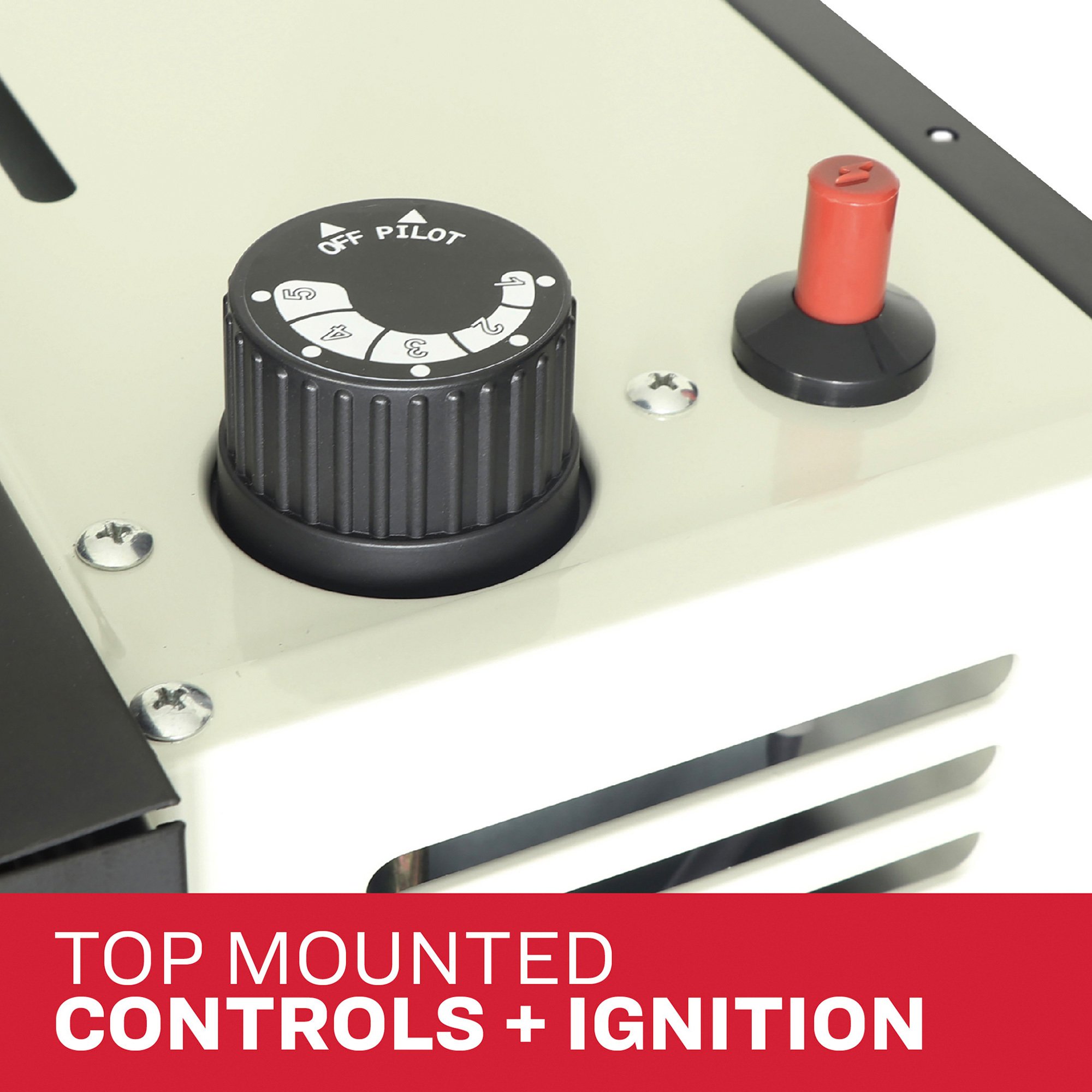
Simply stated, when a natural gas heater is powered on, it works by lighting a burner in a combustion chamber. Once a pilot light is lit or an igniter sparked, heat results and moves into a heat exchanger. The exchanger raises the heat level to the desired temperature and moves it out into the space you’re heating. Many heaters feature an oxygen sensor to alert you when oxygen is becoming depleted, so you can turn off the heater and open doors and windows if necessary. Whatever type of heater you choose, having a carbon monoxide detector nearby is critical.


Natural Gas Heater in workshop

Types of Natural Gas Heaters: Vented and Vent-Free

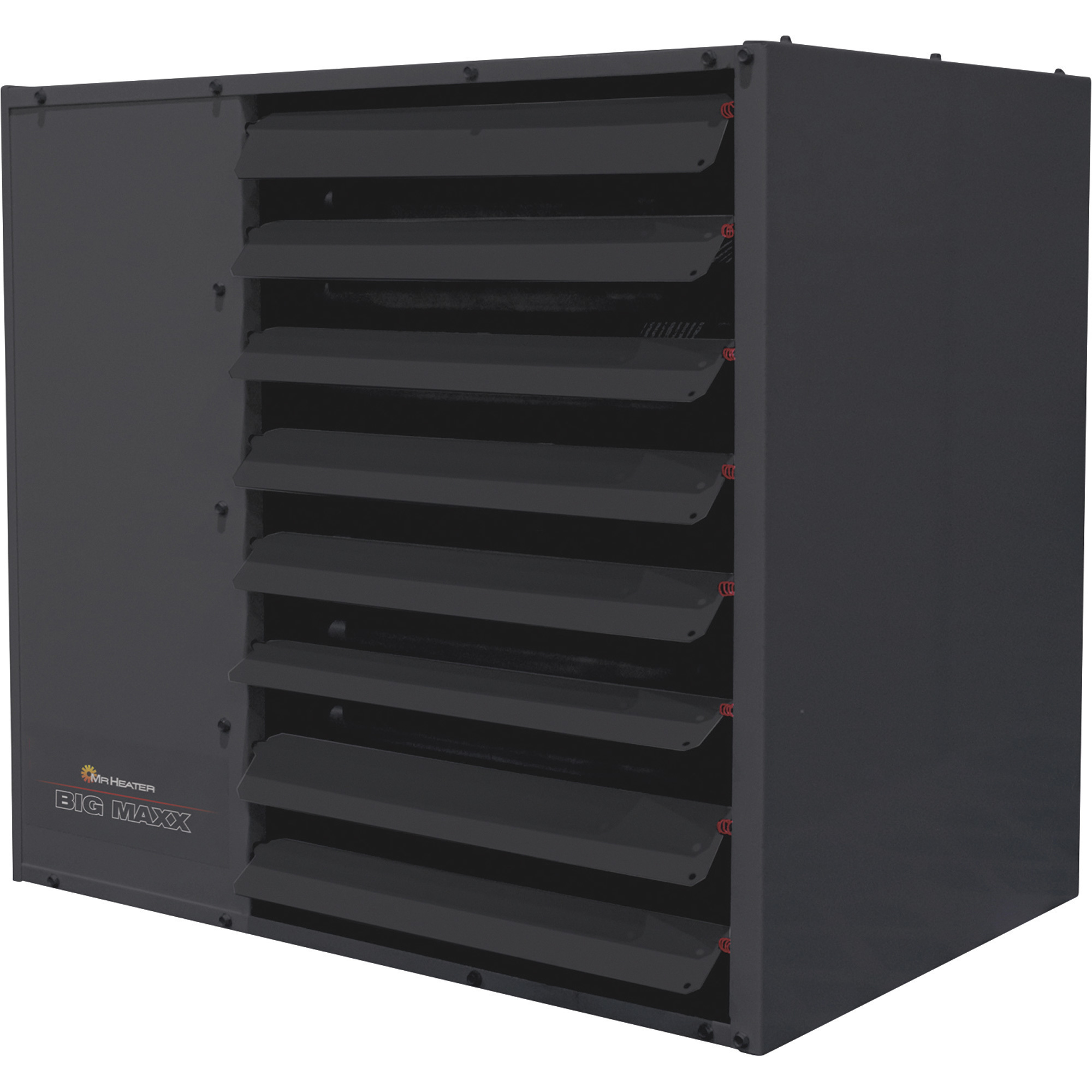
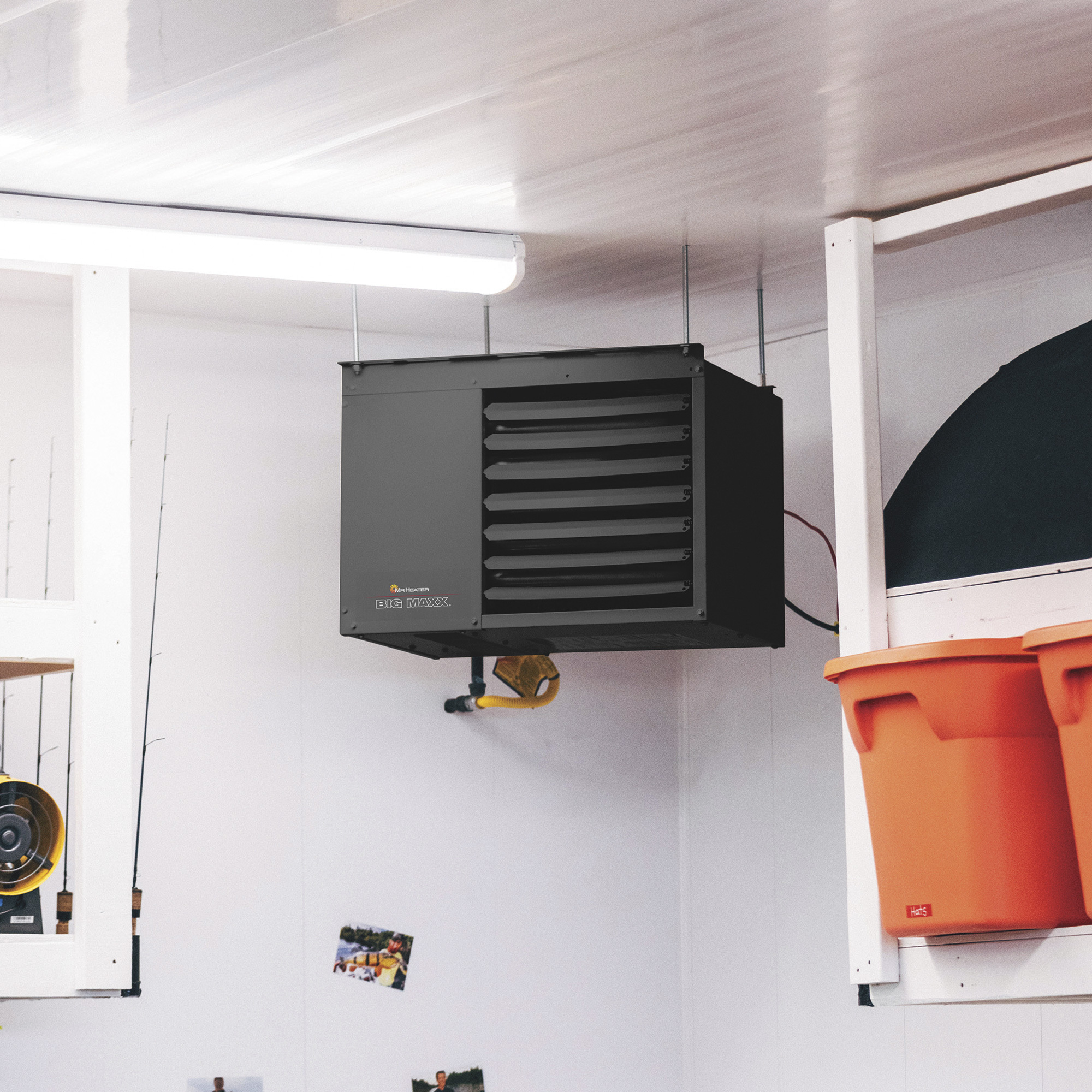
Vented natural gas heaters keep the gas flame completely sealed inside, away from all contact with room air, so only continuously circulating clean heat is delivered into the room. Oxygen for the combustion process is taken from inside air while exhaust is vented outside through a flue.

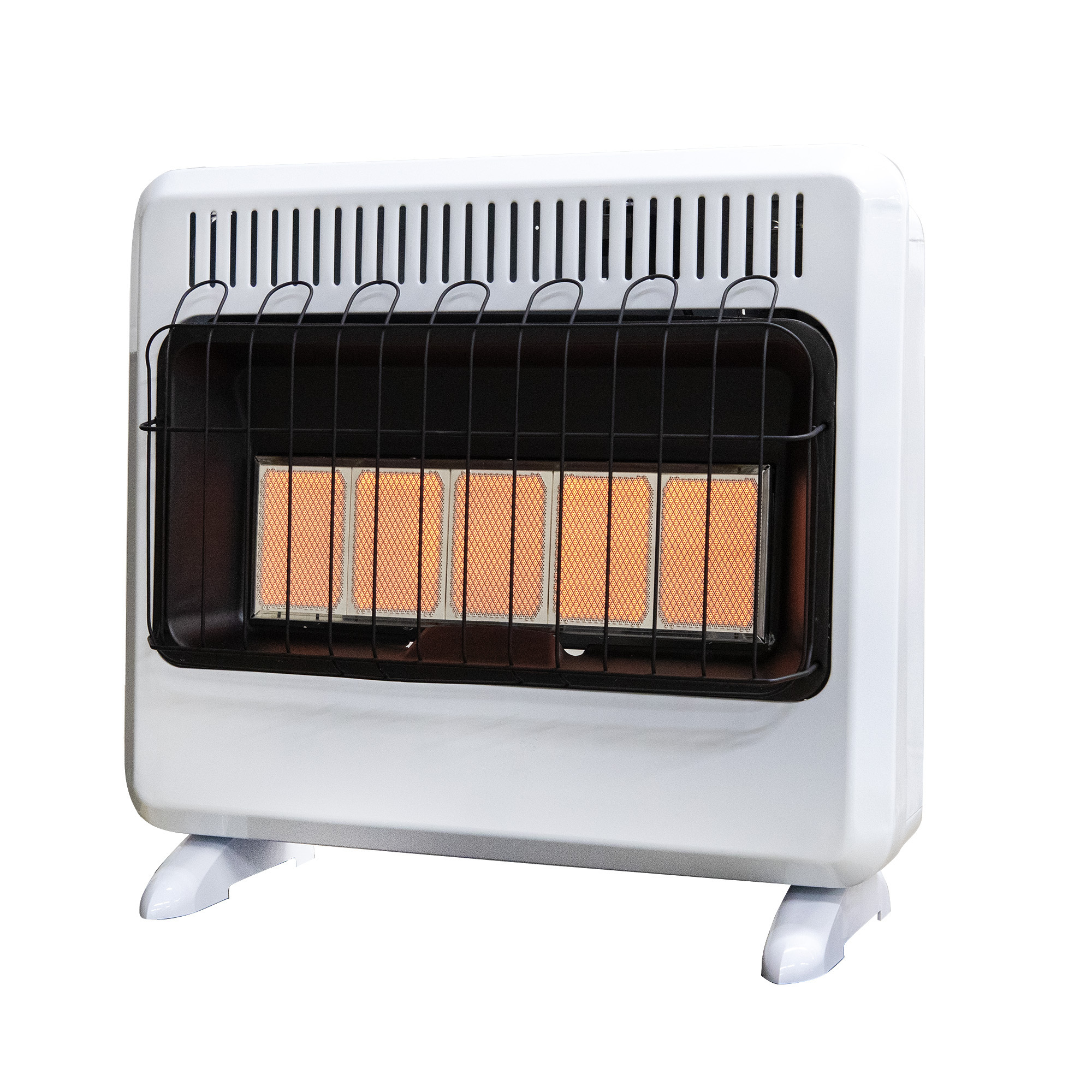
Vent-free natural gas heaters come in two main types: blue flame and infrared. These heaters include internal venting to prevent harmful gases and other volatile compounds from polluting the air. Oxygen needed for combustion to create heat is taken from inside a room, and heat is transferred directly out of the heater.

Blue flame natural gas heaters heat air closest to the heater. The heated air then moves upward until eventually an entire room is heated. An infrared natural gas heater (aka radiant heater) radiates heat to objects in the room, warming you because your clothes and skin absorb the heater’s light. Even if a heater is considered vent-free, it should be used in a room with a carbon monoxide detector and ventilation via windows or doors as necessary. A vent-free heater should always be turned off before you go to sleep or leave the space you are heating.


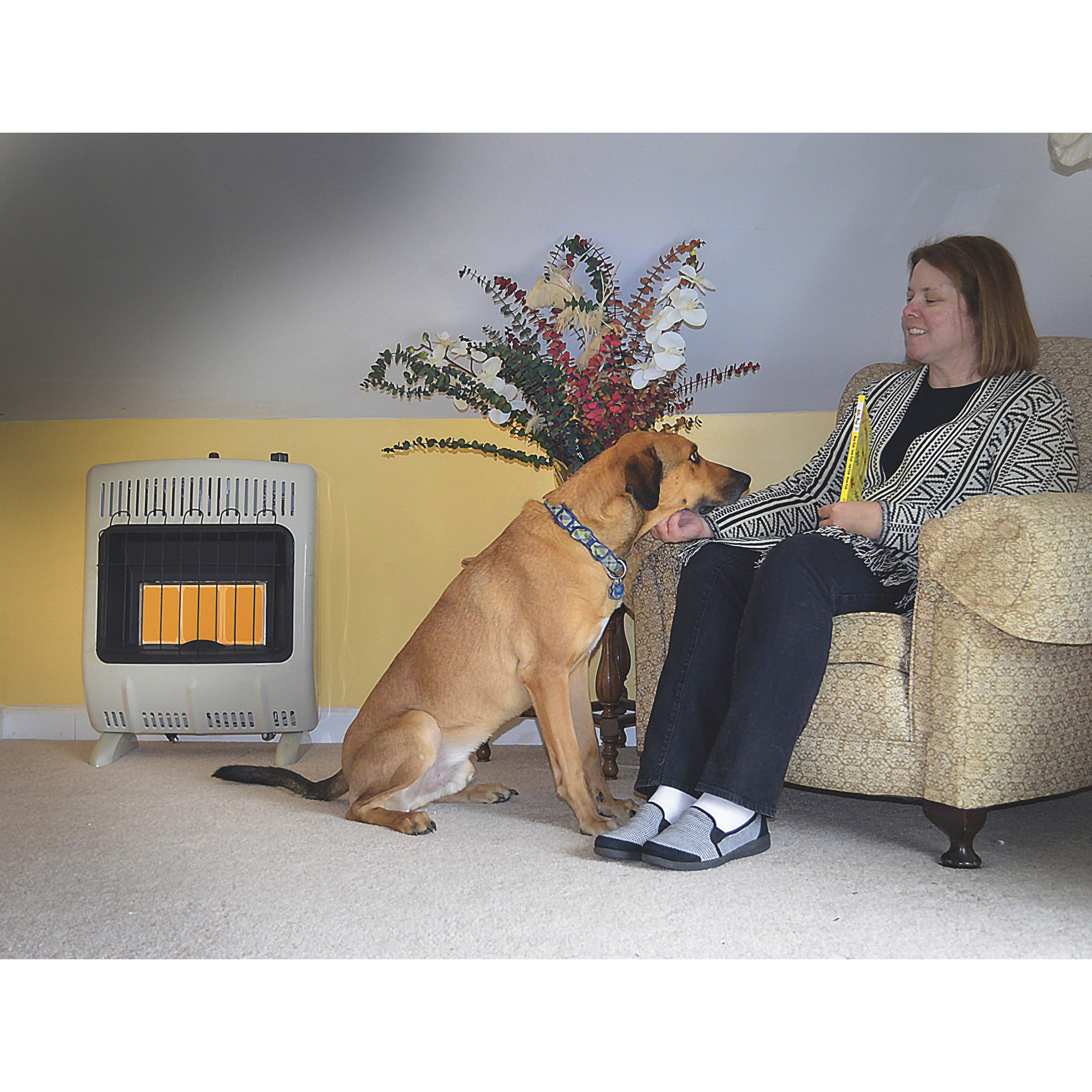
Natural Gas Heater in living room

What BTU Capacity Do You Need?

The BTU capacity of the heater you choose depends on which climate region you live in, how many degrees of heat you need, how well your space is insulated and other factors. A general guideline is that if you live in a hot region, you’ll most likely need 30–35 BTUs per square foot. If you live in a cold region, you’ll most likely need double the number of BTUs for the same-size space. For example, if you want to heat a 1200 sq. ft. space in a hot region, a good BTU capacity would be 36,000–42000. On the other hand, for that same-size space in a cold region, 72,000–84,000 BTUs would be appropriate. These calculations assume an 8ft. ceiling.

If you live in a more moderate climate, your BTU needs would be somewhere in between, and there is a widely used calculation that will give you a rough estimate. Simply multiply the cubic feet of the space you want to heat by the temperature difference you want to achieve and then multiply that sum by 0.133. For example, if the temperature outside is 20°F and you’d like it to be 70°F in your 10,800 cu. ft. room, the temperature difference is 50°. Multiply 10,800 (cu. ft.) x 50 (temperature difference) x 0.133, and you’ll find you need a heater with a BTU capacity of at least 71,820 BTU.

This BTU calculation is rough but often sufficient to make a purchasing decision. If your space has unusual characteristics that could affect a heat source, consult an HVAC professional to see if your calculations are valid.

Whichever natural gas heater you choose, be sure to check its product manual for venting and electrical supply requirements. You’ll also need to be sure your heater choice complies with state and local guidelines. You want safety in addition to warmth.
Shop Natural Gas Heaters