What specific actions can you take to help prevent ice dams?
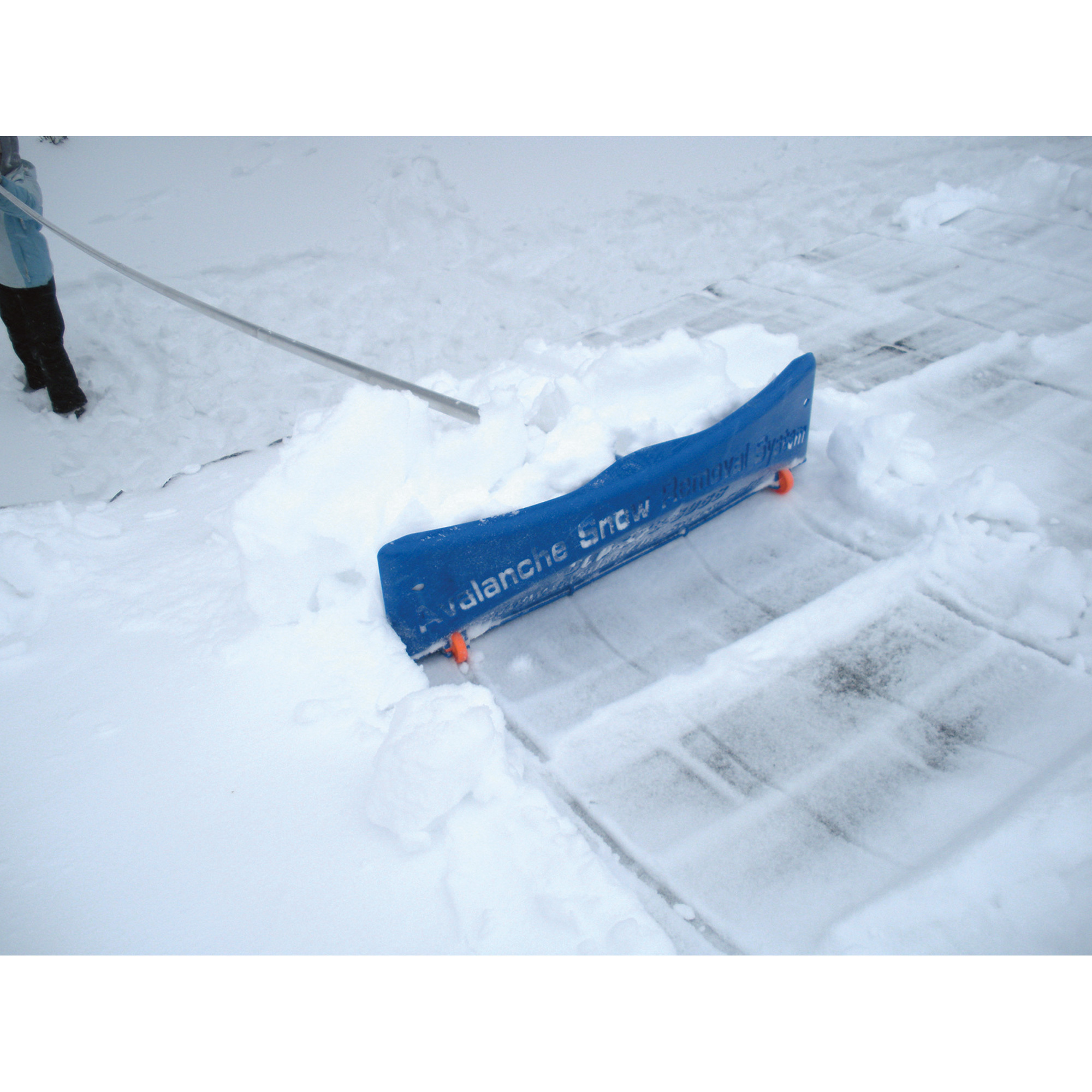
The National Weather Service provides some great tips. For starters, clean your gutters and downspouts thoroughly of any debris, so melted ice and snow can flow freely through them and down to the ground. A handy tool for cleaning gutters is a gutter cleaning attachment for your garden hose. This attachment is curved downward at the top, so it sprays down into the gutter and not up under your shingles. You can also keep snow on your roof to a minimum. This is where a good snow rake comes in handy. It allows you to stand safely on the ground while raking snow off your roof. A 20ft. snow rake enables you to remove snow from 5ft.–6ft. from the edge of your roof. If you need snow removed from further up on your roof, you’ll want to consult a professional to use a ladder and appropriate safety gear to rake from higher up. Not only will snow raking help prevent ice dams, but it will also take excess weight off your roof that could cause structural damage over time. Cleaning gutters and downspouts and raking snow from your roof are activities that will require repetition throughout the winter as debris or snow continue to build up. You can also take steps to ensure that your attic is adequately insulated and ventilated. In northern climates, the R-value of your insulation should be at least R-30, although R-38 is better. Good airflow from under the eaves or soffits under your roof is also important. Insulation is critical to keeping heat inside your house, whereas good airflow is critical to keeping the attic air cold enough to keep freezing and thawing on the roof in check. If you’re not comfortable assessing insulation and airflow yourself, contact a professional expert on roofing and insulation who can assess your needs and recommend improvements.