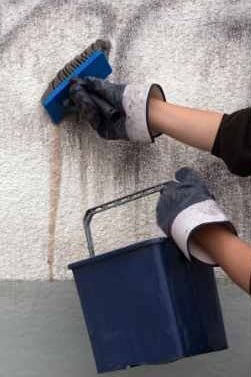
- Remove graffiti as soon as possible.
- Try the gentlest form of removal first.
- Test your removal method on an inconspicuous area to ensure damage will not occur.
- Wear the proper safety gear when working with chemicals and equipment.
- Hire a trained professional when graffiti is on unstable material or valuable surfaces, such as historic buildings.
Primary Methods of Graffiti Removal
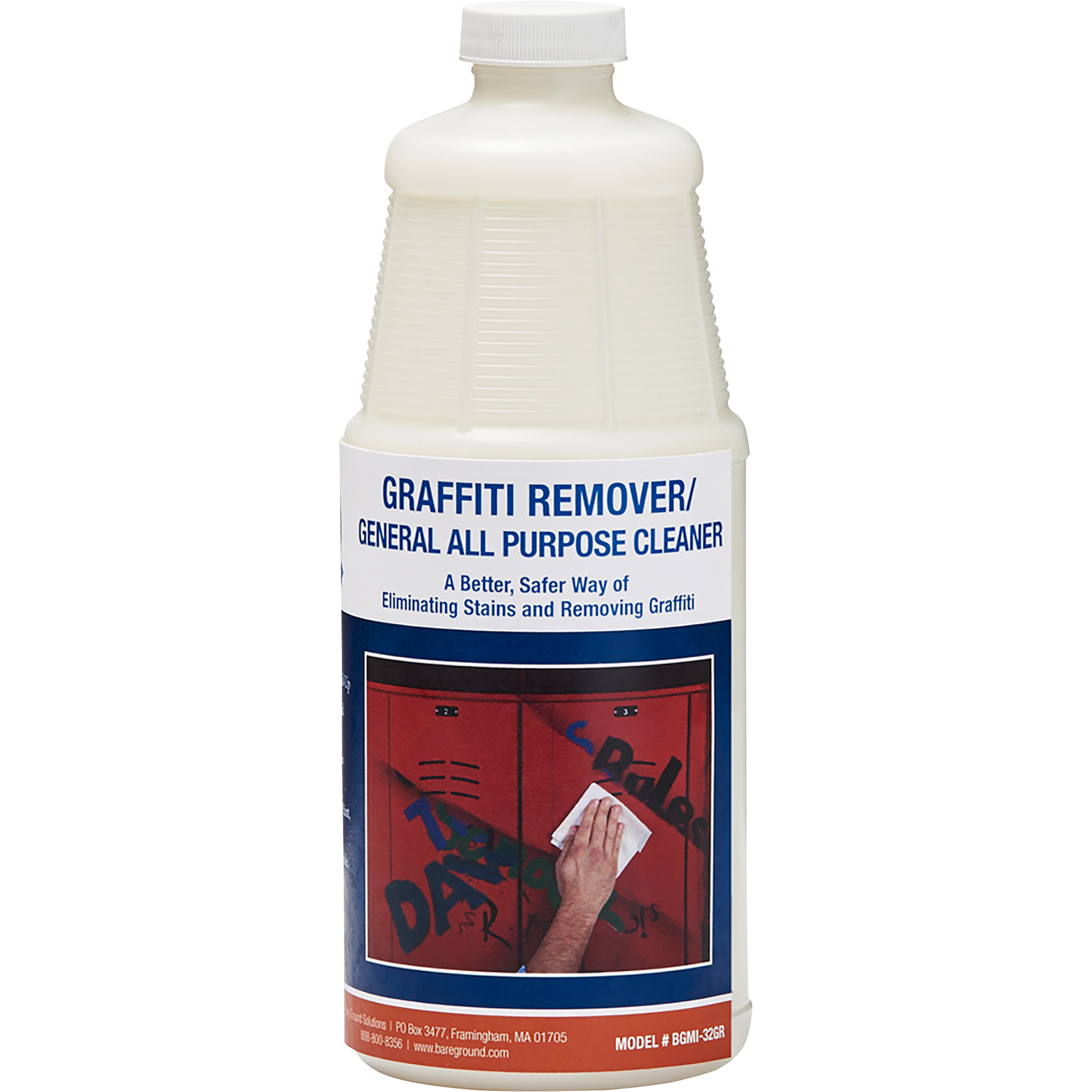
Graffiti remover spray or chemical solvents break down the pigment of most graffiti mediums. Liquid treatments and removers are highly effective for cleaning a variety of surfaces. Popular solvents include acetone, lacquer thinner, mineral spirits, turpentine and more. While liquid solvents are effective cleaning solutions for many surfaces, they are not compatible with plastics or plexiglass. Solvents soften these materials and can leave them with a permanently clouded appearance and tacky texture. Solvents and other chemical cleaning solutions can also damage skin, so gloves and other personal protective gear should be worn while working with them.
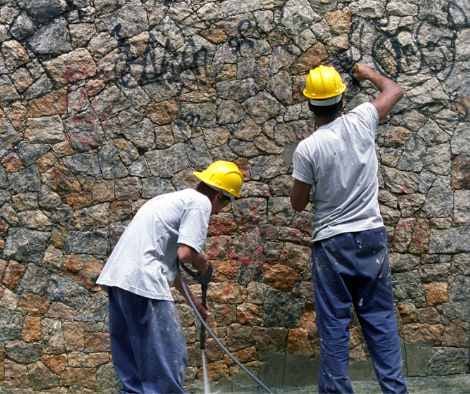
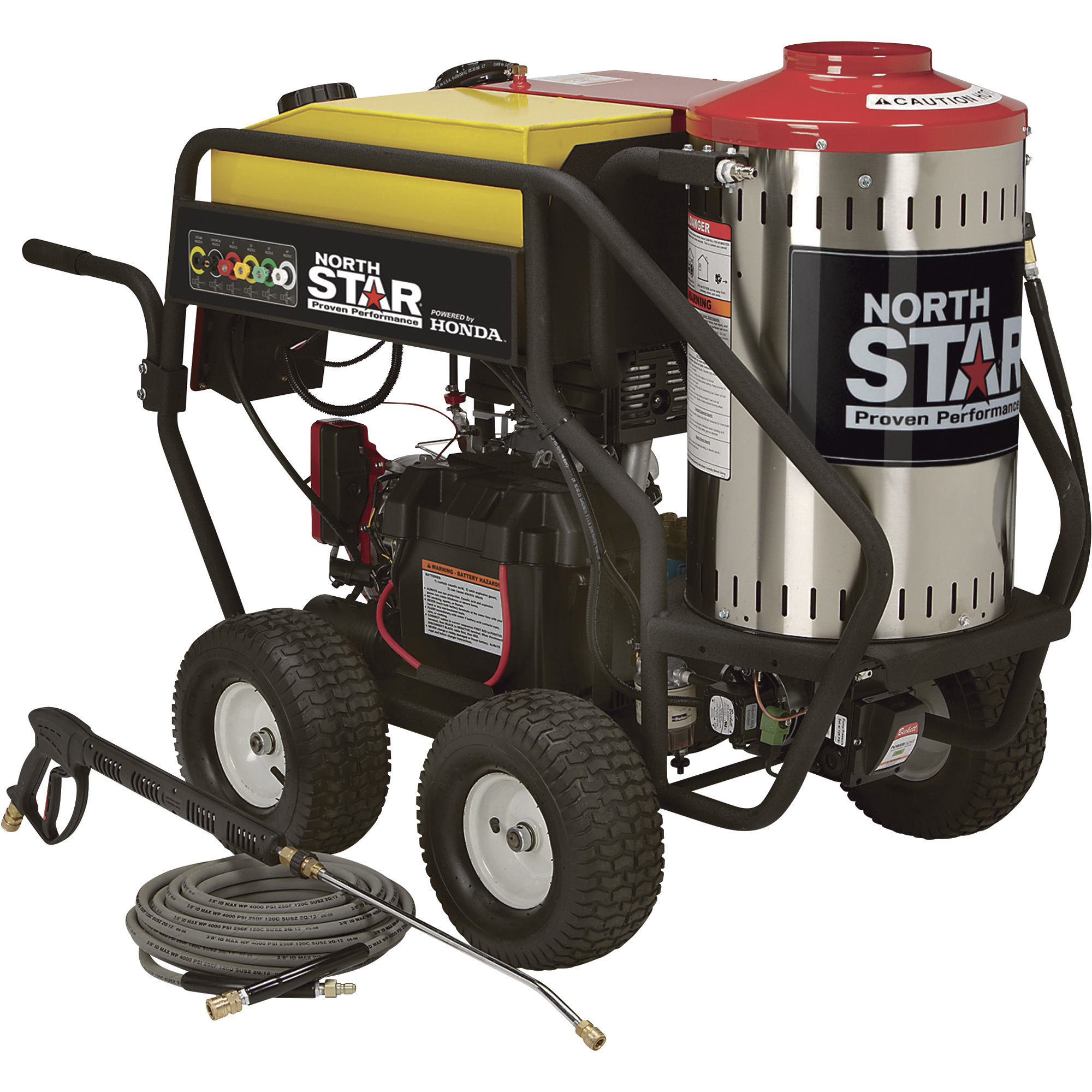
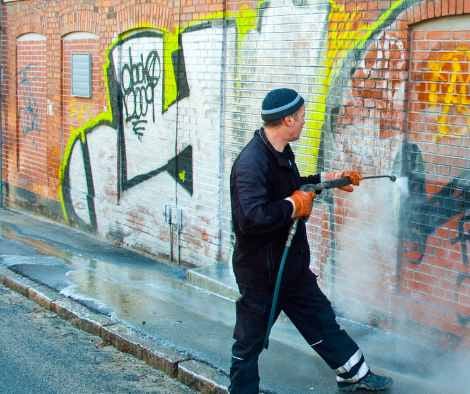
Pressure washing is another effective method for graffiti removal, especially for porous or uneven surfaces including brick, cement, concrete or stucco. A hot water pressure washer will dissolve paint and stains faster than a cold water unit. A cold water pressure washer can also be used, but for best results, pretreat with chemical solvents prior to washing.
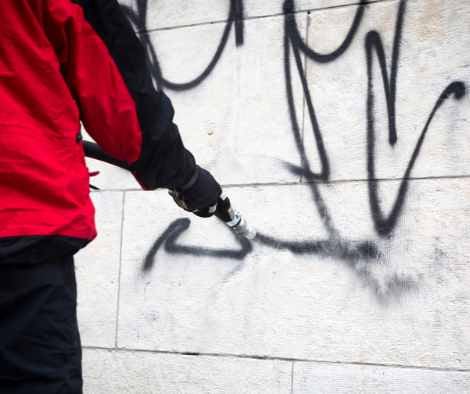
No matter the water temperature, a pressure washer between 1,500–3,000 PSI is ideal for graffiti and paint removal. Turbo nozzles can also help cut paint from porous surfaces with their powerful rotating action. However, a turbo nozzle should not be used on wood surfaces. As recommended above, test this method in a small area to ensure the surface you are cleaning will not be damaged.
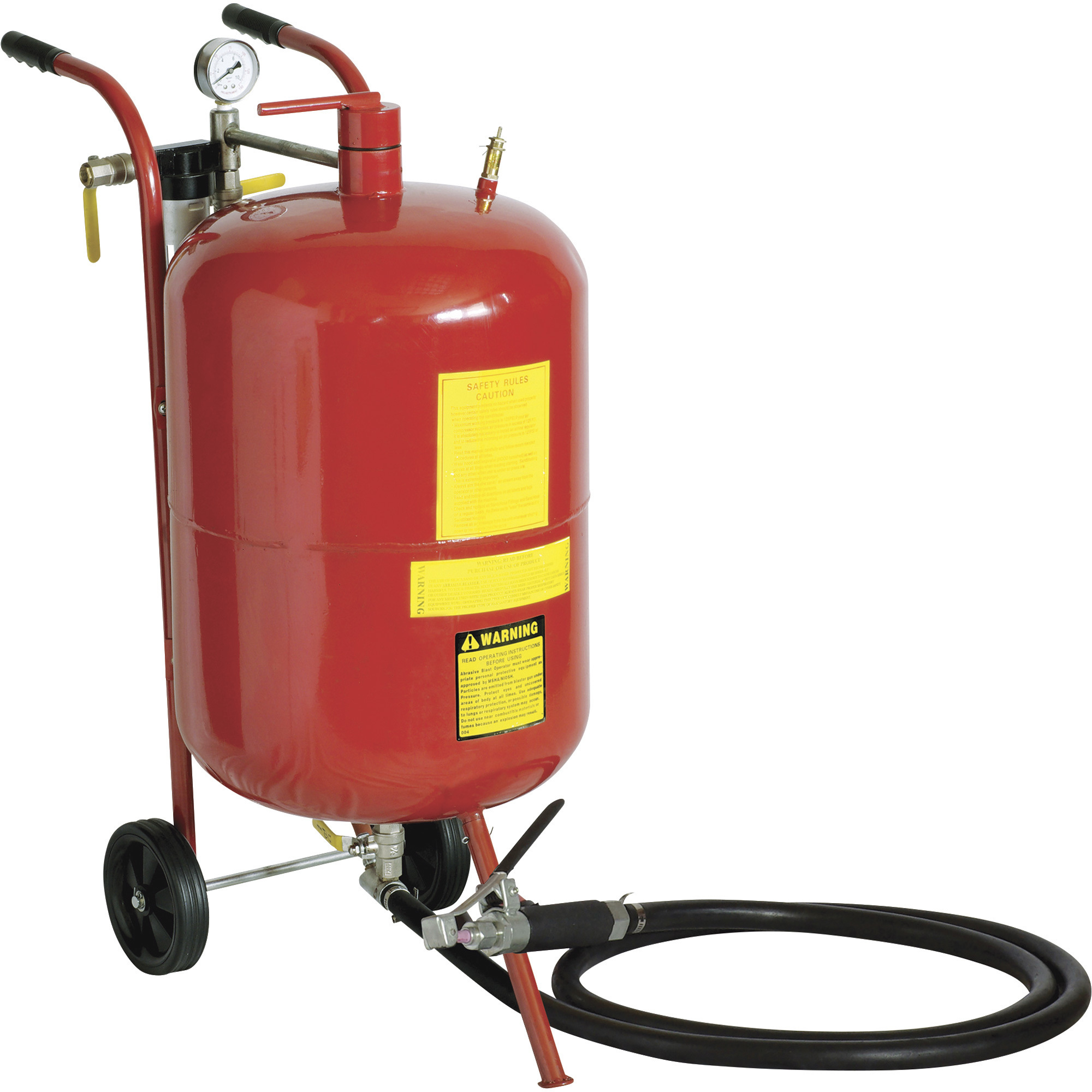
Abrasive blasting (also called media blasting) is a more eco-friendly method of graffiti removal that can also be used on more sensitive surfaces. There are many types of media on the market that are safe for the environment, including sand and other organics (i.e. walnut shells or ground corncobs). Abrasive blasting requires investing in specialized equipment but can erase even the toughest dried-on paint as it gently removes surface layers. While this process does require more cleanup than other methods, it makes up for it with the speed at which it cleans. It is rapidly becoming a top choice among municipalities working to keep their community clean from repeated vandalism.