Drying and Re-covering Water Damaged Drywall
If you’ve unknowingly left a window open during a long, windy rainstorm, and a wall in your family room has been soaked, it needs treatment. You’ll want to dry it out, along with any nearby affected area, as soon as possible. Let’s look at the end-to-end process of assessing moisture buildup, drying it out and re-covering your drywall.
Setting the Stage for Speedy Drying
First, it’s important to dry your water-soaked wall out as soon as possible to prevent mold from developing. Drywall is moisture-wicking, like a sponge, so any moisture within it will spread, possibly to an adjacent wall. Moisture leaches into baseboards, insulation, carpet, padding and flooring, too. Even if you wipe a wall down and don’t see any more moisture, it may still be lurking beneath the surface. The best way to know for sure is to use a moisture meter, which you hold against a wall for a reading of moisture content. Anything over a 1% reading indicates your drywall is compromised. In this case, remove the wall’s baseboard and pull up any carpet and padding (for as far from the water source as you can detect moisture). Doing so will allow air to circulate throughout the affected area and promote drying. Keep in mind that drywall, baseboards, carpet, padding and insulation all become breeding grounds for mold very quickly.
An important consideration is the type of surface covering your drywall. Flat or semi-gloss latex paint (even 2 coats) will reveal moisture readily and dry more quickly than some other coverings. A double layer of high-gloss enamel will hide moisture more readily than some coverings. Wallpaper, depending on its material content, can either reveal or hide moisture. Your moisture meter will detect moisture hidden to the eye.
Employing a Powerful Dehumidifier
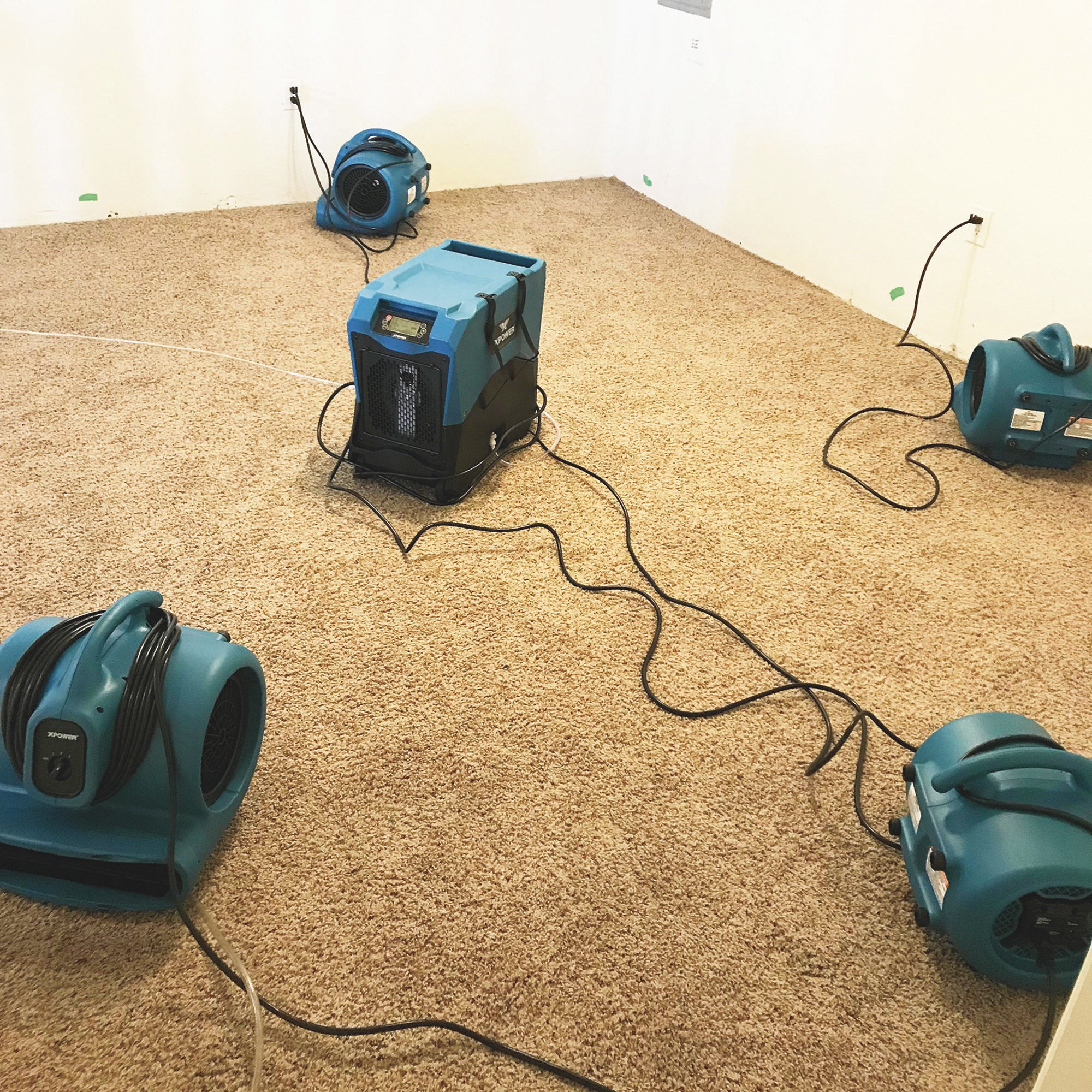
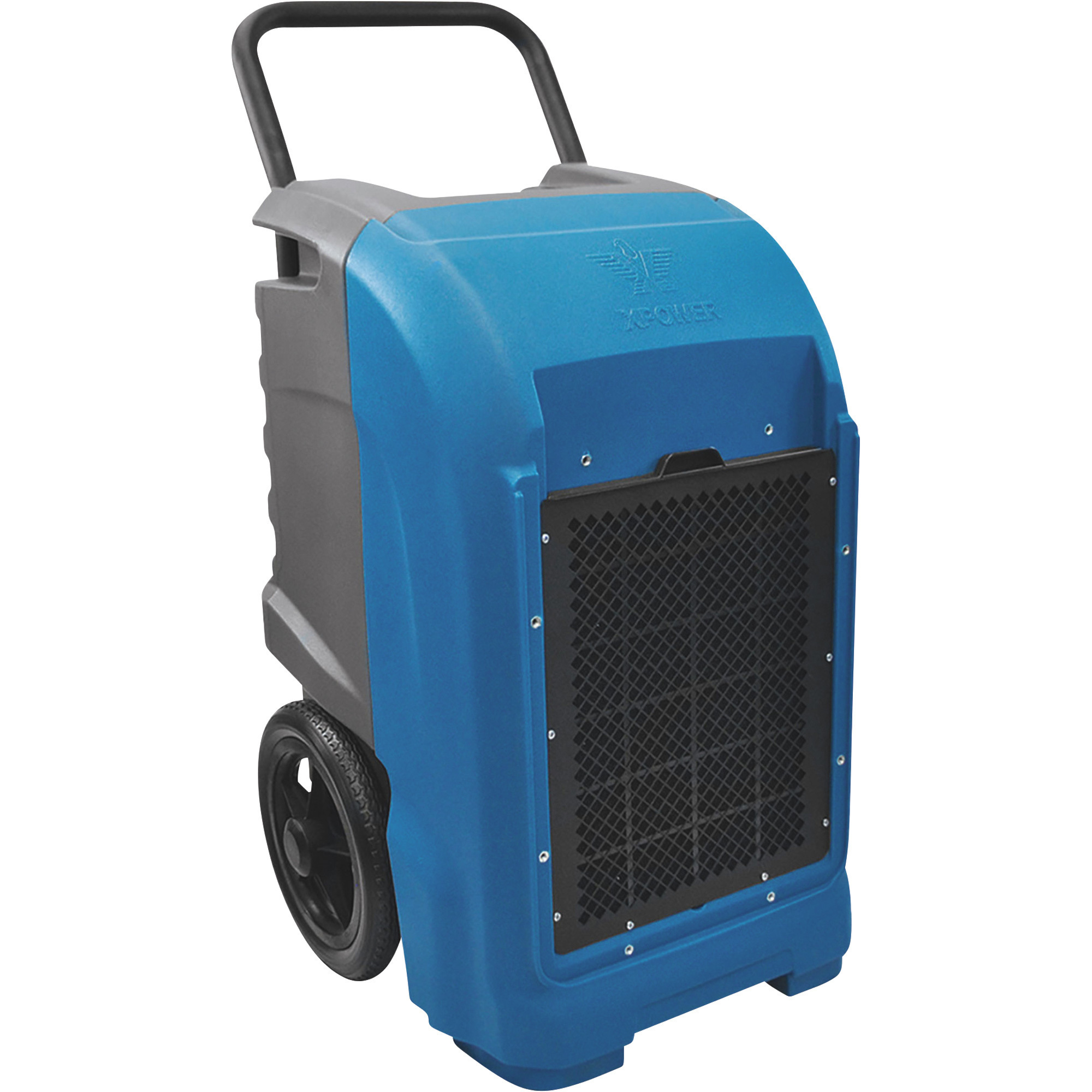
If moisture has permeated your wall and its surroundings, it’s important to use a dehumidifier to speed up drying. Most people don’t have a dehumidifier strong enough to effectively dry a permeated area before mold sets in. In this case, you will want to rent a powerful unit strong enough to speed up drying of the affected area and materials. Experts recommend a dehumidifier that delivers about 115°F with no more than 14% relative humidity (RH).
Using a dehumidifier to dry out a soaked area requires sealing that area with plastic sheeting. Doorways and windows should be closed and sealed as securely as possible. Once your room is sealed, it’s time to turn on the dehumidifier, and let it do its work for three days. After that time, measure moisture in the affected areas again. If some part of the area is still damp, continue to use the dehumidifier until the affected area is completely dry. It’s a good idea to measure for moisture as often as you deem necessary based on the progress over three days.
Re-Covering Your Wall
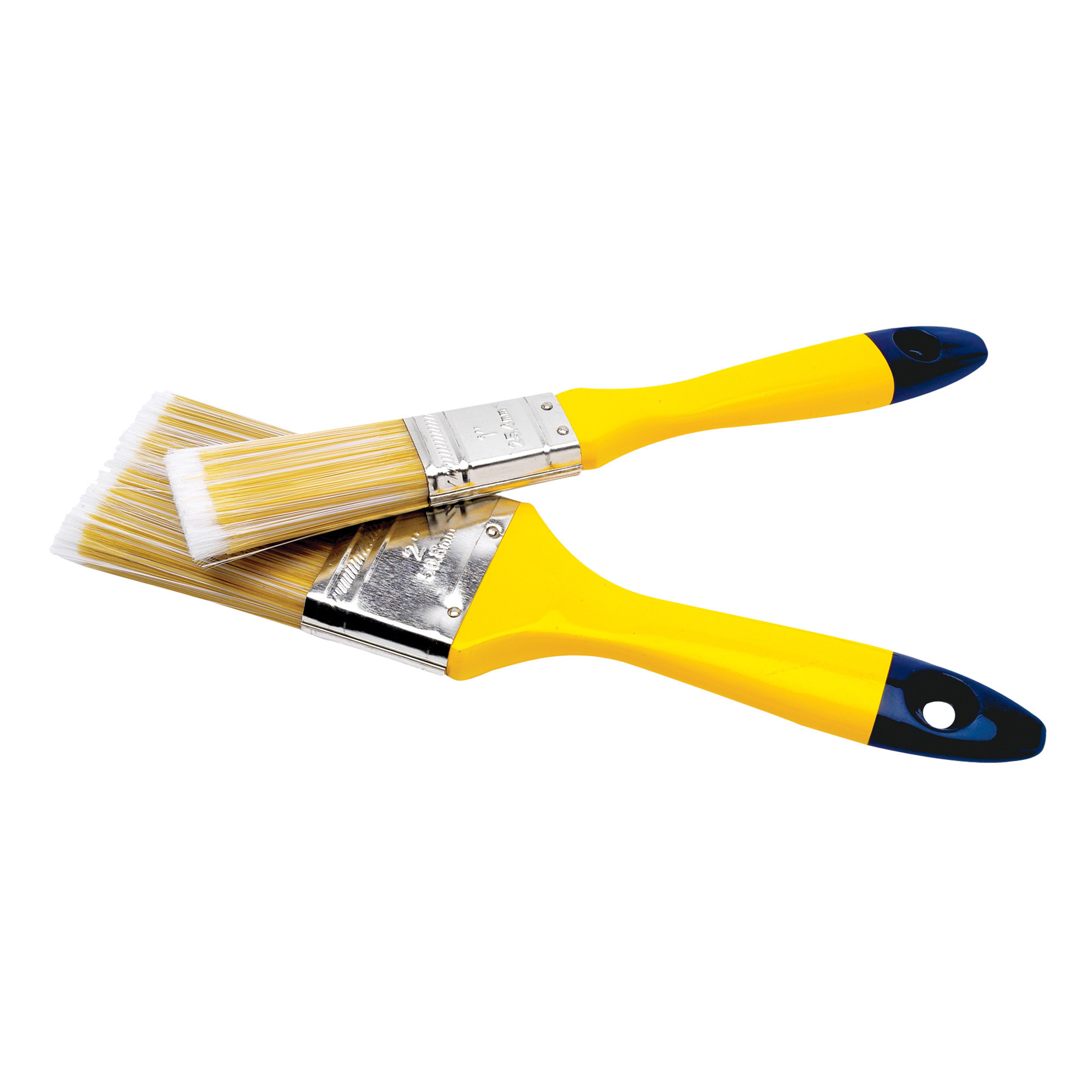
If your drywall remains in good shape throughout the drying process, with no cracks, holes or other damage, your wall is ready for re-painting or re-covering. Be sure to feather paint strokes beyond the affected area to blend paint nicely with the non-affected area, or to cut and apply wallpaper to blend maximally with existing wallpaper. At this point, the baseboard, carpeting and padding are also ready to be laid back down again in the restored area.
Assessing Unforeseen Damage To Drywall
If your drywall shows damage once it’s completely dry, it can’t be treated effectively with just re-painting or re-papering. At this point, it’s time to research ways to fill in, patch or replace your damaged drywall.