A drill press is one of the most versatile pieces of equipment you could add to your shop. Here we’ll consider some of the issues and features to consider when choosing a drill press for your projects.
With a drill press you can process workpieces made of carbon steel, copper, stainless steel, aluminum and more. The types of parts you can process with a drill press are frequently used in several industries, including automotive, machinery, telecommunications, electronics and more.
Types of Drill Presses
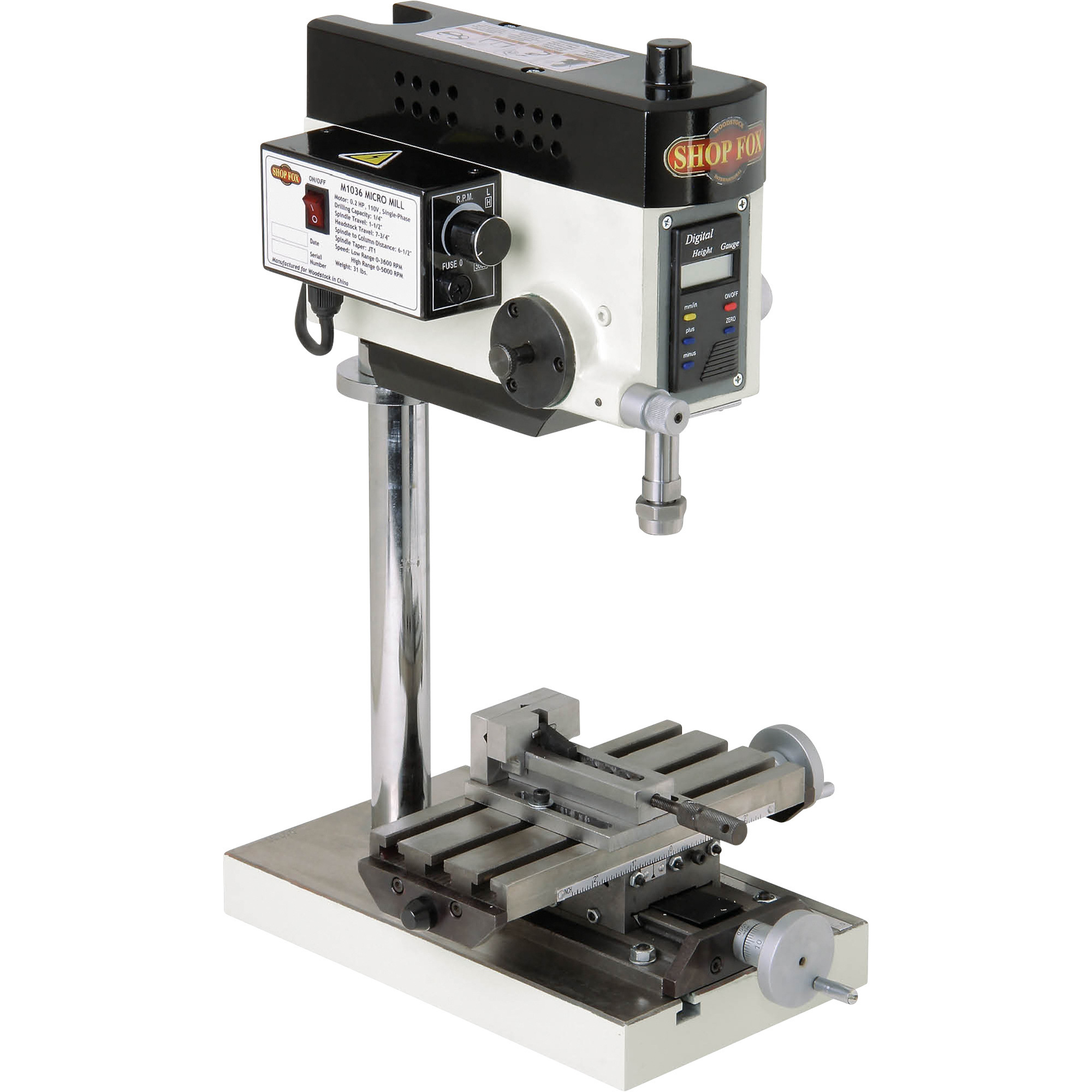
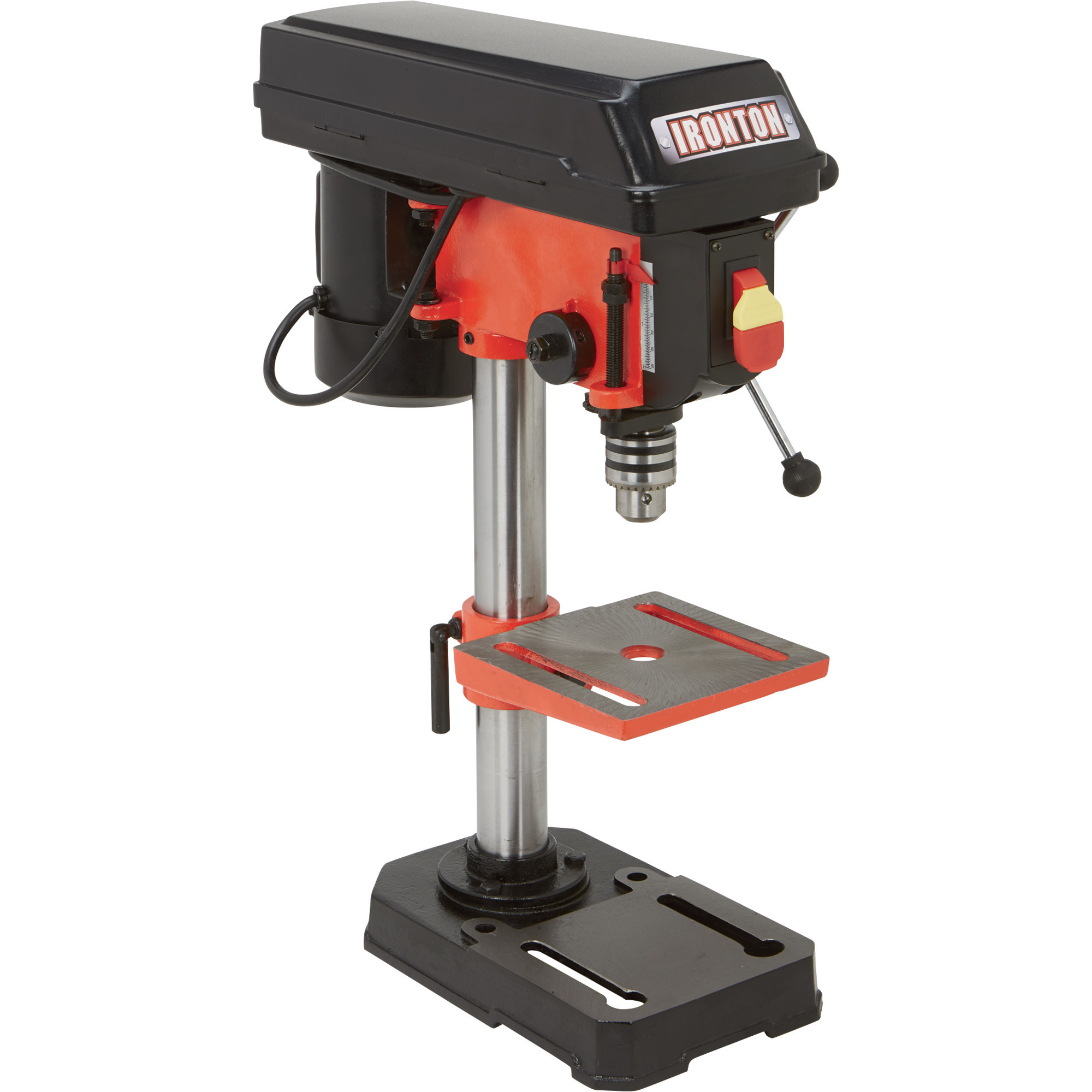
Benchtop models are ideal for relatively smaller tasks and sometimes deliver less precision than a larger type of drill press. However, if your projects are small, you will appreciate the benchtop unit and the fact that it’s easy to store.
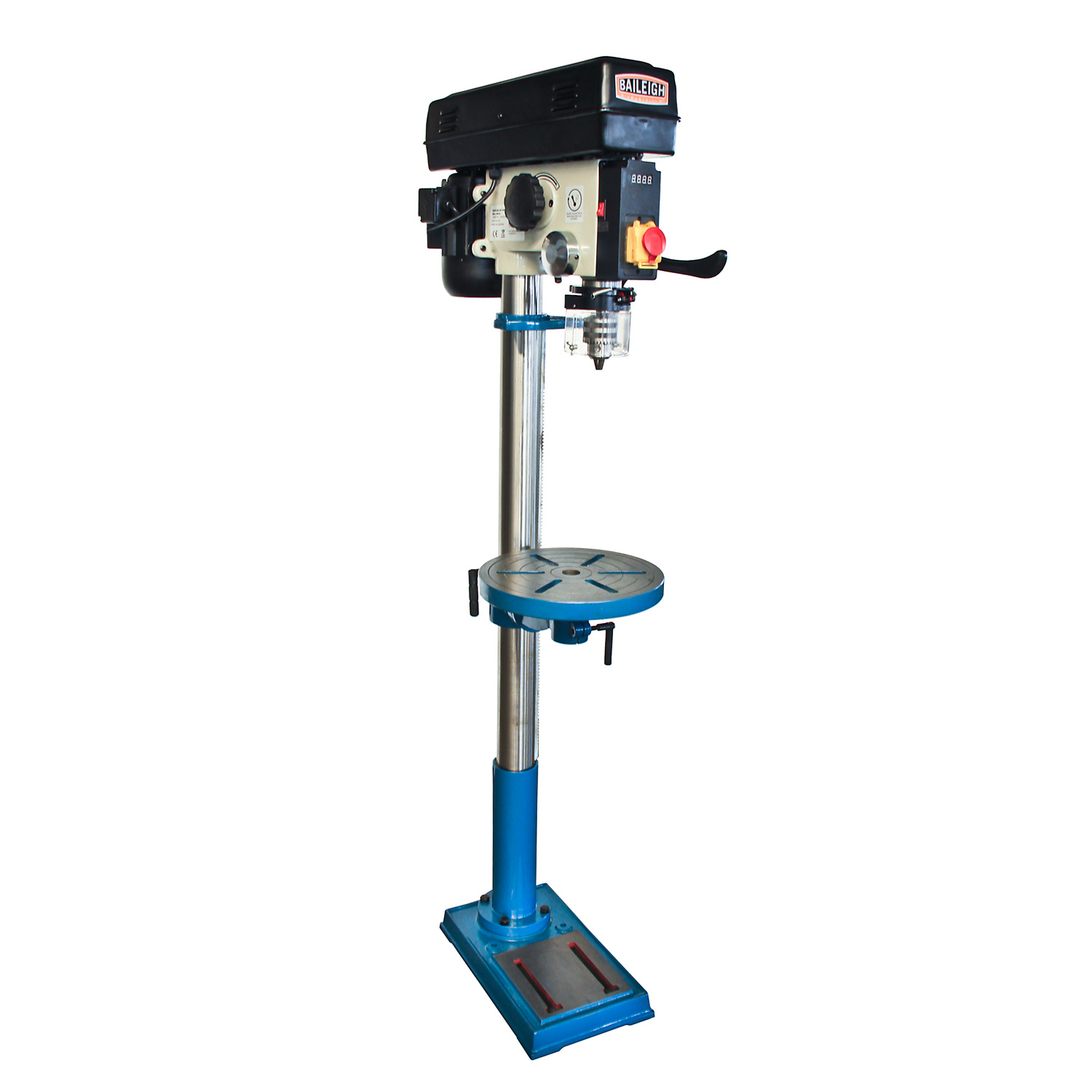
Floor models are perfect for relatively larger projects on a larger scale and with more precision than benchtop drill presses. Floor models also have the capacity to accommodate more accessories for a wider variety of projects.
Magnetic models are typically flexible and easily movable. Also, magnetic drill presses can be fixed horizontally, vertically or sideways. They can rotate annular cutters or other bits to drill holes in structural steel, I-beams, pipe and other metal parts. With these drill presses, the magnetic base sticks to ferrous metal surfaces to hold the drill in place while the cutting bit feeds into the material.
Radial drill presses provide a minimal swing of 24in. and include a way to allow calculated penetrating. This type of drill press can swing wide to slice through wide workpieces. If you frequently need to bore workpieces broader than 17in., a radial drill press would probably serve you best.
Basic Drill Press Features
Swing Capacity
A drill press is measured in terms of its swing, which is twice the throat distance (distance from spindle center to closest edge of column or post). A 16in. drill press by definition has an 8in. throat distance and is capable of drilling a hole in the center of a 16in. disk. Likewise, a 12in. drill press by definition has a 6in. throat distance and is capable of drilling a hole in the center of a 12in. disk.
Depth Capacity
Various drill press types offer various drill depths. Benchtop drill presses can drill 2in.–3in. deep, whereas floor drill presses can drill 3in.–6in. deep. A typical magnetic drill press can usually drill just over 2in. deep, and a radial drill press can drill typically 1 1/2in.–3 3/4in. deep.
Speed Capacity
The average drill press delivers between 2000 RPM–3600 RPM. Most drill presses on the market feature speed control of some type. For drilling through metal, a faster drill speed is most efficient, whereas you might want to slow your speed down for drilling through wood. If precision speed is important to you, you’ll want to be sure your drill choice offers maximum speed control.
Horsepower
A drill press typically offers between 1/2 and 3/4 horsepower, although some floor drill presses feature up to 3 HP and some radial drill presses feature up to 4 HP, possibly more.
Drill Press Accessories
Once you decide on a drill press that works best for your projects, you may want to expand its capacities, and you can do so with accessories. Here are some common accessories on the market.
Crosshair laser alignment for pinpoint drill bit accuracy. This unit features fully adjustable twin laser beams that project a red crosshair on a workpiece at the contact point.
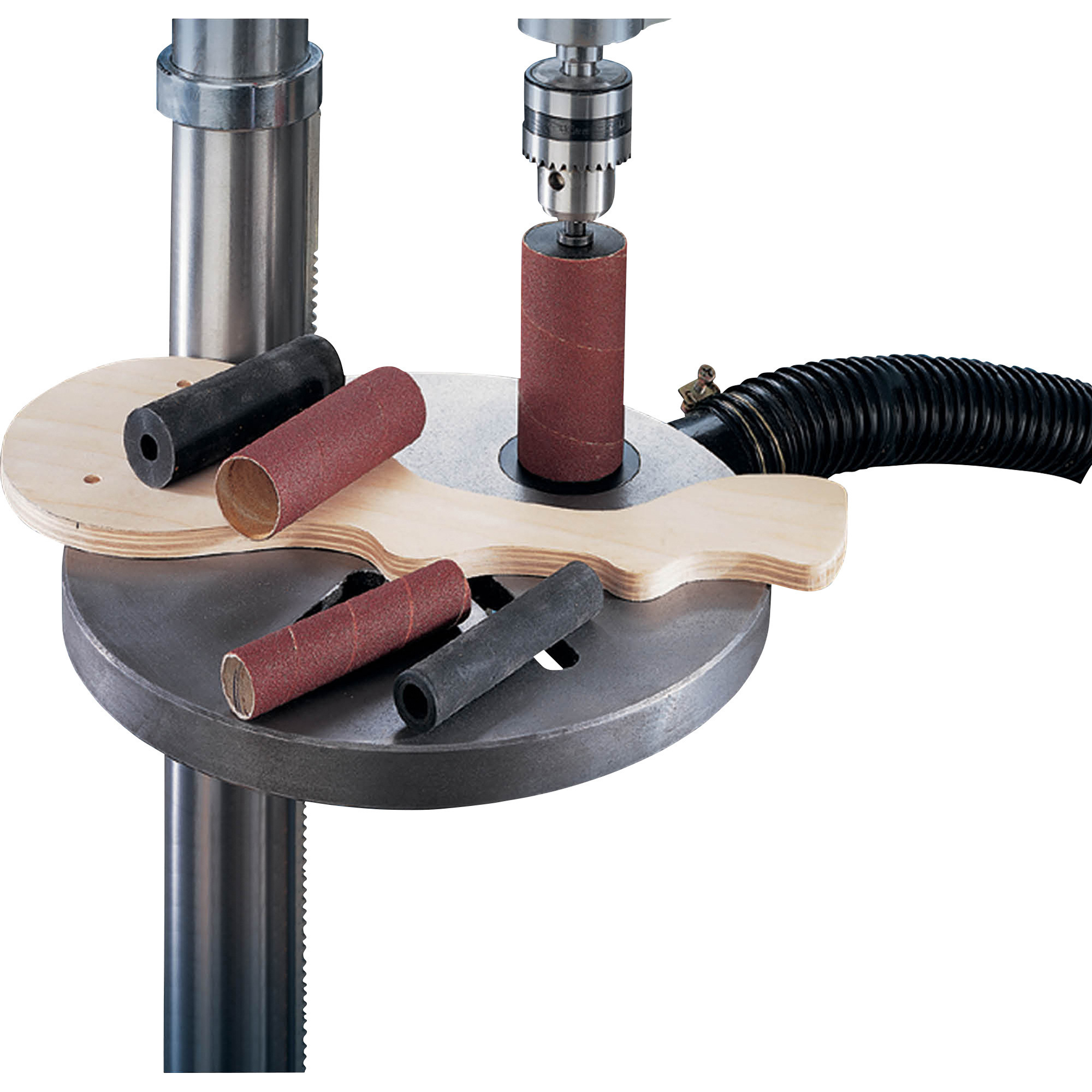
LED light to illuminate your workpiece. This feature is especially helpful if you’re working in a dimly lit space. Specialty bits, such as a 4-sided square chisel with a hole in the middle where the drill bit is inserted. As the bit penetrates, the chisel forces the wood around the bit into the spinning bit, removing material and pulling it out of the square hole, which can then be used for mortising. Several types of specialty bits are available on the market.Drum sander attachment can turn your drill press into a drum sander for preparing wood for projects.
Drill press fence, which transforms your drill press into a precision tool for woodworking. A drill press fence works together with inserts to direct dust away from your workpiece through a hidden chute. A drill press fence is especially useful if you’re using a drum sander attachment.
Adjustable circle cutter, an attachment that allows you to cut perfect circles with your drill press.
Drill stop, which is a collar placed around a drill bit to limit drilling depth. A drill stop prevents you from drilling too deep and possibly damaging your workpiece or a part behind it.
You may find other accessories, and more will emerge on the market. Enjoy choosing the drill press and accessories best for you.
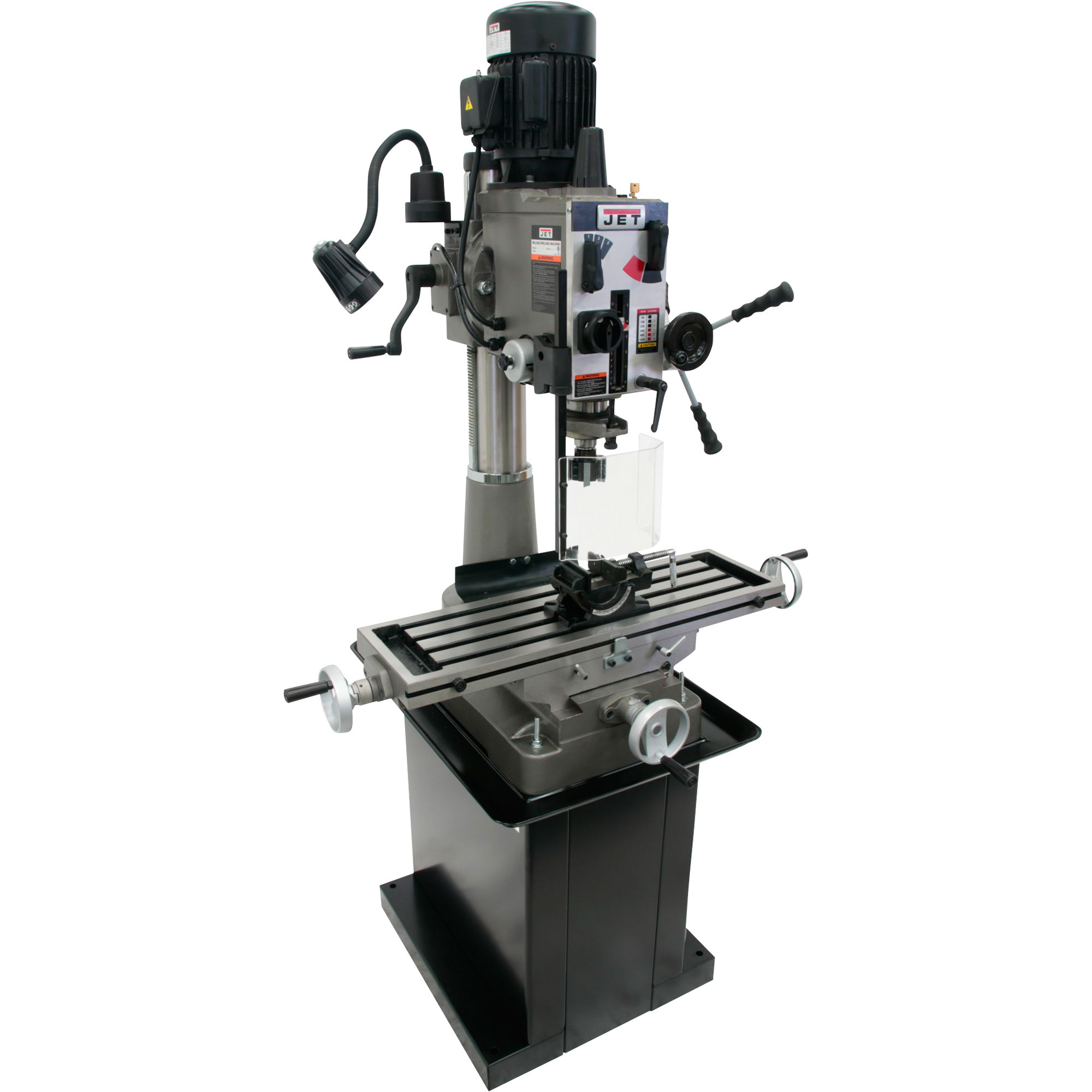
Uses for Drill Presses
Here is a list of some more
capabilities of a drill press.
- Drill holes in wood, metal, plastic, and other materials
- Recess a screw head or create a seat for a bolt or nut
- Reaming holes to a more precise size
- Attach sanding drums, flap wheels, or polishing wheels
- Attach a mortising chisel, for cutting square or rectangular mortises
- Attach a router to perform routing operations
- Use a tapping attachment for tapping holes to add threads.
- Attach sanding drums and flap wheels for shaping and sanding curved surfaces
- Metalworking tasks, drilling holes in sheet metal, shaping metal components, or deburring sharp edges.