Bosch Planers Jointers Accessories
Filters
1-6 of 6 Products

Item # 7048744
Item # 7058651
Item # 7048752
Item # 7048779
Item # 7058660
Item # 7058678
Woodworking Planers
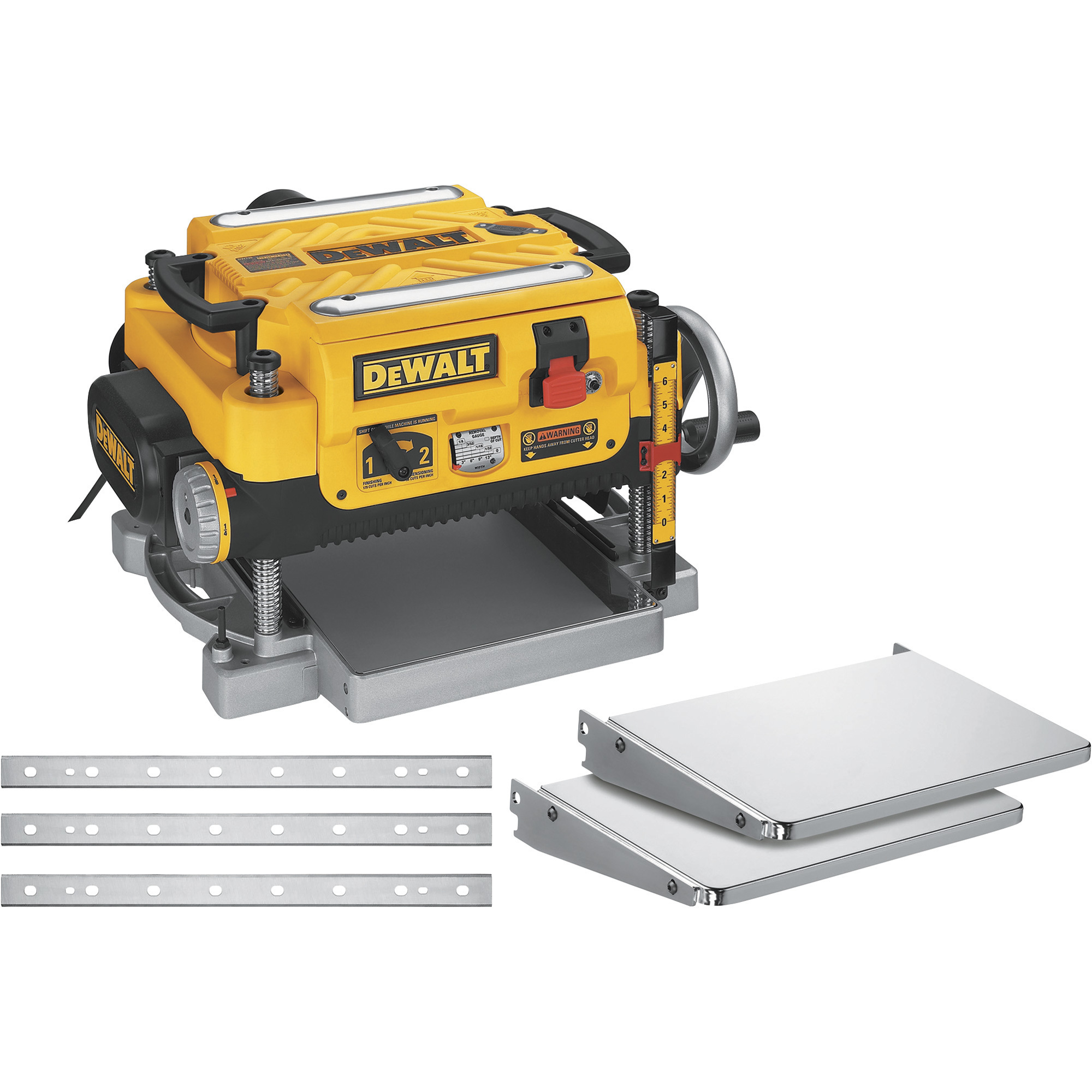
Wood planers are designed to create smooth, flat surfaces and achieve precise thickness across boards. Planers remove small layers of wood with each pass to level uneven stock and reveal a clean, uniform grain. Whether you’re using a handheld planer for quick touch-ups or a stationary thickness planer for larger boards, these tools save time and ensure accuracy for joinery, furniture making, and cabinetry. Wood planers turn rough lumber into perfectly milled material, making it a crucial piece in any woodworker’s shop.
Woodworking planers help achieve smooth and uniform surfaces on wooden boards, designed to trim wood by removing thin layers, ensuring consistency in thickness. A planer has a cutting head that houses multiple blades and an adjustable bed to hold the board. By feeding the wood through the planer, the blades shave off excess material, in the high spots, resulting in a finished piece with a smooth, even surface.
Planer Frequently Asked Questions:
Are there different types of planers for woodworking?
Handheld planers for smaller tasks and benchtop or stationary planers for larger projects. Each type has its own advantages based on the scale and nature of the woodworking project.
How do I set the depth of cut on a planer?
Most planers have a depth adjustment mechanism that controls the thickness of material being removed. Adjust the height of the cutting head or of the bed to set the desired depth of cut.
Can a planer be used on all types of wood?
Softer woods may require a different blade setup than harder woods, and the machine's feed rate may need to be adjusted accordingly. It's important to be aware of each wood's characteristics to get the best results and without causing damage to the material or the planer.
What safety precautions should be taken when using a planer?
Woodworkers should always wear appropriate personal protective equipment (PPE), such as safety glasses and hearing protection. Also, follow the manufacturer's guidelines, secure the workpiece properly, and be mindful of the direction of the wood grain to prevent tear-out.