AV Steel Paint Spray Guns
Filters
1-1 of 1 Products

Item # 6836781
Paint Sprayer Guns
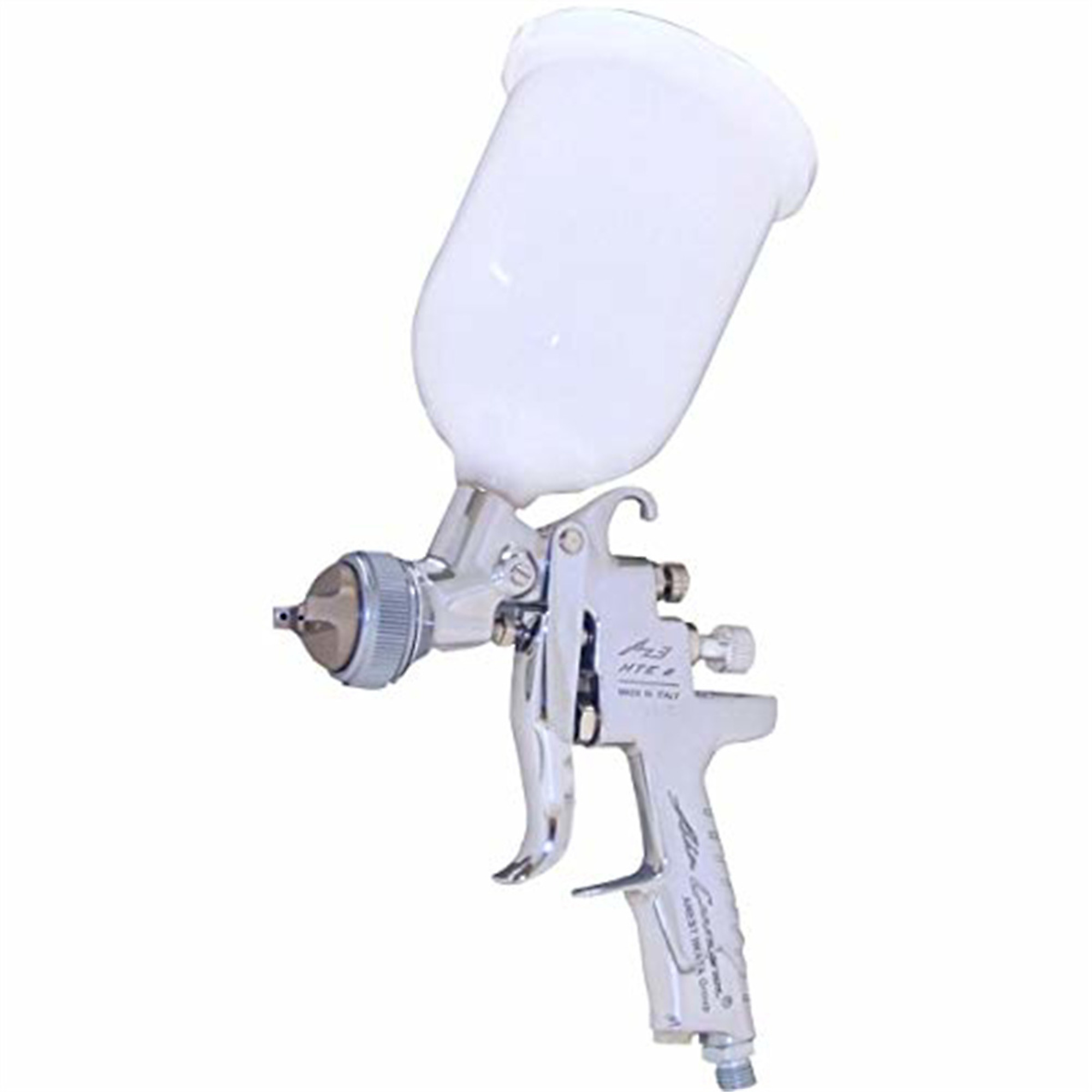
If you have never shopped for a powered paint sprayer before, you might be confused about the difference between a paint sprayer and a paint gun. The simplest answer: power source. Paint spray guns require air while sprayers are airless, therefore a compressor is required for operation. Air guns, like airless models, are highly efficient and allow painters to complete a project up to four times faster than situations where brushes and rollers are used. Paint spray guns can smoothly dispense a greater variety of fluid types than airless units and properly coat a wider array of target types. In addition, these tools atomize paint more finely which results in a more beautiful finish than other powered paint sprayers can produce.
Paint spray guns are not without their disadvantages. One of the biggest being overspray. This overspray issue is a result of low transfer efficiency. These tools typically average 30-40% transfer efficiency, meaning up to 60% of paint/stain is displaced. The large amount of overspray produced by paint spray guns results in higher cost and increased emission of VOC (Volatile Organic Compound.) A HVLP or high-volume, low-pressure paint spray gun offers decreased overspray. These models excel at spraying enamel paint, metallic paint, and varnish. However, they are not suited for high viscosity fluids and operate slower than conventional paint spray guns making them less than ideal for professional applications.
The final item to consider, which may be a disadvantage to some, is the simple fact that a paint spray gun is only as portable as your air hose can reach. If you are searching for a solution with little to no restrictions, opt for an airless sprayer.