Battery Powered Generators
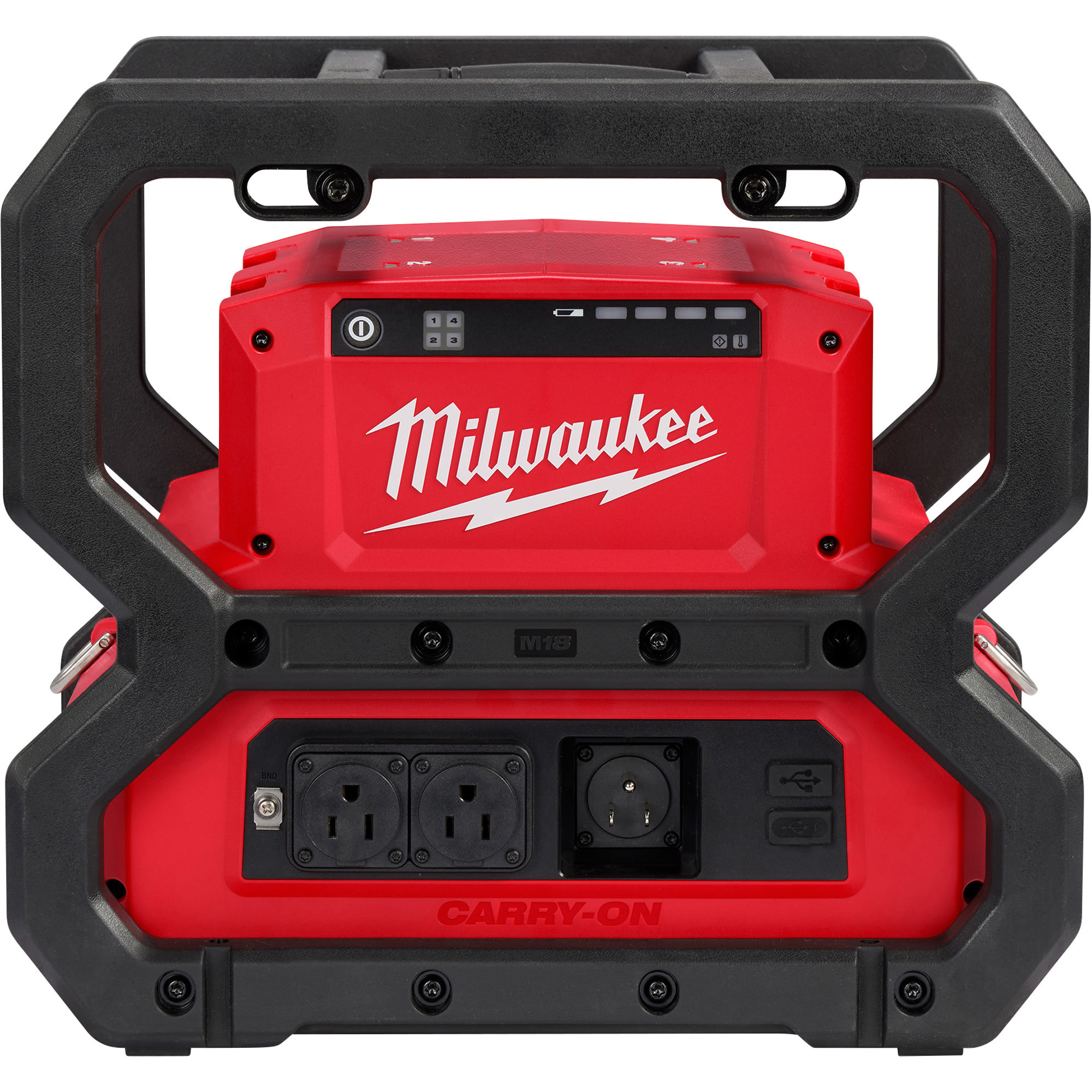
Why you should consider purchasing a battery-powered generator? Unlike
gas-powered generators, battery generators run silently and produce no
harmful emissions. This makes them suitable for indoor use as well as an
environmentally responsible choice. Because they don’t use fuel, there is no
risk of spills or fumes.
In areas prone to frequent power outages from extreme weather, a battery
generator can act as a reliable backup power source. Keep your critical
devices, like phones, laptops, medical equipment, and lights running until
the normal power is restored. If you have a solar panel system or another
renewable energy source, a battery generator can store excess energy
generated during peak times. This stored energy can be utilized when the sun
is not shining or during high energy demand periods, increasing your energy
independence. Battery generators are ideal for restricted environments
like campsites, tailgate events, or residential areas where neighbors might
not appreciate a chugging generator just outside their window.
Battery generators have fewer moving parts than traditional generators,
resulting in lower maintenance requirements and repair costs over time.
While the upfront cost of a battery generator may be higher than fuel
powered generators, no need to purchase fuel and less maintenance
requirements means you’ll see long-term savings. Before purchasing a battery
generator, consider your electrical needs to ensure that the generator's
output is sufficient for your requirements and check its compatibility with
renewable energy sources.
Be sure to browse the
Best Battery Generators list
which reveals our customer's favorites.
Battery Generator Frequently Asked Questions:
What is the advantage of a battery generators over
a fuel-powered generator?
A big advantage of a battery generator is its eco-friendliness. A
battery generator provides all the benefits of a traditional
fuel-powered generator without the noise, toxic emissions or fossil
fuel consumption. A battery generator can be used indoors or out.
You can comfortably watch TV with a battery-powered generator
running in the background, or you can take it camping without
disturbing neighbors. Battery-powered generators are also more
efficient than fuel-powered units, less expensive per watt to
purchase and easier to install. Many battery-powered generators
allow you to store capacity to meet your household needs. If a long
warranty is important to you when purchasing a generator, keep in
mind that battery-powered generators typically come with longer
warranties than traditional fuel-powered generators.
How do I know when the battery needs to be recharged?
Experts recommend that a generator battery be recharged every time
a quarter of its capacity is consumed. Keeping a full charge in the
battery at all times will maximize its service life.
How long does it take to recharge?
The length of time it takes to recharge a generator battery depends
on the type of battery and charging method: a 100Ah 12V Lithium
battery, a common battery for a generator, can be recharged with a
30 Amp charger from flat to full in just over 3 hours, whereas a
100Ah absorbent glass mat (AGM) battery can be recharged in roughly
13 hours. If a wall outlet is used to charge a generator battery,
often that battery can be charged up to 80% in just 2 hours.
How can I
increase power output or capacity of a generator?
You can connect two compatible battery generators to double power
output. The safest way to do so is to use identical generator models
and to read manufacturer’s instructions carefully. Some
manufacturers have engineered battery generators that can be
paralleled with 2 additional identical generators, for a total of 3
generators to triple output. It bears repeating that manufacturer’s
information and instructions are critical to connecting battery
generators properly to prevent damage.
How loud is a battery generator compared to a gas-powered generator?
Battery-powered generators typically produce less than 60dB, often
45dB or less, which is the same amount of sound produced by a quiet
or normal conversation. Battery-powered generators are the quietest
type of generator on the market. Traditional generators, on the
other hand, produce an average of 80dB, which is on par with the
noise level of a busy downtown city street.
Are there safety features built into battery generators?
Because battery-powered generators don’t use oil or include some
of the other features of a traditional generator, some typical
safety features are not included. For example, a low oil shutdown
function isn’t necessary. It is necessary, however, to monitor
battery charging closely to prevent overcharging. Overcharging
happens when a battery generator remains plugged into a wall unit,
solar charging system or built-in charger after it’s fully
charged, which can reduce battery life. It’s also important to
check the battery and charger to ensure connections are tight and
to clear away any corrosion or dirt on the terminals or wiring. A
huge part of safe usage of a battery-powered generator is to keep
it dry. Also, for safety: do not use a generator in wet or rainy
conditions unless it is on a flat, dry surface under a canopy
protection that keeps it completely dry. In addition, avoid
touching the generator with wet hands. Always read the
manufacturer’s instructions for critical safety precautions.
