Dynamic Adjustable Flow Valves
Filters
1-4 of 4 Products

Item # 4865749
Item # 4865845
Item # 4865722
Item # 4865853
Hydraulic Adjustable Flow Valves
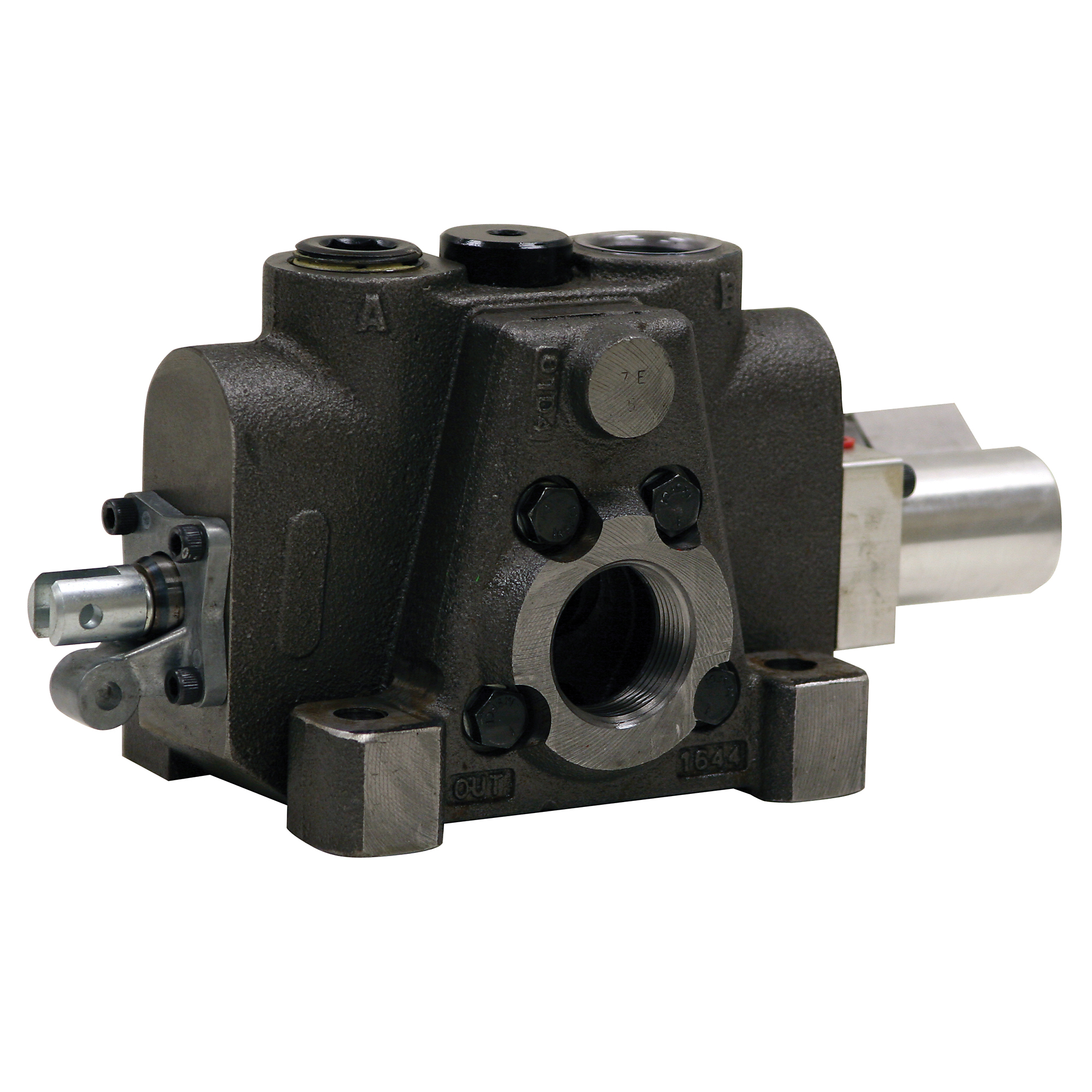
Adjustable flow valves are designed for high flow rates and smooth and easy operation. Pressure valves and regulators are built with premium materials to resist corrosion. Choose port sizes for maximum flow and maximum PSI. The purpose of flow control in a hydraulic system is to regulate flow speed. Flow speed determines the rate of energy transfer at a given pressure. Orifice control is the most basic method for controlling flow and can be used as a pressure-control device. The orifices are placed in series with the pump. An orifice can be a fixed position or it may be a calibrated needle valve. Flow regulators consist of an orifice that senses flow rate. A compensating piston adjusts to variations of inlet and outlet pressures. Flow control accuracy may be 5%, possibly less, with specially calibrated valves that operate to a given flow-rate point. Bypass flow regulators flow that is in excess of the set flow rate, returns to a reservoir through a bypass port. Flow rate is controlled by throttling fluid across a variable orifice regulated by the compensator piston. Demand-compensated flow control bypasses full pump output to a tank during an idle portion of work cycles. Flow controls can also bypass excess system flow to a secondary circuit, fluid is routed at a controlled flow rate to the primary circuit, and bypass fluid can be used for work functions in secondary circuits without affecting the primary one. There must be flow to the primary circuit for this type of valve to function; if the primary circuit is blocked, the valve will cut off flow to the secondary circuit. Pressure-compensated, variable flow valves are equipped with adjustable variable orifices in series with a compensator. The compensator automatically adjusts to the varying inlet and load pressures to maintain a constant flow rate under operating conditions. Some pressure-compensated, variable flow-control valves have integral reverse-flow check valves and integral overload relief valves. Temperature compensators adjust the control orifice openings to correct the effects of viscosity changes caused by temperature fluctuations of the fluid. Priority valves supply fluid at a set flow rate to the primary circuit, functioning as a pressure-compensated flow-control valve. Flow that is in excess of what is required by the primary circuit will bypass to a secondary circuit. If the pressure should vary, the primary circuit has priority over the secondary.