Buyers' Guide to Industrial Heating Blankets
If your home, business or hobby includes temperature-sensitive supplies, products or processes, industrial heating blankets are an ideal way to protect against damage, waste and unnecessary cost. If you have pets or farm animals that require supplemental warmth on occasion, heating blankets can be lifesavers.
Unlike insulated blankets, heating blankets deliver heat evenly and consistently to prevent hot spots and burning. A heating blanket can maintain an ideal temperature continuously, preventing damage to liquids, surfaces, palletized goods and supplies, concrete, ground soil, propane, sidewalks, baby piglets and other animals and much more. Let’s look at some of the ways industrial heating blankets can be used to protect temperature-sensitive assets and creatures.
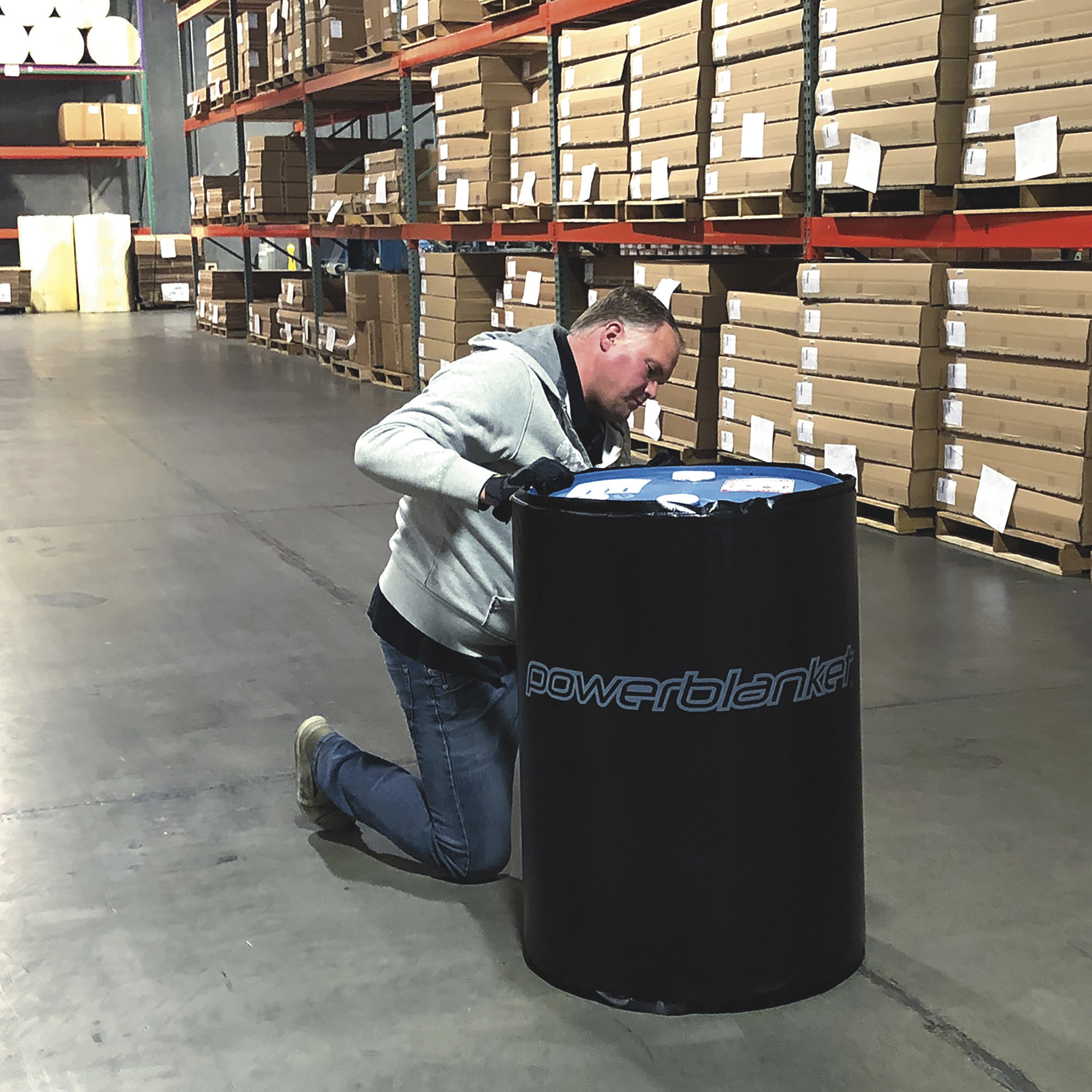
Liquids
Industrial heating blankets are ideal for maintaining a bulk liquid’s optimal viscosity, preventing it from freezing and speeding up the flow of a slow-flowing liquid. Temperature-sensitive liquids in need of a heating blanket could be anything from a gallon container of construction epoxy to a 55-gallon drum of oil or a 350-gallon barrel of honey or molasses. Heating blankets (some are called “tote heaters”) are available on the market for these liquids and many other kinds. Thermostats on heating blankets for these liquids typically range as follows: up to 135°F, up to 300°F and up to 80°F respectively, +/-10°F.
Surfaces
If you need to keep a surface warm, an electric silicone rubber heating blanket with an adjustable thermometer is a great solution. Maybe it’s a hopper or conveyor tank that you want to protect against freezing. Built-in thermostats for silicone rubber heating blankets can offer a range as broad as 50°–425°F. These blankets often feature built-in adhesive and quick-response heating for secure installation.
Palletized Goods and Supplies
If you store or distribute artwork, paper, electronics, wood or leather furniture or fine apparel, you know that these items can be damaged by extreme heat or cold. Industrial heating blankets can prevent both overheating and freezing by maintaining a consistent, evenly applied temperature. Heating blankets for palletized goods can raise temperatures as high as 145°F and be used in temperatures as cold as -20°.
Concrete
Industrial blankets can be used to protect your concrete pour, allowing it to cure even during cold winter months. As soon as you finish your cement project, covering it with a heating blanket allows the concrete to maintain the balance of moisture and temperature to cure for maximum strength and durability. A good concrete heating blanket typically heats quickly to a preset of 100°F +/- 10°.
Ground Soil
If your construction project suffers an unforeseen delay, or if the ground freezes unexpectedly, or simply if you want to build during cold winter months, ground thaw blankets that heat to a preset 150°F can help immensely. They thaw frozen ground, so you can forge ahead.
Propane
An industrial heating blanket for a propane cylinder with a preset temperature of 90°F allows you to tap this gas easier in cold weather than is possible with a cold cylinder. A cylinder heating blanket will help keep pressure up, thereby reducing the number of refills necessary. Heating blankets for propane cylinders are often available in bands, so you can add one or two to a cylinder depending on environmental conditions. When choosing an industrial heating blanket for a propane cylinder, be sure to get one certified by ETL, to UL and CSA safety standards.
Sidewalks
If you live in a place where snow and ice accumulate on sidewalks in the winter, you might want to install a snow-melting heating mat and keep it in place until temperatures warm up. It’s a great way to avoid slipping and falling, not to mention shoveling and salting. Simply lay down the mat, plug it into a standard outlet and leave it there all winter. Many snow-melting mats are engineered to melt up to 2 inches of snow in an hour, so there’s no buildup even in snowstorms. The average amount of snowfall ranges from half an inch to one and a half inches per hour, so a 2-inch melting capacity per hour keeps your sidewalk clear.
Baby Piglets (and Other Animals)
Newborn nursery pigs and other animals often need supplemental heat to thrive, depending on the season they’re born and the shelter they’re housed in. Industrial heating blankets or pads can provide just the right amount of heat to keep them comfortable. These blankets and pads typically maintain temperatures anywhere from 20°–35° above air temperature.
If you need a heating blanket for a purpose not mentioned here, don’t worry. That doesn’t mean there isn’t one for that purpose, or that there isn’t a heating blanket designed for something else that’s flexible enough for your needs. Once you start looking for an industrial heating blanket, you’ll be surprised with how many there are and how integral they are to asset protection.